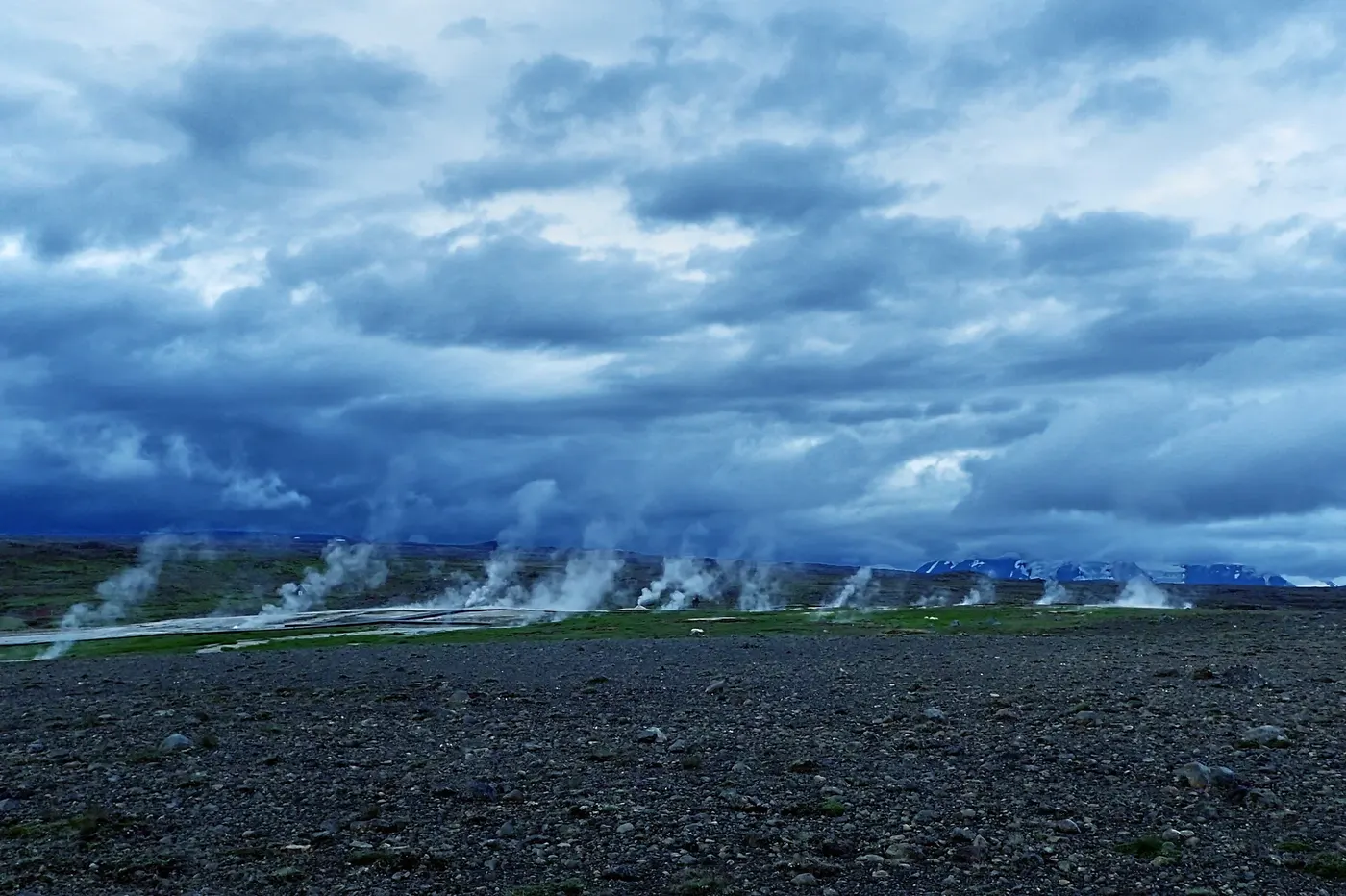
Manantiales / Hveravellir Geothermal PoolSprings / Hveravellir Geothermal Pool温泉・鉱泉 / Hveravellir Geothermal Pool
Sulphurous
✓ Verificado el 2026-07-28
✓ Verified on 2026-07-28
✓ 確認日 2026-07-28
Hveravellir es un campo geotérmico y reserva natural en la ruta de tierras altas de Kjölur, a unos 650 m de altitud entre los glaciares Langjökull y Hofsjökull. La piscina de baño se formó en 1950 al construirse una pequeña presa sobre un arroyo geotérmico; hoy el agua está a unos 38-40 °C con un pH casi neutro de 7,8. La zona geotérmica más amplia ha sido usada como lugar de descanso en las tierras altas desde la Era de los Asentamientos y fue documentada científicamente ya en 1752; se dice que el proscrito del siglo XVIII Fjalla-Eyvindur se refugió aquí, y aún se conservan cerca las ruinas de un refugio de piedra asociado a él. El acceso es por la carretera de montaña sin asfaltar F35, generalmente transitable solo en verano con vehículo 4x4.
Hveravellir is a geothermal field and nature reserve on the Kjölur highland route, at about 650 m elevation between the Langjökull and Hofsjökull glaciers. The bathing pool was formed in 1950 when a small dam was built across a geothermal stream; today the water runs about 38–40°C with a near-neutral pH near 7.8. The wider geothermal field has been used as a highland resting place since the Age of Settlement and was documented scientifically as early as 1752; the 18th-century outlaw Fjalla-Eyvindur is said to have sheltered here, and stone shelter ruins associated with him remain nearby. Access is via the unpaved F35 mountain road, generally only passable by 4x4 in summer.
フヴェラヴェトリル(Hveravellir)はキョルル・ハイランドルート沿いの地熱地帯・自然保護区で、標高約650m、ラーンヨークトル氷河とホフスヨークトル氷河の間に位置します。入浴用プールは1950年、地熱の流れに小さなダムが築かれて形成されました。現在の水温は約38〜40°C、pHはほぼ中性の7.8です。この地熱地帯はアイスランド入植時代からハイランド横断者の休息地として利用されており、1752年には早くも科学的に記録されています。18世紀の無法者フィヤトラ=エイヴィンドゥルがここに身を隠したと伝えられ、彼にまつわる石造りの避難小屋の遺構が今も近くに残っています。アクセスは未舗装のF35山岳道路経由で、通常は夏季のみ4WD車両で通行可能です。
Técnicas
Techniques
技法
Bathing
Patrimonio
La zona geotérmica ha servido a viajeros que cruzaban el interior de las tierras altas desde la época medieval y fue descrita científicamente por primera vez en 1752 por Eggert Ólafsson y Bjarni Pálsson. Está asociada al proscrito del siglo XVIII Fjalla-Eyvindur, quien según se dice usó las fuentes termales para sobrevivir mientras se escondía en las tierras altas; las ruinas de un refugio atribuido a él permanecen cerca del lugar. La piscina de baño en sí data de 1950.
Heritage
The geothermal area has served travelers crossing the highland interior since medieval times and was first scientifically described in 1752 by Eggert Ólafsson and Bjarni Pálsson. It is associated with the 18th-century outlaw Fjalla-Eyvindur, who is said to have used the hot springs to survive while hiding in the highlands; the ruins of a shelter attributed to him remain near the site. The bathing pool itself dates to 1950.
文化財
この地熱地帯は中世以来、ハイランド内陸部を横断する旅行者に利用されてきました。1752年にエッゲルト・オゥラフソンとビャルニ・パゥルソンによって初めて科学的に記録されています。18世紀の無法者フィヤトラ=エイヴィンドゥルが、ハイランドに身を隠しながら生き延びるためにこの温泉を利用したと伝えられており、彼にまつわるとされる避難小屋の遺構が今も現地近くに残っています。現在の入浴プール自体は1950年に造られたものです。
Otros manantiales en Iceland