Manantiales / Chemka Hot SpringsSprings / Chemka Hot Springs温泉・鉱泉 / Chemka Hot Springs
📅 Establecido
Known to local communities for generations
📅 Established
Known to local communities for generations
📅 開設
Known to local communities for generations
GeothermalNatural PoolEco-Tourism
✓ Verificado el 2026-07-22
✓ Verified on 2026-07-22
✓ 確認日 2026-07-22
Los Chemka Hot Springs — 'chemka' significa 'hervir' en swahili — son una serie de manantiales geotérmicamente calentados de aguas cristalinas en el área de Kikuletwa, región de Kilimanjaro, a unos 50 kilómetros al oeste de Moshi. Los manantiales emergen de un acuífero volcánico a unos 28–32 °C y llenan piscinas naturales sombreadas por enormes higueras cuyas raíces descienden directamente al agua. La claridad del agua es excepcional y el origen geológico está claramente vinculado al sistema hidrotermal del Rift del África Oriental.
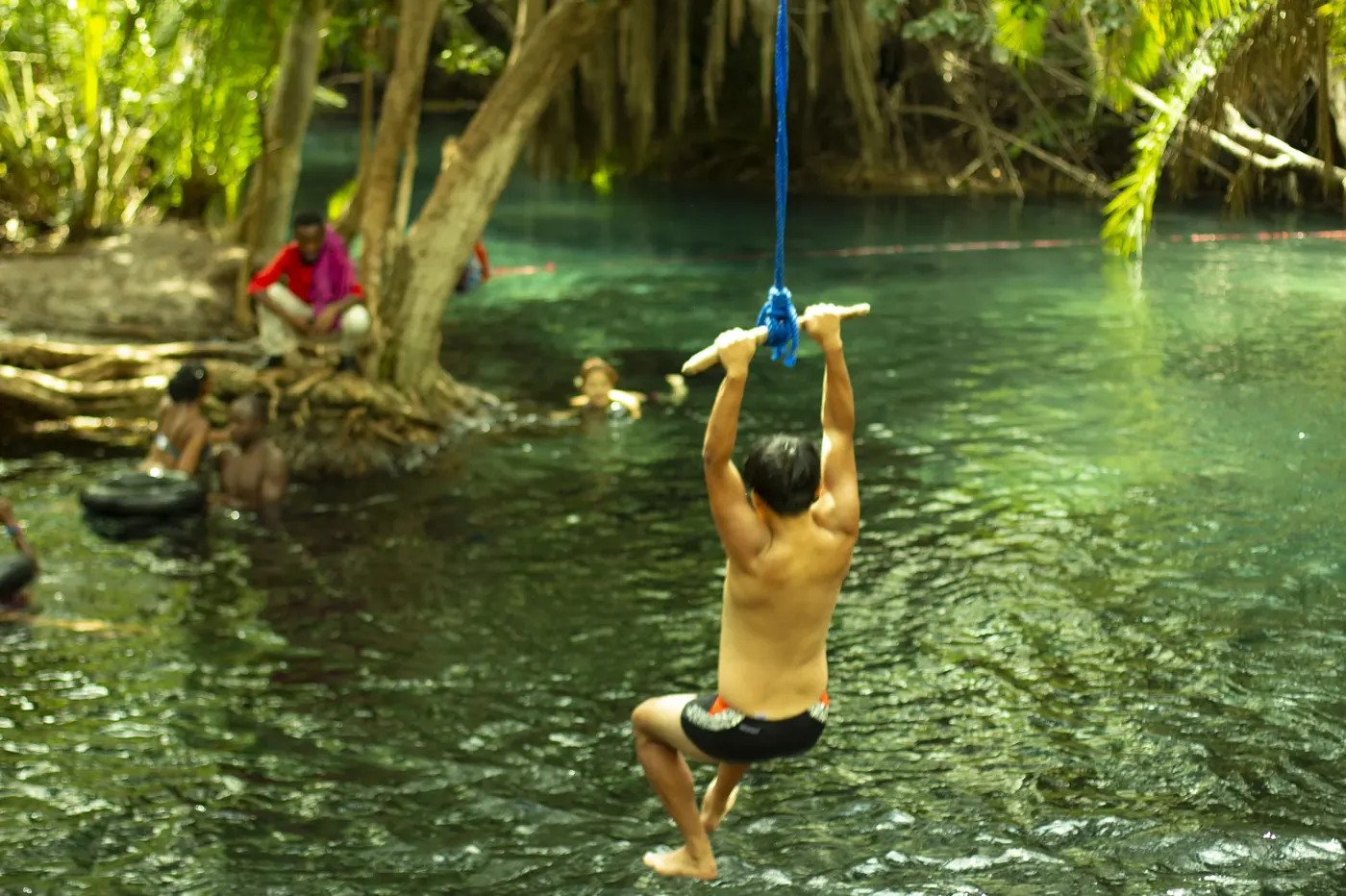
Chemka Hot Springs — the word 'chemka' means 'boil' in Swahili — are a series of clear, geothermally warmed springs in the Kikuletwa area of the Kilimanjaro Region, about 50 kilometres west of Moshi and less than 100 kilometres from the summit of Africa's highest mountain. The springs emerge from a volcanic aquifer at approximately 28–32°C and fill a series of natural pools shaded by enormous fig trees whose root systems descend directly into the water. The clarity of the water is exceptional — visibility to several metres depth — and the geological origin is clearly volcanic, linked to the deep hydrothermal system of the East African Rift. The combination of clear warm water, ancient fig tree canopy, the distant white cone of Kilimanjaro visible on clear days, and the solitude of a setting removed from major tourist circuits makes Chemka one of East Africa's most distinctive thermal natural sites.
Chemka Hot Springsはタンザニア・Kilimanjaro Regionに位置する地熱温泉。源泉温度は30℃、標高760mの地に湧出する。泉水はアルカリ性(pH約7.6)の泉質、炭酸水素塩泉・ナトリウム泉を豊富に含む、総溶解固形物380 mg/Lが特徴だ。リラクゼーション・遊泳・自然体験など多様な温浴療法が行われる。施設では天然泉での遊泳・木陰での浸浴・ロープスイングなどが体験できる。
Minerales
Minerals
ミネラル
| Sodium | 68 mg/L |
| Bicarbonate | 240 mg/L |
| Silica | 35 mg/L |
| Calcium | 28 mg/L |
| Fluoride | 1.2 mg/L |
Tratamientos
Treatments
トリートメント
RelaxationSwimmingNature Immersion
Técnicas
Techniques
技法
Natural spring swimmingTree-shaded soakingRope swing
Patrimonio
Los manantiales de Kikuletwa forman parte de la manifestación geotérmica del Sistema del Rift de África Oriental, la estructura geológica que separa lentamente al continente africano. El pueblo chagga, que ha cultivado las laderas del Kilimanjaro durante siglos, posee un conocimiento tradicional de los manantiales y el paisaje circundante, utilizando las aguas cálidas para el baño y el riego. Los higuerones de Chemka probablemente tienen siglos de antigüedad y forman un microecosistema que sustenta aves, insectos y peces adaptados a la temperatura constante del agua.
Heritage
The Kikuletwa springs are part of the geothermal expression of the East African Rift System, the geological structure that is slowly separating the African continent. The Chagga people, who have farmed the slopes of Kilimanjaro for centuries, have traditional knowledge of the springs and surrounding landscape, using the warm waters for bathing and irrigation. The fig trees at Chemka are likely centuries old and form a micro-ecosystem supporting birds, insects, and fish adapted to the constant water temperature.
文化財
キクレトワの泉は、アフリカ大陸をゆっくりと分裂させつつある地質構造、東アフリカ大地溝帯の地熱活動の一つの表れである。何世紀にもわたりキリマンジャロの山腹を耕作してきたチャガ族は、この泉と周辺の土地についての伝統的な知識を持ち、温水を入浴や灌漑に利用してきた。チェムカのイチジクの木々はおそらく樹齢数百年に及び、一定の水温に適応した鳥、昆虫、魚を育む小さな生態系を形成している。
Cultura
Chemka es un lugar de encuentro para las comunidades locales tanzanas —familias de Moshi y Arusha que lo conocen como un refugio de fin de semana— y, cada vez más, para visitantes internacionales que buscan una alternativa al safari convencional o al ascenso al Kilimanjaro. Los manantiales representan una Tanzania distinta: íntima, tranquila, cálida, entretejida con los ritmos cotidianos de las comunidades agrícolas circundantes, en lugar de estar empaquetada para la exportación turística. Un columpio de cuerda que cuelga de las ramas del higuerón hacia la poza cristalina capta algo de ese placer espontáneo y sin artificios que caracteriza este lugar.
Culture
Chemka is a gathering place for local Tanzanian communities — families from Moshi and Arusha who know it as a weekend retreat — and increasingly for international visitors seeking an alternative to the conventional safari or Kilimanjaro climb. The springs represent a different Tanzania: intimate, quiet, warm, woven into the everyday rhythms of the surrounding farming communities rather than packaged for export. A rope swing from the fig tree branches into the clear pool captures something of the uncurated pleasure of this place.
文化
チェムカは地元タンザニアの人々——モシやアルーシャから訪れ、週末の憩いの場として親しむ家族連れ——が集う場所であり、近年では従来型のサファリやキリマンジャロ登山に代わる体験を求める海外からの旅行者も増えている。この泉が体現するのは、また別のタンザニアの姿である。すなわち、輸出向けにパッケージ化されたものではなく、周辺の農村共同体の日常のリズムに織り込まれた、親密で静かで温かい場所としてのタンザニアである。イチジクの枝からロープのブランコが澄んだ淵へと垂れ下がる光景は、この場所が持つ飾り気のない喜びを物語っている。
Sostenibilidad
Los manantiales de Chemka fluyen desde un acuífero geotérmico natural sin intervención mecánica. El paisaje circundante —tierras agrícolas masái y chagga— está sometido a una presión creciente derivada del crecimiento poblacional y la extracción de agua. Los programas de turismo responsable liderados por guías locales buscan generar ingresos para la comunidad circundante, al tiempo que limitan el impacto ambiental directo sobre la fuente del manantial y el antiguo ecosistema de higuerones.
Sustainability
The springs at Chemka flow from a natural geothermal aquifer without mechanical intervention. The surrounding landscape — Masai and Chagga agricultural land — is under increasing pressure from population growth and water extraction. Responsible tourism programmes led by local guides aim to generate income for the surrounding community while limiting direct environmental impact on the spring source and the ancient fig tree ecosystem.
持続可能性
チェムカの泉は、人為的な介入なしに天然の地熱帯水層から湧出している。周辺の土地——マサイ族とチャガ族の農地——は、人口増加と水の取水量の増加による圧力を強く受けている。地元ガイドが主導する責任ある観光プログラムは、周辺コミュニティに収入をもたらしつつ、泉源と古いイチジクの生態系への直接的な環境影響を抑えることを目指している。