Manantiales / Hervideros de San JacintoSprings / Hervideros de San Jacinto温泉・鉱泉 / Hervideros de San Jacinto
📅 Establecido
Active geothermal field; community tourism since 1990s
📅 Established
Active geothermal field; community tourism since 1990s
📅 開設
Active geothermal field; community tourism since 1990s
VolcanicGeothermalNatural
✓ Verificado el 2026-07-22
✓ Verified on 2026-07-22
✓ 確認日 2026-07-22
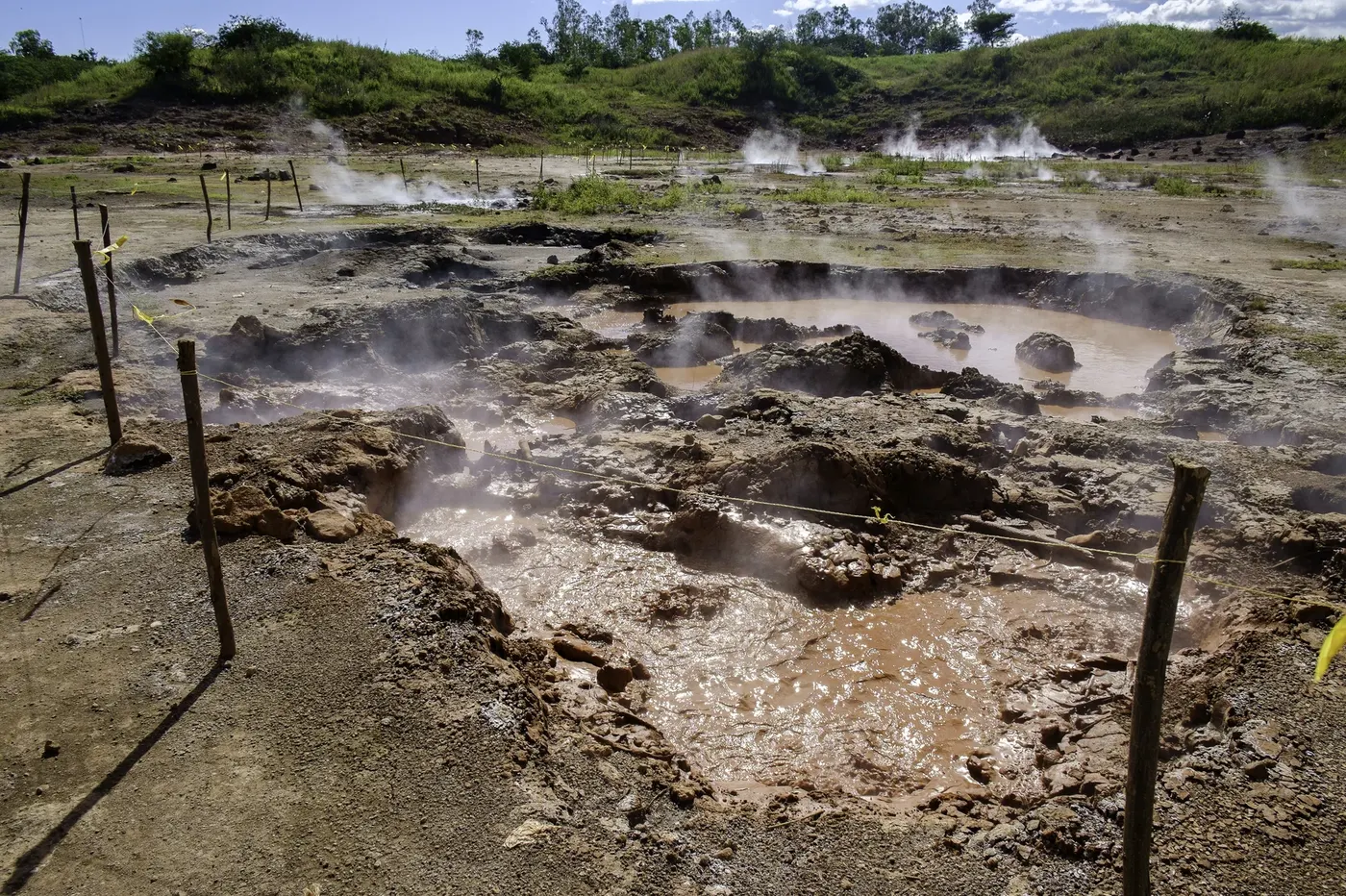
Los Hervideros de San Jacinto son un campo geotérmico a unos 30 kilómetros al norte de León, donde la actividad volcánica de la cadena del Cerro Negro se expresa en la superficie mediante piscinas de lodo hirviente, fumarolas sulfurosas y veneros de vapor activos. La temperatura del suelo en la superficie alcanza casi el punto de ebullición en algunos puntos. Un sistema de guías locales organizado por la comunidad de San Jacinto proporciona acceso al campo geotérmico. Es un ejemplo notable de ecoturismo gestionado por la comunidad.
The Hervideros de San Jacinto ('Boiling Springs of San Jacinto') are a geothermal field about 30 kilometres north of León, where volcanic activity from the Cerro Negro chain expresses itself at the surface through boiling mud pools, sulphurous fumaroles, and active steam vents. The ground temperature at the surface reaches near-boiling point in places, and the smell of hydrogen sulphide is pervasive. Visitors walk across a dry volcanic landscape of bubbling mud craters, some emitting jets of steam, others cycling through slow thick boils at their rim. A basic boardwalk and local guide system — organised by the community of San Jacinto — provides access to the geothermal field. The site is significant both geologically (it sits atop one of the most seismically active zones in Central America) and as an example of community-managed ecotourism: the families of San Jacinto have organised guide services, a small visitor centre, and artisanal souvenir sales that provide income without large-scale infrastructure.
Hervideros de San Jacintoはニカラグア・León Departmentに位置する地熱温泉。源泉温度は95℃の豊かな温泉水が湧き出る。泉水は強酸性(pH約2.5)の泉質、塩化ナトリウム泉・アルミニウムを豊富に含む、総溶解固形物2100 mg/Lが特徴だ。観察・自然教育など多様な温浴療法が行われる。施設ではガイド付き地熱ウォーク・泥沼観察などが体験できる。
Minerales
Minerals
ミネラル
| Sulphur | 28 mg/L |
| Hydrogen Sulphide | 18 mg/L |
| Sodium Chloride | 850 mg/L |
| Aluminium | 95 mg/L |
| Silica | 42 mg/L |
Tratamientos
Treatments
トリートメント
ObservationNature Education
Técnicas
Techniques
技法
Guided geothermal walkMud pool observation
Patrimonio
La cadena volcánica que recorre el noroeste de Nicaragua —que incluye el Cerro Negro (uno de los volcanes más jóvenes y activos de Centroamérica), el Momotombo y el Telica— se asienta sobre una de las zonas tectónicas sísmica y volcánicamente más activas del mundo, donde la placa de Cocos se subduce bajo la placa Caribe. Los Hervideros de San Jacinto son una expresión superficial directa de esta violencia geológica. La cercana ciudad de León fue la capital intelectual y revolucionaria de Nicaragua durante la era sandinista.
Heritage
The volcanic chain running through northwestern Nicaragua — including Cerro Negro (one of the youngest and most active volcanoes in Central America), Momotombo, and Telica — sits above one of the most seismically and volcanically active tectonic zones in the world, where the Cocos Plate subducts under the Caribbean Plate. The Hervideros of San Jacinto are a direct surface expression of this geological violence. León, the nearby city, was the intellectual and revolutionary capital of Nicaragua during the Sandinista era.
文化財
ニカラグア北西部を走る火山列——中米で最も若く活発な火山の一つであるセロ・ネグロ、モモトンボ、テリカを含む——は、ココスプレートがカリブプレートの下に沈み込む、世界でも地震・火山活動が最も活発な構造帯の一つの上に位置している。サン・ハシントの「エルビデロス」(沸騰泥地)は、この地質学的な激しさが地表に直接現れたものである。近隣の都市レオンは、サンディニスタ時代においてニカラグアの知的・革命的な中心地であった。
Cultura
El campo geotérmico de San Jacinto es gestionado como ecoturismo comunitario por familias que han convivido con la actividad volcánica durante generaciones. Los niños del pueblo actúan como guías informales, corriendo descalzos sobre el mismo terreno que quema las botas de los turistas más precavidos, una demostración del conocimiento geológico corporizado que surge de vivir en un paisaje volcánico. La cercanía entre la fuerza geológica cruda y la tranquila comunidad agrícola es algo singularmente nicaragüense: los dos lagos más grandes del país, su cadena volcánica y su historia política son todas expresiones de esa misma intensidad elemental.
Culture
San Jacinto's geothermal field is managed as community ecotourism by families who have lived alongside the volcanic activity for generations. Children from the village serve as informal guides, running barefoot across the same ground that scalds the boots of cautious tourists — a demonstration of the embodied geological knowledge that comes from living in a volcanic landscape. The proximity of raw geological force and quiet agricultural community is uniquely Nicaraguan: the country's two largest lakes, its volcanic chain, and its political history are all expressions of the same elemental intensity.
文化
サン・ハシントの地熱地帯は、何世代にもわたり火山活動とともに暮らしてきた家族たちによって、地域主体のエコツーリズムとして管理されている。村の子どもたちは非公式のガイドを務め、慎重な観光客の靴底さえ焦がすほどの地面を裸足で駆け回る——それは、火山の土地に生きることで培われた、身体に染み込んだ地質学的知識の表れである。生々しい地質の力と、静かな農業共同体との近さは、ニカラグアならではのものである。国内最大の二つの湖、火山列、そして政治的な歴史は、いずれも同じ根源的な激しさの表れなのである。
Sostenibilidad
San Jacinto es, casi por defecto, uno de los sitios de turismo geotérmico gestionados de forma más sostenible en Centroamérica: no cuenta con grandes infraestructuras, cobra tarifas de entrada modestas que van directamente a la comunidad local, y la propia actividad geotérmica no requiere gestión alguna. Nicaragua opera uno de los programas de energía geotérmica más grandes de Centroamérica, aprovechando la misma energía volcánica a escala industrial en las cercanías.
Sustainability
San Jacinto is one of the most sustainably operated geothermal tourism sites in Central America by default: it has no large infrastructure, charges modest entry fees that go directly to the local community, and the geothermal activity itself requires no management. Nicaragua operates one of Central America's largest geothermal power programmes, harnessing the same volcanic energy at industrial scale nearby.
持続可能性
サン・ハシントは、いわば自然の成り行きとして、中米で最も持続可能な形で運営されている地熱観光地の一つである。大規模なインフラを持たず、入場料も控えめで、それは直接地元コミュニティに還元される。そして地熱活動そのものには管理が不要である。ニカラグアは中米最大級の地熱発電プログラムを運営しており、近隣では同じ火山エネルギーを産業規模で活用している。