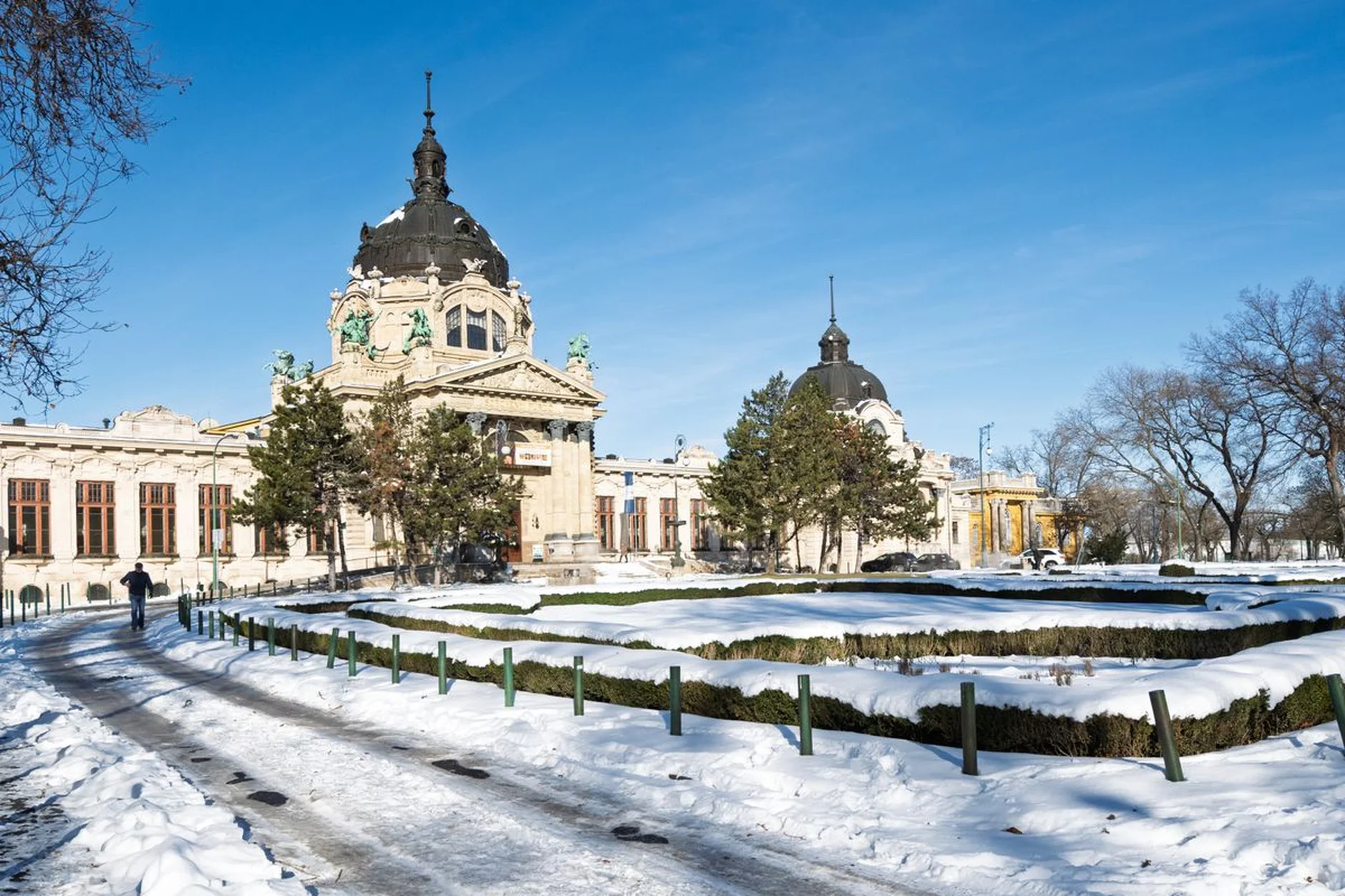
Budapest Thermal Baths

🇭🇺 Hungary · Budapest

Budapest Thermal Baths

Manantiales / Budapest Thermal BathsSprings / Budapest Thermal Baths温泉・鉱泉 / Budapest Thermal Baths

♨ Temperatura

38°C

⛰ Altitud

102 m

⚗ pH

7

💧 TDS

1900 mg/L

🌊 Caudal

76000 L/day

📅 Establecido

Ottoman period, 16th century

♨ Temperature

38°C

⛰ Altitude

102 m

⚗ pH

7

💧 TDS

1900 mg/L

🌊 Flow rate

76000 L/day

📅 Established

Ottoman period, 16th century

♨ 温度

38°C

⛰ 標高

102 m

⚗ pH

7

💧 TDS

1900 mg/L

🌊 流量

76000 L/day

📅 開設

Ottoman period, 16th century

CalciumMagnesiumSulphated

✓ Verificado el 2026-07-22

✓ Verified on 2026-07-22

✓ 確認日 2026-07-22

Budapest alberga uno de los sistemas de manantiales termales urbanos más extraordinarios del mundo: más de 120 fuentes naturales emergen bajo la ciudad, calentando el agua entre 21 y 78 °C. La tradición balnearia comenzó con los romanos (Aquincum), se elaboró bajo la ocupación otomana del siglo XVI —cuando se construyeron los hammam que subsisten hoy— y alcanzó su cenit en la Belle Époque con palacios termales como el Széchenyi (1913) y el Gellért (1918). Budapest es la única capital del mundo con una red de baños termales accesibles en su casco histórico de forma ininterrumpida desde hace 2.000 años.

Budapest is built on more than 100 thermal springs and is known as the 'City of Spas'. The Ottomans built the first bath houses in the 16th century; the Széchenyi, Gellért, Rudas, and Lukács baths remain operational today. The calcium-magnesium sulphate waters are recognised by Hungarian health authorities for rheumatological and circulatory conditions. Bathing culture in Budapest is social and architectural as much as therapeutic — the palaces of water are a UNESCO candidate.

Budapest Thermal Bathsはハンガリー・Budapestに位置するカルシウム泉・マグネシウム泉。源泉温度は38℃の豊かな温泉水が湧き出る。泉水は中性に近い(pH約7.0)の泉質、硫酸塩泉・炭酸水素塩泉を豊富に含む、総溶解固形物1900 mg/Lが特徴だ。数世紀にわたる歴史を持つ。リウマチ療法・循環器系・筋骨格系など多様な温浴療法が行われる。施設では入浴・水流マッサージジェット・スチームルームなどが体験できる。

Minerales

Minerals

ミネラル

Calcium230 mg/L
Magnesium85 mg/L
Sulphate420 mg/L
Bicarbonate380 mg/L
Fluoride2.1 mg/L

Tratamientos

Treatments

トリートメント

RheumatologyCirculatoryMusculoskeletalRelaxationDermatology

Técnicas

Techniques

技法

BathingHydrotherapy JetsSteam RoomSaunaMassage

Patrimonio

El patrimonio termal de Budapest abarca 2.000 años, desde la Aquincum romana hasta los baños otomanos construidos después de 1541. Los baños Király, Rudas y Veli Bej, todos de época otomana, son monumentos arquitectónicos en pleno funcionamiento. Budapest ha propuesto su cultura balnearia para su designación como Patrimonio Mundial de la UNESCO, con 11 establecimientos termales incluidos en la candidatura.

Heritage

Budapest's thermal spring heritage spans 2,000 years — from Roman Aquincum to the Ottoman bath houses built after 1541. The Király, Rudas, and Veli Bej baths, all dating to the Ottoman period, are functioning architectural monuments. Budapest has submitted its spa culture for UNESCO World Heritage designation, with 11 thermal establishments included in the proposed inscription.

文化財

ブダペストの温泉遺産は、ローマ時代のアクインクムから1541年以降に建てられたオスマン様式の浴場に至るまで、2,000年の歴史を誇る。オスマン時代に建てられたキラーイ浴場、ルダシュ浴場、ヴェリ・ベイ浴場は、いずれも現役で稼働する建築記念物である。ブダペストはその温泉文化をユネスコ世界遺産に登録申請しており、11の温泉施設が登録提案に含まれている。

Cultura

La cultura balnearia de Budapest es una de las más arraigadas socialmente del mundo. Los baños termales son espacios genuinamente transversales desde el punto de vista social: los frecuentan jubilados habituales, oficinistas, turistas y jugadores de ajedrez (los famosos baños de ajedrez de Széchenyi). Los baños son instituciones cívicas centrales para la identidad de Budapest como la Ciudad de los Balnearios. La tradición del baño diario como práctica social y de mantenimiento de la salud sigue muy viva.

Culture

Budapest's bath culture is one of the most socially embedded in the world. The thermal baths are genuinely cross-social spaces — visited by elderly regulars, office workers, tourists, and chess players (the famous chess baths of Széchenyi). The baths are civic institutions central to Budapest's identity as the City of Spas. The tradition of daily bathing as a social and health maintenance practice remains very much alive.

文化

ブダペストの入浴文化は、世界でも最も社会に深く根づいたものの一つである。温泉浴場は真に社会階層を超えた空間であり、常連の高齢者、会社員、観光客、そしてチェスを指す人々(セーチェーニ温泉の有名なチェス風呂)が集う。これらの浴場は、「温泉の都」としてのブダペストのアイデンティティの中心を成す市民的施設である。社会的・健康維持の営みとしての日々の入浴という伝統は、今なお色濃く息づいている。

Sostenibilidad

Los manantiales termales de Budapest son surgencias artesianas naturales que no requieren energía externa para la extracción de agua. El sistema de calefacción urbana de la ciudad se está integrando gradualmente con la energía geotérmica para reducir las emisiones de carbono. Varios edificios balnearios más antiguos están siendo objeto de renovaciones de eficiencia energética, con el fin de reducir la huella de carbono del calentamiento del agua mientras se preserva su patrimonio arquitectónico.

Sustainability

Budapest's thermal springs are natural artesian flows requiring no external energy for water extraction. The city's district heating system is gradually being integrated with geothermal energy to reduce carbon emissions. Several older bath buildings are undergoing energy-efficiency renovation to reduce the carbon footprint of water heating while preserving their architectural heritage.

持続可能性

ブダペストの温泉は自噴する被圧地下水であり、揚水に外部エネルギーを必要としない。市の地域暖房システムは、炭素排出量を削減するため地熱エネルギーとの統合が徐々に進められている。いくつかの古い浴場建築では、建築遺産を保存しながら給湯の炭素排出量を削減するため、省エネルギー改修が行われている。

Contacto

Teléfono+36 1 466 6166

Sitio webwww.gellertbath.hu

DirecciónKelenhegyi út 4, Budapest, 1118, Hungary

Contact

Phone+36 1 466 6166

Websitewww.gellertbath.hu

AddressKelenhegyi út 4, Budapest, 1118, Hungary

連絡先

電話+36 1 466 6166

ウェブサイトwww.gellertbath.hu

住所Kelenhegyi út 4, Budapest, 1118, Hungary

← Volver al directorio completo Ver en el mapa interactivo← Back to the full directory View on the interactive map← ディレクトリ全体に戻る インタラクティブマップで見る