Manantiales / Aguas Calientes Thermal SpringsSprings / Aguas Calientes Thermal Springs温泉・鉱泉 / Aguas Calientes Thermal Springs
BicarbonatedSulphurous🏛 Patrimonio de la UNESCO🏛 UNESCO World Heritage🏛 世界遺産
✓ Verificado el 2026-07-22
✓ Verified on 2026-07-22
✓ 確認日 2026-07-22
Aguas Calientes —hoy Machu Picchu Pueblo— es la aldea termal enclavada en el cañón del Urubamba, a 2.040 metros, que sirve de acceso a la ciudadela inca de Machu Picchu. Los manantiales termales bicarbonatados, a 42 °C, son usados desde tiempos preincaicos: los cronistas españoles del siglo XVI describieron a la corte del Sapa Inca bañándose en manantiales de montaña durante sus estancias en la citadela. Para la cosmovisión andina, los manantiales termales representaban la respiración de la Pachamama (Madre Tierra) y los Apus (espíritus de las montañas): bañarse en ellos era un acto de comunión espiritual con las fuerzas naturales del mundo andino. El municipio termal forma parte del Santuario Histórico de Machu Picchu, Patrimonio de la Humanidad UNESCO.
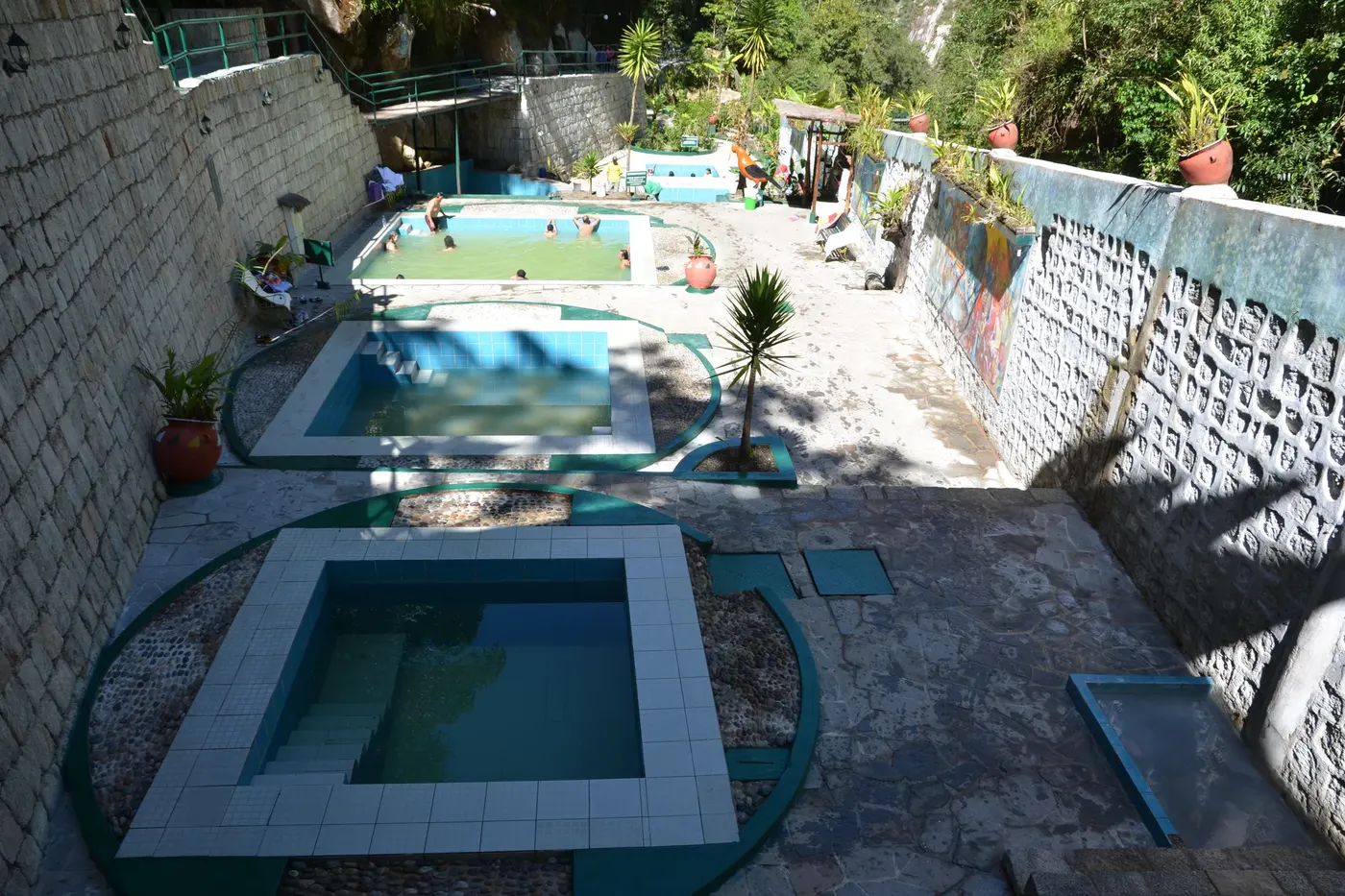
Aguas Calientes — officially Machu Picchu Pueblo — is the gateway village to Machu Picchu, site of the ancient Inca citadel and one of the world's most famous archaeological destinations. The town's thermal springs, used by Inca royalty and their retinue who occupied the mountain citadel, flow from the cloud forest flanks of the Urubamba valley at 42°C. The municipal thermal complex, built above the rushing Urubamba River in a landscape of cloud forest and dramatic Andean peaks, offers open-air pools fed by the same spring system the Inca court is believed to have used. A visit to Aguas Calientes and Machu Picchu from Lima's Callao cruise port requires a flight to Cusco and a 3.5-hour train journey — one of the world's most spectacular rail routes — making it an extraordinary multi-day excursion.
Aguas Calientes Thermal Springsはペルー・Cuscoに位置する重炭酸泉・硫黄泉。源泉温度は42℃、標高2040mの地に湧出する。泉水は中性に近い(pH約7.4)の泉質、炭酸水素塩泉・カルシウム泉を豊富に含む、総溶解固形物680 mg/Lが特徴だ。リラクゼーション・高地順応・リウマチ療法など多様な温浴療法が行われる。施設では入浴・屋外プール・全身浴などが体験できる。
Minerales
Minerals
ミネラル
| Bicarbonate | 310 mg/L |
| Calcium | 88 mg/L |
| Magnesium | 29 mg/L |
| Sulphate | 64 mg/L |
| Sodium | 42 mg/L |
Tratamientos
Treatments
トリートメント
RelaxationAltitude AcclimatisationRheumatologyMuscle Recovery
Técnicas
Techniques
技法
BathingOutdoor PoolFull-Body Immersion
Patrimonio
Los manantiales termales de Aguas Calientes están documentados en relatos coloniales españoles del siglo XVI que describen al Sapa Inca y su corte bañándose en pozas de montaña durante sus estancias en Machu Picchu. Los manantiales formaban parte del concepto inca de 'pachacuti' —la renovación del mundo mediante el contacto con las fuerzas vitales de la tierra, de las cuales las aguas termales eran una manifestación primordial. Aguas Calientes forma parte del Santuario Histórico de Machu Picchu, Patrimonio de la Humanidad de la UNESCO, una de las designaciones culturales y naturales más significativas del mundo.
Heritage
The thermal springs at Aguas Calientes are documented in 16th-century Spanish colonial accounts that describe the Sapa Inca and his court bathing in mountain pools during their sojourns at Machu Picchu. The springs were a component of the Inca concept of 'pachacuti' — the renewal of the world through contact with the earth's vital forces, of which thermal waters were a primary manifestation. Aguas Calientes is part of the Historic Sanctuary of Machu Picchu UNESCO World Heritage Site, one of the world's most significant cultural and natural designations.
文化財
アグアス・カリエンテスの温泉は16世紀のスペイン植民地時代の記録に登場し、サパ・インカとその廷臣たちがマチュピチュ滞在中に山中の温泉池で入浴していたことが描かれている。この温泉はインカの「パチャクティ(pachacuti)」という概念の一部であった。これは大地の生命力との接触を通じて世界を刷新するという思想であり、温泉水はその主要な発現とされた。アグアス・カリエンテスはユネスコ世界遺産「マチュピチュ歴史保護区」の一部であり、世界でも屈指の重要性を持つ文化・自然遺産の指定地域である。
Cultura
Para los incas, los manantiales termales eran conexiones sagradas con la Pachamama (Madre Tierra) y los Apus (espíritus de las montañas) —bañarse en ellos era un acto de comunión con las fuerzas divinas del paisaje andino. Los manantiales de Aguas Calientes siguen siendo un lugar donde las comunidades quechuahablantes contemporáneas realizan ceremonias tradicionales, manteniendo una continuidad espiritual ininterrumpida con las prácticas precolombinas. La combinación de la monumentalidad arqueológica de Machu Picchu y la calidez íntima de las pozas termales crea una experiencia de profundidad cultural única en el mundo.
Culture
For the Inca, thermal springs were sacred connections to Pachamama (Earth Mother) and Apus (mountain spirits) — bathing in them was an act of communion with the divine forces of the Andean landscape. The springs at Aguas Calientes remain a place where contemporary Quechua-speaking communities perform traditional ceremonies, maintaining an unbroken spiritual continuity with pre-Columbian practice. The combination of Machu Picchu's archaeological monumentality and the intimate warmth of the spring pools creates an experience of cultural depth unique in the world.
文化
インカの人々にとって温泉はパチャママ(大地の母)やアプ(山の精霊)との神聖なつながりであり、そこに入浴することはアンデスの風景に宿る神聖な力との交わりの行為であった。アグアス・カリエンテスの温泉は今なお、現代のケチュア語を話すコミュニティが伝統的な儀式を執り行う場であり続けており、コロンブス以前の慣習との精神的な連続性が途切れることなく保たれている。マチュピチュの考古学的な壮大さと温泉池の親密な温もりとの組み合わせは、世界でも類を見ない文化的深みのある体験を生み出している。
Sostenibilidad
Aguas Calientes opera dentro del marco de gestión del Santuario Histórico de Machu Picchu, un Patrimonio de la Humanidad de la UNESCO con estrictos protocolos de gestión de visitantes. Se aplican límites diarios de visitantes tanto para la ciudadela como para el complejo termal. Los volúmenes de extracción del agua del manantial son monitoreados por la ANA (Autoridad Nacional del Agua) de Perú. El plan maestro de 2021 del gobierno peruano para el santuario incluye medidas de conservación de los manantiales y una propuesta de teleférico alternativo para reducir el impacto en el sendero del bosque nuboso.
Sustainability
Aguas Calientes operates under the management framework of the Historic Sanctuary of Machu Picchu, a UNESCO World Heritage Site with strict visitor management protocols. Daily visitor limits to both the citadel and the spring complex are enforced. Spring water extraction volumes are monitored by Peru's ANA (National Water Authority). The Peruvian government's 2021 master plan for the sanctuary includes spring conservation measures and a proposed cable car alternative to reduce footprint on the cloud forest trail.
持続可能性
アグアス・カリエンテスは、厳格な来訪者管理プロトコルを持つユネスコ世界遺産「マチュピチュ歴史保護区」の管理枠組みのもとで運営されている。城塞と温泉施設の両方について、1日あたりの来訪者数に上限が設けられている。源泉からの取水量はペルーの国家水資源庁(ANA)によって監視されている。2021年にペルー政府が策定した保護区のマスタープランには、温泉の保全対策と、雲霧林の遊歩道への負荷を減らすためのロープウェー代替案が盛り込まれている。
Otros manantiales en Peru