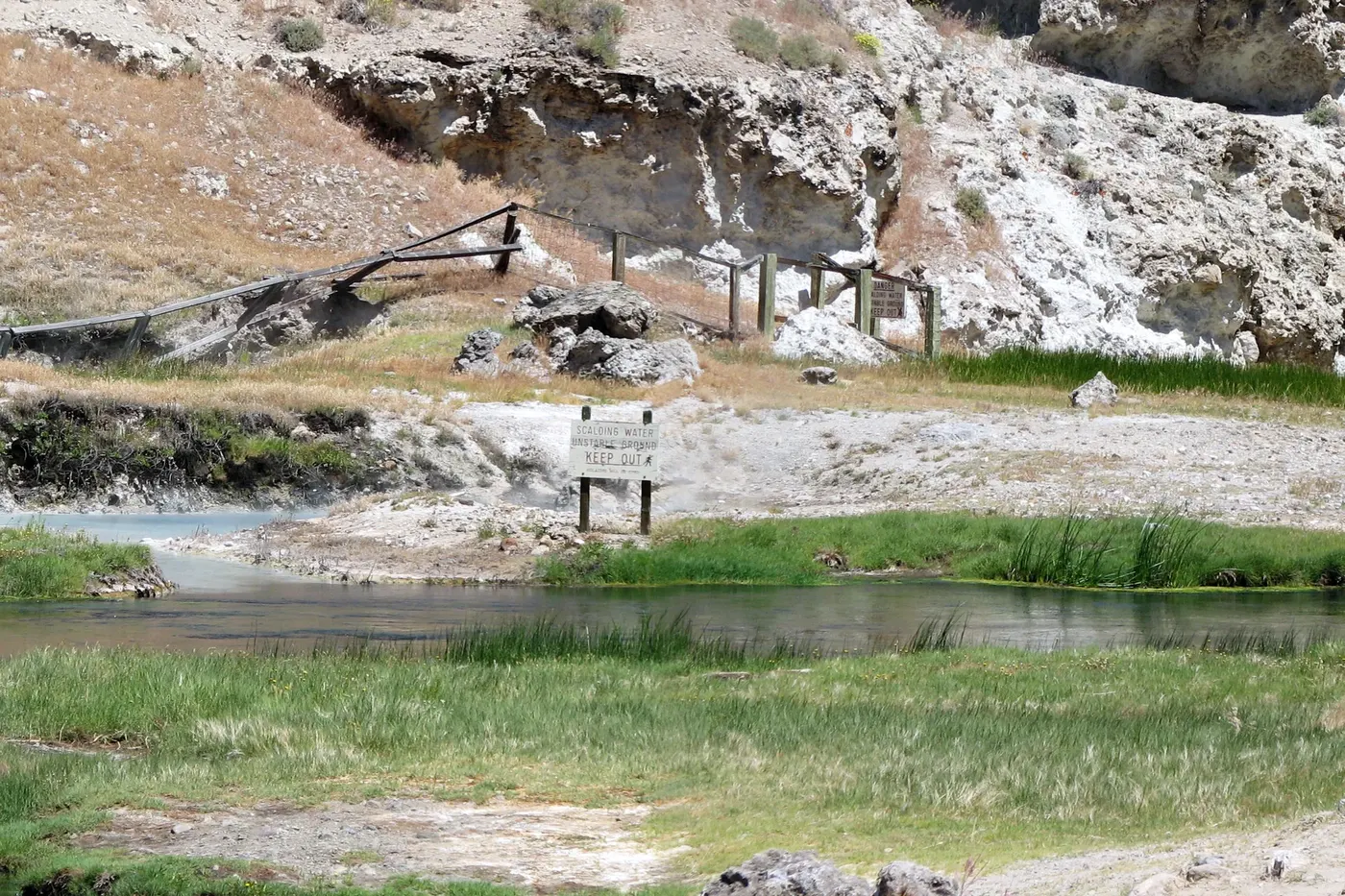
Caldera Hot Springs

🇵🇦 Panama · Chiriquí Province, Boquete

Caldera Hot Springs

Manantiales / Caldera Hot SpringsSprings / Caldera Hot Springs温泉・鉱泉 / Caldera Hot Springs

♨ Temperatura

38°C

⛰ Altitud

1070 m

⚗ pH

7.2

💧 TDS

420 mg/L

🌊 Caudal

📅 Establecido

Natural springs; known to local communities historically

♨ Temperature

38°C

⛰ Altitude

1070 m

⚗ pH

7.2

💧 TDS

420 mg/L

🌊 Flow rate

📅 Established

Natural springs; known to local communities historically

♨ 温度

38°C

⛰ 標高

1070 m

⚗ pH

7.2

💧 TDS

420 mg/L

🌊 流量

📅 開設

Natural springs; known to local communities historically

GeothermalHighlandNatural

✓ Verificado el 2026-07-22

✓ Verified on 2026-07-22

✓ 確認日 2026-07-22

Los manantiales termales de Caldera (Pozos Termales de Caldera) son manantiales geotérmicos naturales en el municipio de Caldera, provincia de Chiriquí, a unos 20 kilómetros de la famosa ciudad cafetalera de Boquete y bajo la sombra del Volcán Barú — el punto más alto de Panamá a 3.475 metros. Los manantiales emergen a unos 35–42 °C del sistema hidrotermal volcánico del Barú y fluyen hacia una serie de piscinas naturales entre el bosque de montaña. Las Tierras Altas de Chiriquí son una de las zonas más biodiversas de Centroamérica.

The Caldera Hot Springs (locally Pozos Termales de Caldera) are natural geothermal springs in the highland township of Caldera, Chiriquí Province, about 20 kilometres from the famous coffee-growing town of Boquete and in the shadow of Volcán Barú — Panama's highest point at 3,475 metres and the country's only stratovolcano. The springs emerge at approximately 35–42°C from the volcanic hydrothermal system of Barú and flow into a series of natural pools set among the highland forest. A small fee is charged at the community entrance. The surrounding Chiriquí highlands are one of the most biodiverse areas in Central America, known for bird diversity including the resplendent quetzal, cloud forest ecology, and the cultivation of highland Arabica coffee. The Caldera springs are a quieter, less-developed alternative to the boutique tourism of nearby Boquete, offering direct contact with geothermal water in a natural forest setting.

Caldera Hot Springsはパナマ・Chiriquí Province, Boqueteに位置する地熱温泉。源泉温度は38℃、標高1070mの地に湧出する。泉水は中性に近い(pH約7.2)の泉質、炭酸水素塩泉・ナトリウム泉を豊富に含む、総溶解固形物420 mg/Lが特徴だ。リラクゼーション・筋肉の回復・自然体験など多様な温浴療法が行われる。施設では天然プール入浴・森の中での浸浴などが体験できる。

Minerales

Minerals

ミネラル

Sodium58 mg/L
Bicarbonate195 mg/L
Calcium32 mg/L
Silica28 mg/L
Sulphate38 mg/L

Tratamientos

Treatments

トリートメント

RelaxationMuscle RecoveryNature Immersion

Técnicas

Techniques

技法

Natural pool bathingForest soaking

Patrimonio

Las tierras altas de Chiriquí son el territorio tradicional del pueblo indígena ngäbe-buglé, uno de los grupos indígenas más numerosos de Centroamérica, que ha cultivado y gestionado este paisaje montañoso durante más de mil años. La geología volcánica de la región —moldeada por la subducción de la placa de Cocos bajo la placa Caribe— ha dado origen a los suelos fértiles y a la actividad termal de la que se han beneficiado tanto las comunidades indígenas como los colonos posteriores. El volcán Barú es el único desde el cual se pueden ver simultáneamente las costas del Pacífico y del Atlántico.

Heritage

The Chiriquí highlands are the traditional territory of the Ngäbe-Buglé indigenous people, one of the largest indigenous groups in Central America, who have farmed and managed this highland landscape for over a millennium. The volcanic geology of the region — shaped by the subduction of the Cocos Plate beneath the Caribbean — has created the fertile soils and the thermal activity that both indigenous and later settler communities have drawn upon. Volcán Barú is the only volcano from which both the Pacific and Atlantic coasts can be seen simultaneously.

文化財

チリキ高地は、中米最大級の先住民族の一つであるンゴベ・ブグレ族の伝統的な領域であり、彼らは千年以上にわたりこの高地の土地を耕作し、管理してきた。ココスプレートがカリブプレートの下に沈み込むことで形成されたこの地域の火山地質は、先住民とその後の入植者の双方が利用してきた肥沃な土壌と地熱活動を生み出した。バルー火山は、太平洋と大西洋の両方の海岸を同時に見渡すことができる唯一の火山である。

Cultura

Los manantiales de Caldera están entretejidos en la vida cotidiana de la comunidad local, más que empaquetados como una experiencia premium. Las familias de Caldera y de las comunidades vecinas los utilizan para el baño de fin de semana; los turistas internacionales llegan desde Boquete buscando algo menos artificioso. Los manantiales se encuentran en la intersección entre la cultura cafetalera de las tierras altas de Boquete —una de las mejores regiones productoras de café arábica del mundo— y la energía geológica elemental del volcán Barú, el punto más alto de Panamá.

Culture

The Caldera springs are woven into the everyday life of the local community rather than packaged as a premium experience. Families from Caldera and surrounding communities use the springs for weekend bathing; international tourists arrive from Boquete seeking something less curated. The springs sit at the intersection of the coffee culture of the Boquete highlands — one of the best Arabica-producing regions in the world — and the elemental geological energy of Volcán Barú, Panama's highest point.

文化

カルデラの温泉は、上質な体験としてパッケージ化されたものではなく、地元コミュニティの日常生活に織り込まれている。カルデラおよび周辺コミュニティの家族連れは週末の入浴のためにこの温泉を利用し、海外からの旅行者はより演出されていない体験を求めてボケテから訪れる。この温泉は、世界屈指のアラビカ種コーヒー産地であるボケテ高地のコーヒー文化と、パナマの最高地点であるバルー火山の根源的な地質エネルギーとが交わる場所に位置している。

Sostenibilidad

Los manantiales de Caldera fluyen de forma natural desde un acuífero volcánico, sin bombeo. La comunidad local gestiona el acceso y el mantenimiento de manera autoorganizada, y las tarifas de entrada cubren el mantenimiento básico. El bosque circundante ofrece una barrera natural que protege la fuente del manantial frente a la erosión. Las tierras altas de Chiriquí están sometidas a una presión creciente por la expansión agrícola y el desarrollo turístico, lo que hace especialmente importante el control comunitario de los sitios termales.

Sustainability

The springs at Caldera flow naturally from a volcanic aquifer without pumping. The local community manages access and maintenance on a self-organised basis, with entry fees covering basic upkeep. The surrounding forest provides a natural buffer protecting the spring source from erosion. The Chiriquí highlands are under increasing pressure from agricultural expansion and tourism development, making community control of the thermal sites especially important.

持続可能性

カルデラの温泉は、ポンプを使わず火山性帯水層から自然に湧出している。地元コミュニティはアクセスと維持管理を自主的に運営しており、入場料が基本的な維持費用を賄っている。周辺の森林は、泉源を浸食から守る自然の緩衝帯としての役割を果たしている。チリキ高地は農地拡大と観光開発による圧力が増しており、そのためこれらの温泉地に対する地域コミュニティによる管理がとりわけ重要となっている。

Contacto

Sitio webwww.visitpanama.com

DirecciónCaldera, Chiriquí Province, Panama

Contact

Websitewww.visitpanama.com

AddressCaldera, Chiriquí Province, Panama

連絡先

ウェブサイトwww.visitpanama.com

住所Caldera, Chiriquí Province, Panama

← Volver al directorio completo Ver en el mapa interactivo← Back to the full directory View on the interactive map← ディレクトリ全体に戻る インタラクティブマップで見る