Manantiales / Hierapolis Ancient Thermal CitySprings / Hierapolis Ancient Thermal City温泉・鉱泉 / Hierapolis Ancient Thermal City
BicarbonatedCarbogaseous🏛 Patrimonio de la UNESCO🏛 UNESCO World Heritage🏛 世界遺産
✓ Verificado el 2026-07-22
✓ Verified on 2026-07-22
✓ 確認日 2026-07-22
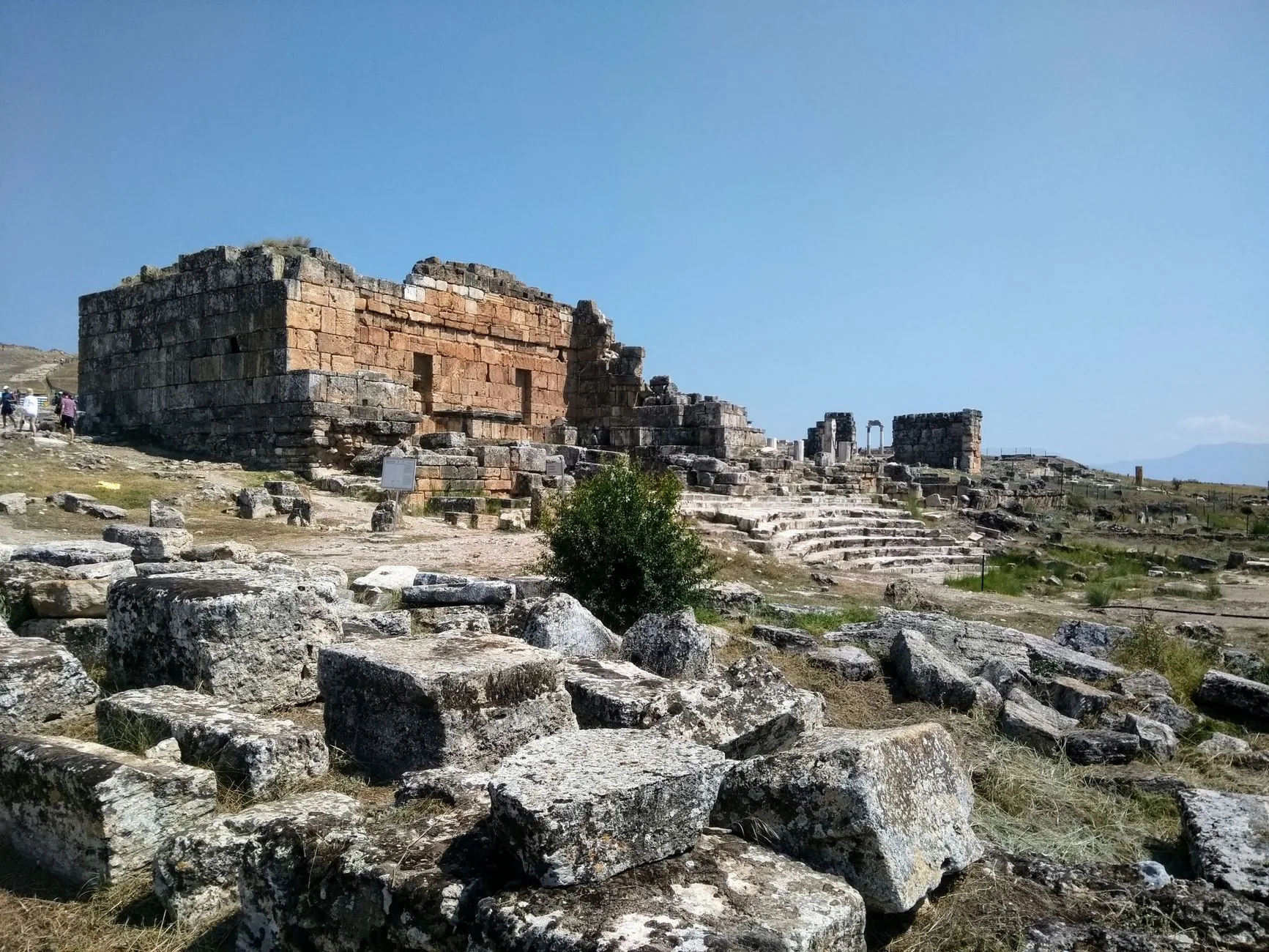
Hierápolis fue fundada alrededor del 190 a.C. por los reyes Atálidas de Pérgamo como una ciudad sagrada centrada en sus manantiales termales. La ciudad creció hasta convertirse en una de las más prósperas de Anatolia, atrayendo a peregrinos, atletas y ricos de todo el mundo helenístico y romano posterior. El conjunto incluye una vasta necrópolis, una calle columnada, un teatro para 12.000 espectadores y el Plutonium, el famoso vent de gas que intrigó a los visitantes durante siglos.
Hierapolis was founded around 190 BC by the Attalid kings of Pergamon as a sacred city centred on its thermal springs. The city grew into one of the most prosperous of Anatolia, its hot springs drawing pilgrims, athletes, and the wealthy from across the Hellenistic and later Roman world. The remains include a vast necropolis, a colonnaded street, a theatre for 12,000 spectators, a large Roman bath complex, and the Temple of Apollo positioned over a geological vent from which carbon dioxide emerged. The thermal pool within the ruins — the Cleopatra Pool — is now open to swimmers who bathe among fallen marble columns in the warm mineralised water. Together with Pamukkale, Hierapolis was inscribed as a UNESCO World Heritage Site in 1988.
Hierapolis Ancient Thermal Cityはトルコ・Denizliに位置する重炭酸泉・炭酸泉。源泉温度は35℃、標高350mの地に湧出する。泉水は中性に近い(pH約6.0)の泉質、炭酸水素塩泉・二酸化炭素を豊富に含む、総溶解固形物2400 mg/Lが特徴だ。古代より知られる。温浴療法・歴史的巡礼など多様な温浴療法が行われる。施設では遺跡の中での遊泳・温泉入浴などが体験できる。
Minerales
Minerals
ミネラル
| Calcium | 480 mg/L |
| Bicarbonate | 1150 mg/L |
| Magnesium | 65 mg/L |
| Carbon Dioxide | 900 mg/L |
Tratamientos
Treatments
トリートメント
BalneotherapyHistorical Pilgrimage
Técnicas
Techniques
技法
Swimming among ruinsThermal Bathing
Patrimonio
Hierápolis se encuentra entre los sitios de patrimonio termal más importantes del mundo: una ciudad entera cuya razón de ser era el manantial termal. Las ruinas abarcan los periodos helenístico, romano y bizantino, preservando 2000 años de cultura ininterrumpida de baño termal. La Piscina de Cleopatra, donde columnas de mármol de un terremoto del siglo VII descansan hoy en el fondo del manantial, es una experiencia que no se encuentra en ningún otro lugar del mundo.
Heritage
Hierapolis is among the most significant thermal heritage sites in the world — an entire ancient city whose raison d'être was the thermal spring. The ruins span Hellenistic, Roman, and Byzantine periods, preserving 2,000 years of continuous thermal bathing culture. The Cleopatra Pool, where marble columns from a 7th-century earthquake now rest on the spring floor, is an experience found nowhere else on Earth.
文化財
ヒエラポリスは世界でも最も重要な温泉遺産のひとつであり、都市そのものの存在理由が温泉であったという類例のない古代都市である。その遺跡はヘレニズム、ローマ、ビザンツの各時代にまたがり、2000年にわたる連続した温泉入浴文化を今に伝えている。7世紀の地震で崩れた大理石の柱が源泉の底に今も横たわる「クレオパトラの プール」は、世界の他のどこにもない体験である。
Cultura
Hierápolis añade una dimensión arqueológica a la experiencia termal de Pamukkale que es única en el turismo de bienestar mundial: los visitantes pueden nadar en las cálidas y mineralizadas aguas romanas rodeados de ruinas de 2200 años de antigüedad bajo un cielo de Anatolia. La necrópolis por sí sola, con más de 1200 monumentos funerarios, es una de las mejor conservadas del Mediterráneo antiguo.
Culture
Hierapolis adds an archaeological dimension to the Pamukkale thermal experience unique in world wellness tourism — visitors can swim in warm, mineral-rich Roman spring water surrounded by 2,200-year-old ruins under an Anatolian sky. The necropolis alone, with over 1,200 tomb monuments, is one of the best-preserved in the ancient Mediterranean world.
文化
ヒエラポリスは、世界のウェルネス観光の中でも他に類を見ない考古学的な深みをパムッカレの温泉体験に加えている。訪問者はアナトリアの空の下、2200年前の遺跡に囲まれながら、温かくミネラル豊富なローマ時代の源泉に浸ることができる。1200基を超える墓碑が並ぶ墓地遺跡だけでも、古代地中海世界で最も保存状態の良いもののひとつである。
Sostenibilidad
La gestión de la UNESCO en el sitio desde 1988 ha establecido cupos de visitantes, restringido el acceso a las zonas más frágiles y desarrollado protocolos de conservación tanto para los restos arqueológicos como para la formación de travertino que hace único al lugar.
Sustainability
UNESCO management of the site since 1988 has established visitor quotas, restricted access to the most fragile areas, and developed conservation protocols for both the archaeological remains and the travertine formation that makes the site unique.
持続可能性
1988年以降のユネスコによるこの遺跡の管理により、来訪者数の割当が設定され、最も脆弱な区域へのアクセスが制限され、考古遺跡とこの場所を唯一無二のものにしている石灰華(トラバーチン)地形の両方を対象とした保全プロトコルが策定された。
Otros manantiales en Turkey