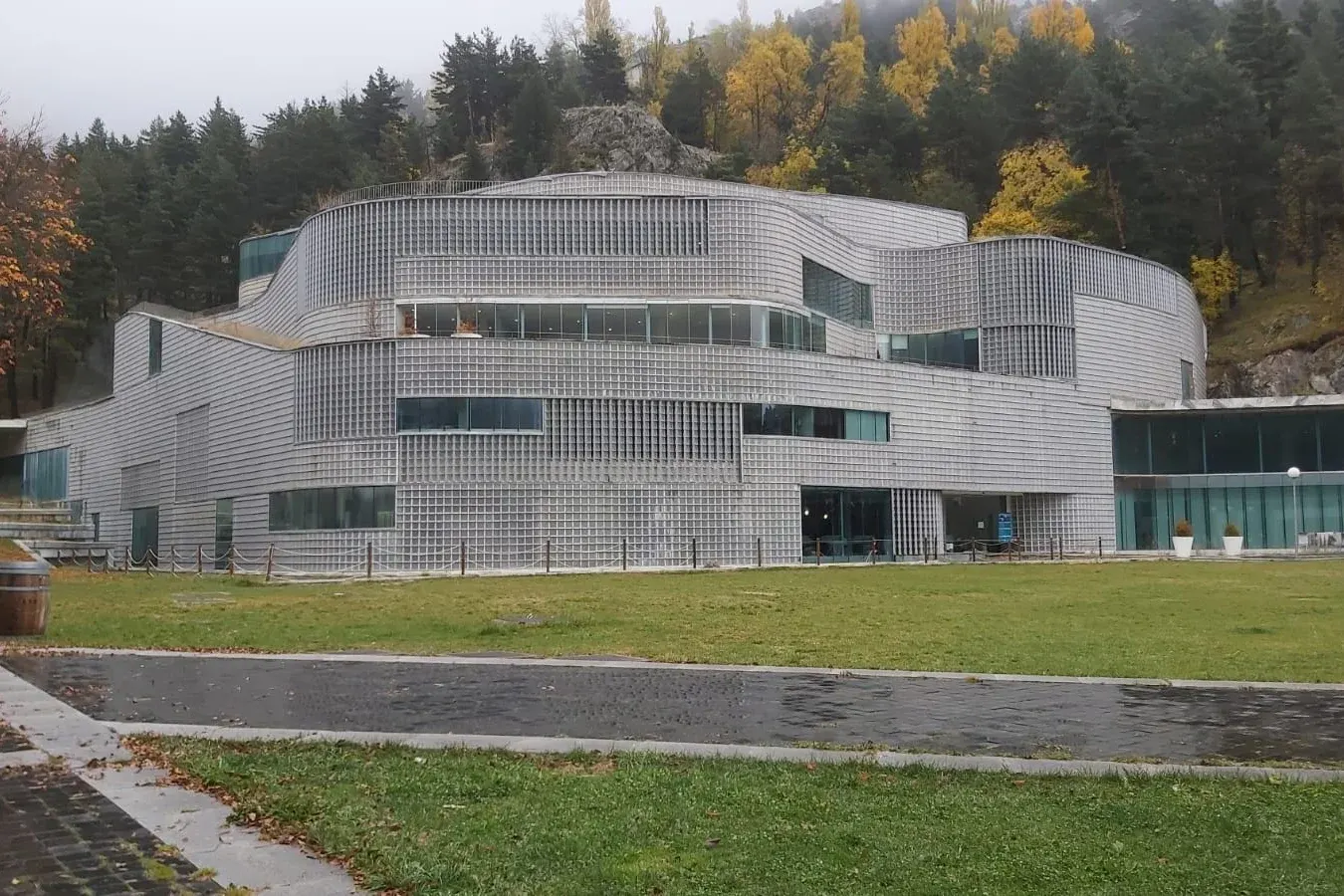
Manantiales / Balneario de Panticosa (Termas de Tiberio)Springs / Balneario de Panticosa (Termas de Tiberio)温泉・鉱泉 / Balneario de Panticosa (Termas de Tiberio)
📅 Establecido
First bathhouse built 1694; expropriated by the Crown and developed as a resort from 1826; declared a National Tourism Site of Interest in 1966
📅 Established
First bathhouse built 1694; expropriated by the Crown and developed as a resort from 1826; declared a National Tourism Site of Interest in 1966
📅 開設
First bathhouse built 1694; expropriated by the Crown and developed as a resort from 1826; declared a National Tourism Site of Interest in 1966
SulphurousBicarbonatedFluoridatedSodic
✓ Verificado el 2026-08-02
✓ Verified on 2026-08-02
✓ 確認日 2026-08-02
El Balneario de Panticosa es un establecimiento termal decimonónico situado en un valle glaciar del Pirineo oscense, en Aragón. Documentado por primera vez en 1286 y desarrollado como balneario desde 1694, vivió su apogeo en el siglo XIX como uno de los destinos termales más elegantes de España, frecuentado por personajes como el rey Alfonso XIII. Seis manantiales minero-medicinales alimentan el complejo —San Agustín, La Laguna, Fuente de la Belleza, Fuente del Carmen, Azoada y la célebre fuente Tiberio—, cuyas aguas sulfuradas, bicarbonatadas sódicas brotan a unos 53°C, entre las más calientes de Europa. Tradicionalmente se emplean para tratar afecciones renales, digestivas, respiratorias, reumáticas y de la piel. Hoy el balneario combina su histórico circuito termal Termas de Tiberio con hoteles modernos dentro del Parque Natural de los Valles Occidentales.
Balneario de Panticosa is a 19th-century thermal resort set in a glacial valley of the Pyrenees in Huesca province, Aragón. First documented in 1286 and developed as a bathing establishment from 1694, it flourished during the 1800s as one of Spain's most fashionable spa towns, hosting figures such as King Alfonso XIII. Six named mineral springs feed the complex — including San Agustín, La Laguna, Fuente de la Belleza, Fuente del Carmen, Azoada and the renowned Tiberio spring, whose sulphurous, bicarbonated sodium waters emerge at around 53°C, among the hottest in Europe. The waters are traditionally used to treat kidney, digestive, respiratory, rheumatic and skin conditions. Today the resort combines its historic Termas de Tiberio spa circuit with modern hotels within Los Valles Natural Park.
バルネアリオ・デ・パンティコサは、アラゴン州ウエスカ県のピレネー山脈氷河谷にある19世紀の温泉リゾートです。1286年に初めて文献に記録され、1694年から浴場として整備され、19世紀にはアルフォンソ13世のような著名人も訪れるスペイン屈指の高級温泉地として繁栄しました。サン・アグスティン、ラ・ラグナ、フエンテ・デ・ラ・ベジェサ、フエンテ・デル・カルメン、アソアダ、そして有名なティベリオ源泉など6つの鉱泉が施設に水を供給しており、硫黄泉・重炭酸ナトリウム泉であるティベリオの湯は約53°Cで湧出し、ヨーロッパ最高温の温泉の一つです。伝統的に腎臓、消化器、呼吸器、リウマチ、皮膚の疾患の治療に用いられてきました。現在は歴史あるテルマス・デ・ティベリオの温泉施設と近代的なホテルが、ロス・バジェス自然公園内で共存しています。
Técnicas
Techniques
技法
Bathing
Patrimonio
Conocido desde la Edad Media y desarrollado como balneario desde 1694, fue expropiado por Fernando VII en 1826 y se convirtió en un retiro predilecto de la realeza e intelectuales españoles del siglo XIX como Ortega y Gasset; fue declarado Conjunto Histórico-Artístico de Interés Turístico Nacional en 1966.
Heritage
Known since the medieval era and developed as a resort from 1694, the spa was expropriated by King Ferdinand VII in 1826 and became a favored 19th-century retreat of Spanish royalty and intellectuals such as Ortega y Gasset; it was declared a National Tourism Site of Interest in 1966.
文化財
中世から知られ、1694年から温泉地として整備されたこの施設は、1826年にフェルナンド7世によって収用され、19世紀にはオルテガ・イ・ガセットなどスペインの王族や知識人に愛される保養地となり、1966年に国家観光利益地に指定された。
Otros manantiales en Spain