Manantiales / Baños Termales de ChacapiSprings / Baños Termales de Chacapi温泉・鉱泉 / Baños Termales de Chacapi
📅 Establecido
Pre-Inca era
📅 Established
Pre-Inca era
Hot SpringSulphurousHigh-Altitude
✓ Verificado el 2026-07-22
✓ Verified on 2026-07-22
✓ 確認日 2026-07-22
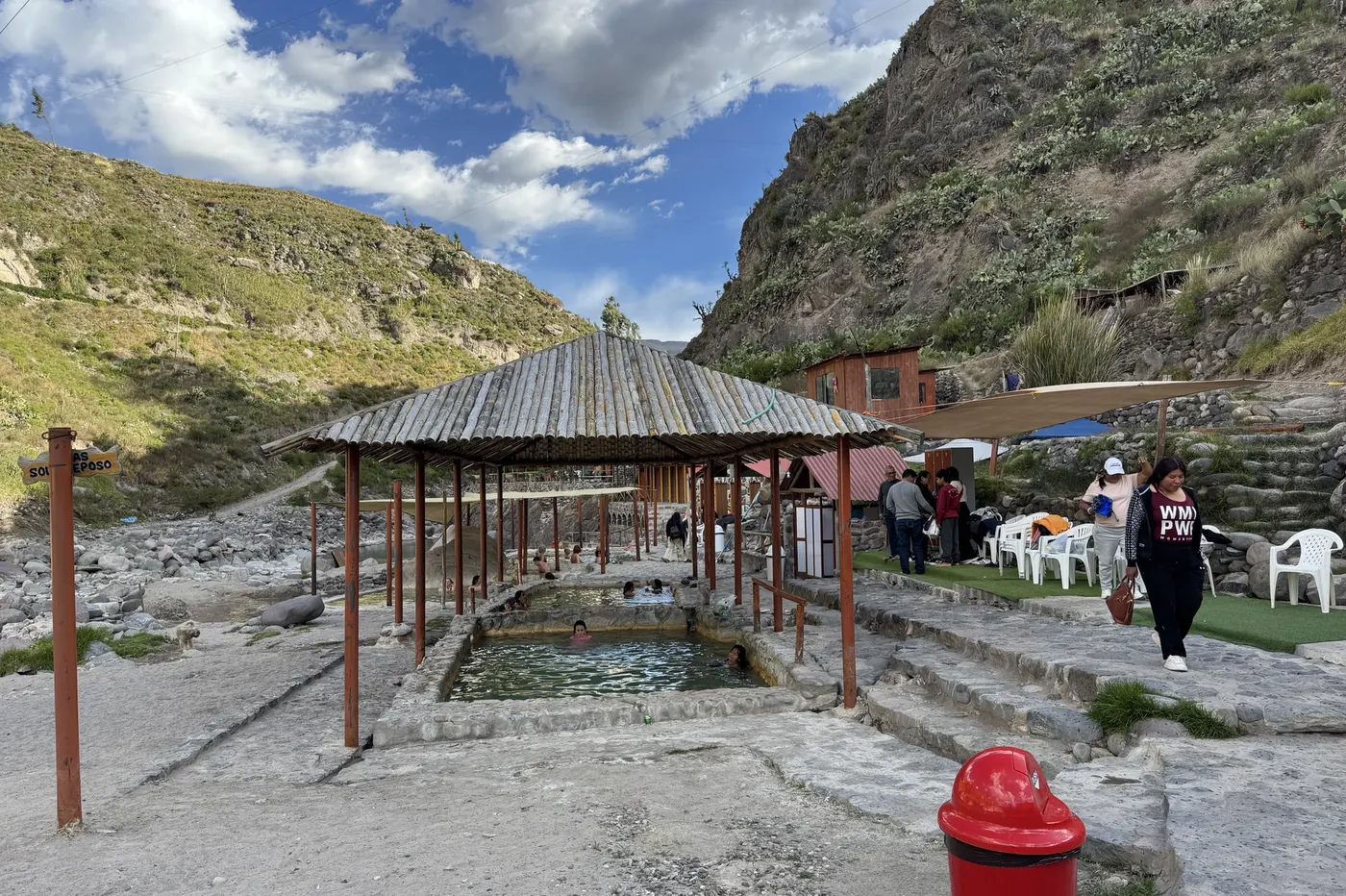
Las aguas termales de Chacapi se encuentran en los Andes a casi 4.000 metros de altitud, al noroeste de Cusco, rodeadas de nevados y valles glaciares. Brotan a unos 45°C y se acumulan en piscinas naturales de piedra. El Valle de Lares es uno de los mejores ejemplos de cultura quechua viva: idioma, textiles, agricultura de terrazas. Las familias locales utilizan las aguas en sus sistemas médicos tradicionales para tratar afecciones articulares y musculares atribuidas al trabajo en altura.
The hot springs at Chacapi sit at an elevation of nearly 4,000 metres in the Andean highlands northwest of Cusco, surrounded by snow-capped peaks and deep glacial valleys. Water emerges from the earth at around 45°C and collects in a series of natural and community-built stone pools. The Lares Valley trek has long been considered an alternative to the Inca Trail, passing through villages where Quechua is still the primary language and traditional textile and agricultural practices continue largely unchanged. The springs are used by local Quechua families for bathing and, within traditional knowledge systems, for the treatment of joint and muscular conditions attributed to high-altitude labour. Trekkers pass through on multi-day routes between Lares and the Sacred Valley.
Baños Termales de Chacapiはペルー・Lares district, Cusco Regionに位置する硫黄泉。源泉温度は45℃、標高3850mの地に湧出する。泉水は中性に近い(pH約7.1)の泉質、炭酸水素塩泉・カルシウム泉を豊富に含む、総溶解固形物520 mg/Lが特徴だ。リウマチ療法・筋肉回復・高地順応など多様な温浴療法が行われる。施設では開放的な浸浴・地域プールなどが体験できる。
Minerales
Minerals
ミネラル
| Sulphur (H₂S) | 1.2 mg/L |
| Bicarbonate | 384 mg/L |
| Calcium | 89 mg/L |
| Sodium | 42 mg/L |
| Magnesium | 18 mg/L |
| Iron | 0.8 mg/L |
Tratamientos
Treatments
トリートメント
RheumatologyMuscular RecoveryAltitude AcclimatizationRelaxation
Técnicas
Techniques
技法
Open soakingCommunity pools
Patrimonio
El valle de Lares se encuentra dentro del corazón imperial inca más amplio de la región del Cusco. La evidencia arqueológica muestra una habitación quechua continua en este valle durante más de 2000 años. Es casi seguro que las fuentes termales de Chacapi eran conocidas por el Estado inca, que catalogó y utilizó sistemáticamente las aguas termales en todo el imperio. Hoy en día, las comunidades circundantes se encuentran entre los ejemplos mejor conservados de tejido quechua tradicional, teñido textil y agricultura de altura que perduran en las Américas.
Heritage
The Lares Valley lies within the broader Inca imperial heartland of the Cusco region. Archaeological evidence shows continuous Quechua habitation in this valley for over 2,000 years. The hot springs at Chacapi were almost certainly known to the Inca state, which systematically catalogued and used thermal springs across the empire. Today the surrounding communities are among the best-preserved examples of traditional Quechua weaving, textile dyeing, and highland agriculture remaining in the Americas.
文化財
ラーレス渓谷は、クスコ地方に広がるインカ帝国の中心地域に位置している。考古学的証拠によれば、この渓谷には2000年以上にわたって継続的にケチュア族が居住してきた。チャカピの温泉は、帝国全土の温泉を体系的に記録し利用していたインカ国家にほぼ確実に知られていたと考えられる。今日、周辺のコミュニティはアメリカ大陸に残る伝統的なケチュアの機織り、染色、そして高地農業の最も良く保存された事例の一つとなっている。
Cultura
Bañarse en aguas termales tiene un profundo significado en la cosmovisión andina, asociado con el concepto de 'kawsay', la energía vital o fuerza de vida que fluye a través de la tierra. Las aguas termales se entienden como regalos de la Pachamama (Madre Tierra) que concentran energía mineral sanadora desde las profundidades de las montañas. Las fuentes de Lares son un recurso comunitario integrado en la vida social local, no un producto de spa comercial.
Culture
Bathing in hot springs carries deep significance in Andean cosmology, associated with the concept of 'kawsay' — the vital energy or life force that flows through the earth. Thermal waters are understood as gifts from Pachamama (Earth Mother) that concentrate healing mineral energy from deep within the mountains. The Lares springs are a community resource embedded in local social life, not a commercial spa product.
文化
温泉に浸かることは、アンデスの宇宙観において深い意味を持ち、大地を流れる生命エネルギーである「カウサイ」の概念と結びついている。温泉水は、山々の奥深くから癒しの鉱物エネルギーを凝縮したパチャママ(大地の母)からの贈り物として理解されている。ラーレスの温泉は、商業的なスパ製品ではなく、地域の社会生活に根ざした共同体の資源である。
Sostenibilidad
A 3850 metros de altitud, la fuente no requiere infraestructura artificial ni energía para funcionar. La gestión comunitaria ha mantenido estas piscinas durante siglos. El valle de Lares en su conjunto sigue siendo uno de los paisajes agrícolas tradicionales mejor conservados de los Andes, con terrazas de cultivo de papa y sistemas de canales de origen inca que aún están en uso.
Sustainability
At 3,850 metres, the spring sustains no artificial infrastructure and requires no energy to operate. Community management has historically maintained these pools for centuries. The broader Lares Valley remains one of the most intact traditional agricultural landscapes in the Andes, with potato farming terraces and canal systems of Inca origin still in use.
持続可能性
標高3850メートルに位置するこの温泉は、人工的なインフラを必要とせず、稼働にエネルギーを要しない。数世紀にわたり、地域コミュニティによる管理でこれらの浴槽が維持されてきた。ラーレス渓谷一帯は、アンデスで最も損なわれずに残る伝統的農業景観の一つであり、インカ起源のジャガイモ栽培用段々畑や水路システムが今も使われている。
Otros manantiales en Peru