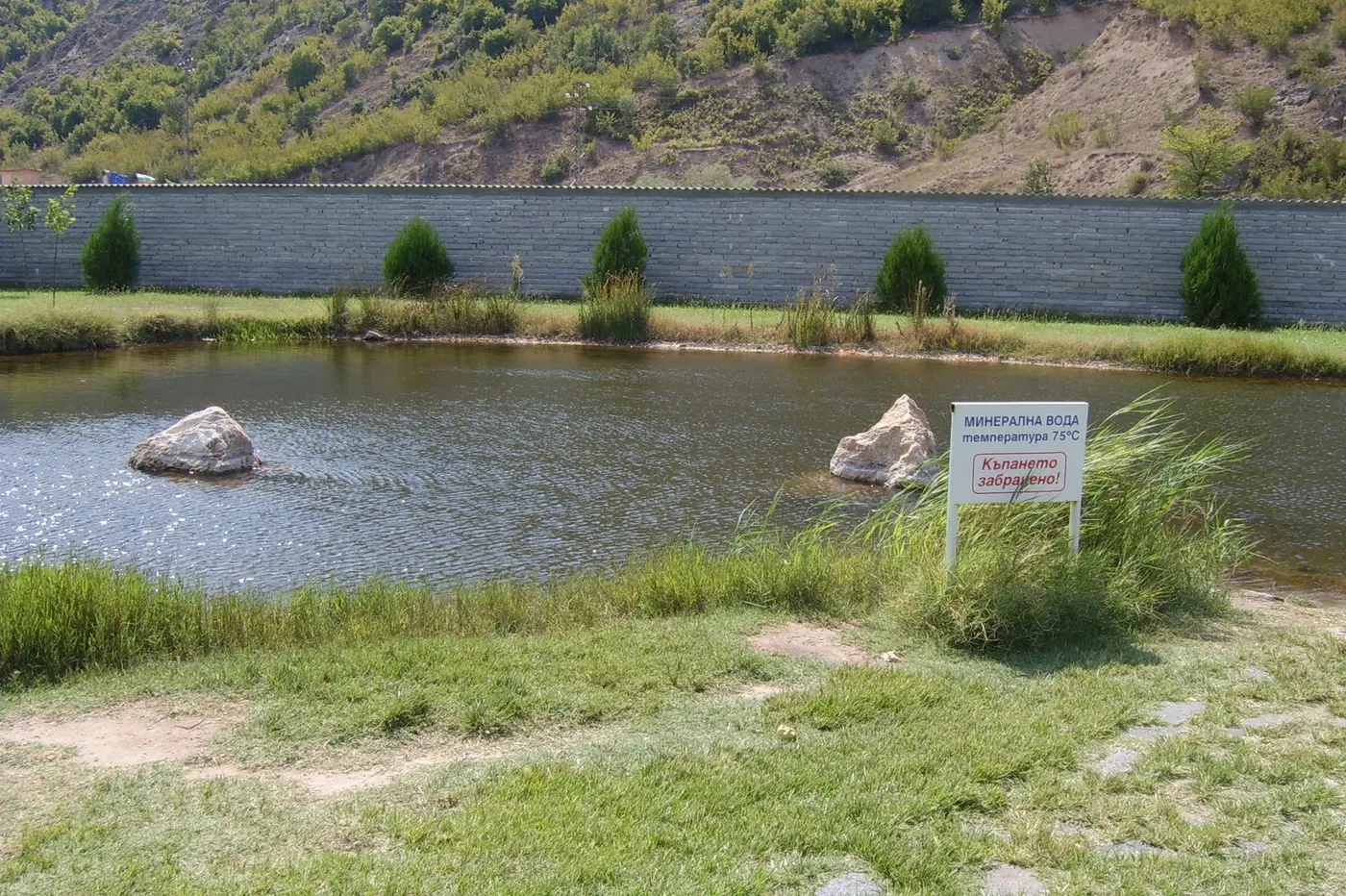
Rupite Thermal Springs

🇧🇬 Bulgaria · Blagoevgrad Province

Rupite Thermal Springs

Manantiales / Rupite Thermal SpringsSprings / Rupite Thermal Springs温泉・鉱泉 / Rupite Thermal Springs

♨ Temperatura

75°C

⛰ Altitud

⚗ pH

💧 TDS

🌊 Caudal

📅 Establecido

Kozhuh volcanic outcrop protected as a natural landmark since 1962; St. Petka of Bulgaria memorial temple built 1994

♨ Temperature

75°C

⛰ Altitude

⚗ pH

💧 TDS

🌊 Flow rate

📅 Established

Kozhuh volcanic outcrop protected as a natural landmark since 1962; St. Petka of Bulgaria memorial temple built 1994

♨ 温度

75°C

⛰ 標高

⚗ pH

💧 TDS

🌊 流量

📅 開設

Kozhuh volcanic outcrop protected as a natural landmark since 1962; St. Petka of Bulgaria memorial temple built 1994

Hot SpringVolcanicGeothermal

✓ Verificado el 2026-07-31

✓ Verified on 2026-07-31

✓ 確認日 2026-07-31

Los manantiales calientes de Rupite —con temperaturas de entre 71°C y 78°C y un caudal combinado de unos 35 litros por segundo— afloran al pie de Kozhuh, un afloramiento volcánico de 281 metros que representa el borde erosionado de un volcán extinto y que es monumento natural protegido desde 1962. Los restos arqueológicos en la base suroeste de Kozhuh corresponden a la antigua ciudad de Heraclea Sintica, ocupada desde el siglo IV a.C. hasta el siglo VI d.C. Rupite se hizo conocido internacionalmente gracias a Baba Vanga (1911-1996), la vidente más famosa de Bulgaria, quien vivió aquí y consideraba el terreno volcánico como el origen de los poderes que se le atribuían; el templo conmemorativo de Santa Petka de Bulgaria, construido a petición suya en 1994, atrae hoy tanto a peregrinos como a turistas interesados en las propias aguas geotérmicas.

Rupite's hot springs — measured between 71°C and 78°C with a combined discharge of about 35 litres per second — surface at the foot of Kozhuh, a 281-metre volcanic outcrop that represents the eroded edge of an extinct volcano and has been a protected natural landmark since 1962. Archaeological remains at Kozhuh's southwestern base point to the ancient city of Heraclea Sintica, occupied from the 4th century BC to the 6th century AD. Rupite became internationally known through Baba Vanga (1911–1996), Bulgaria's most famous clairvoyant, who lived here and considered the volcanic terrain a wellspring of the powers attributed to her; the memorial church of St. Petka of Bulgaria, built at her request in 1994, now draws pilgrims and tourists alongside those visiting for the geothermal water itself.

ルピテの温泉は71℃から78℃の間で測定され、合計毎秒約35リットルの湧出量を持つ。この温泉は標高281メートルの火山性丘陵コジュフの麓に湧き出しており、コジュフは絶滅火山の侵食された縁にあたる地形で、1962年から自然記念物として保護されている。コジュフ南西麓の考古学的遺構は、紀元前4世紀から紀元後6世紀まで存在した古代都市ヘラクレア・シンティカの跡である。ルピテはブルガリア最も有名な予言者バーバ・ヴァンガ(1911〜1996年)が暮らした地として国際的に知られるようになった。彼女はこの火山性の土地を自らの力の源と考えており、1994年に彼女の意向で建立された聖ペトカ記念聖堂は、地熱水そのものを訪れる人々と並んで巡礼者や観光客を集めている。

Técnicas

Techniques

技法

Bathing

Contacto

DirecciónRupite village, on the Struma River near Petrich, Blagoevgrad Province, Bulgaria

Contact

AddressRupite village, on the Struma River near Petrich, Blagoevgrad Province, Bulgaria

連絡先

住所Rupite village, on the Struma River near Petrich, Blagoevgrad Province, Bulgaria

← Volver al directorio completo Ver en el mapa interactivo← Back to the full directory View on the interactive map← ディレクトリ全体に戻る インタラクティブマップで見る