Manantiales / Sembawang Hot Spring ParkSprings / Sembawang Hot Spring Park温泉・鉱泉 / Sembawang Hot Spring Park
📅 Establecido
Discovered 1909 during British colonial rubber plantation clearing; public park reopened 2020
📅 Established
Discovered 1909 during British colonial rubber plantation clearing; public park reopened 2020
📅 開設
Discovered 1909 during British colonial rubber plantation clearing; public park reopened 2020
GeothermalNaturalUrban Heritage
✓ Verificado el 2026-07-22
✓ Verified on 2026-07-22
✓ 確認日 2026-07-22
El Parque de Manantiales Termales de Sembawang es uno de los destinos de naturaleza urbana más inusuales del sudeste asiático: una instalación pública de aguas termales gratuita en el distrito residencial norte de Sembawang, en un Estado-isla que no tiene actividad volcánica ni ninguna razón geológica obvia para producir aguas termales. Los manantiales emergen a aproximadamente 70 °C desde un acuífero de granito basamental, luego enfriados a unos 42 °C en cuencas de baño de pies. Los manantiales fueron descubiertos en 1909 cuando ingenieros coloniales británicos que desmontaban tierra para una plantación de caucho encontraron el agua cálida anómala. La Junta de Parques Nacionales de Singapur (NParks) lo reabrió como Parque de Manantiales Termales de Sembawang en diciembre de 2020 tras una extensa restauración paisajística.
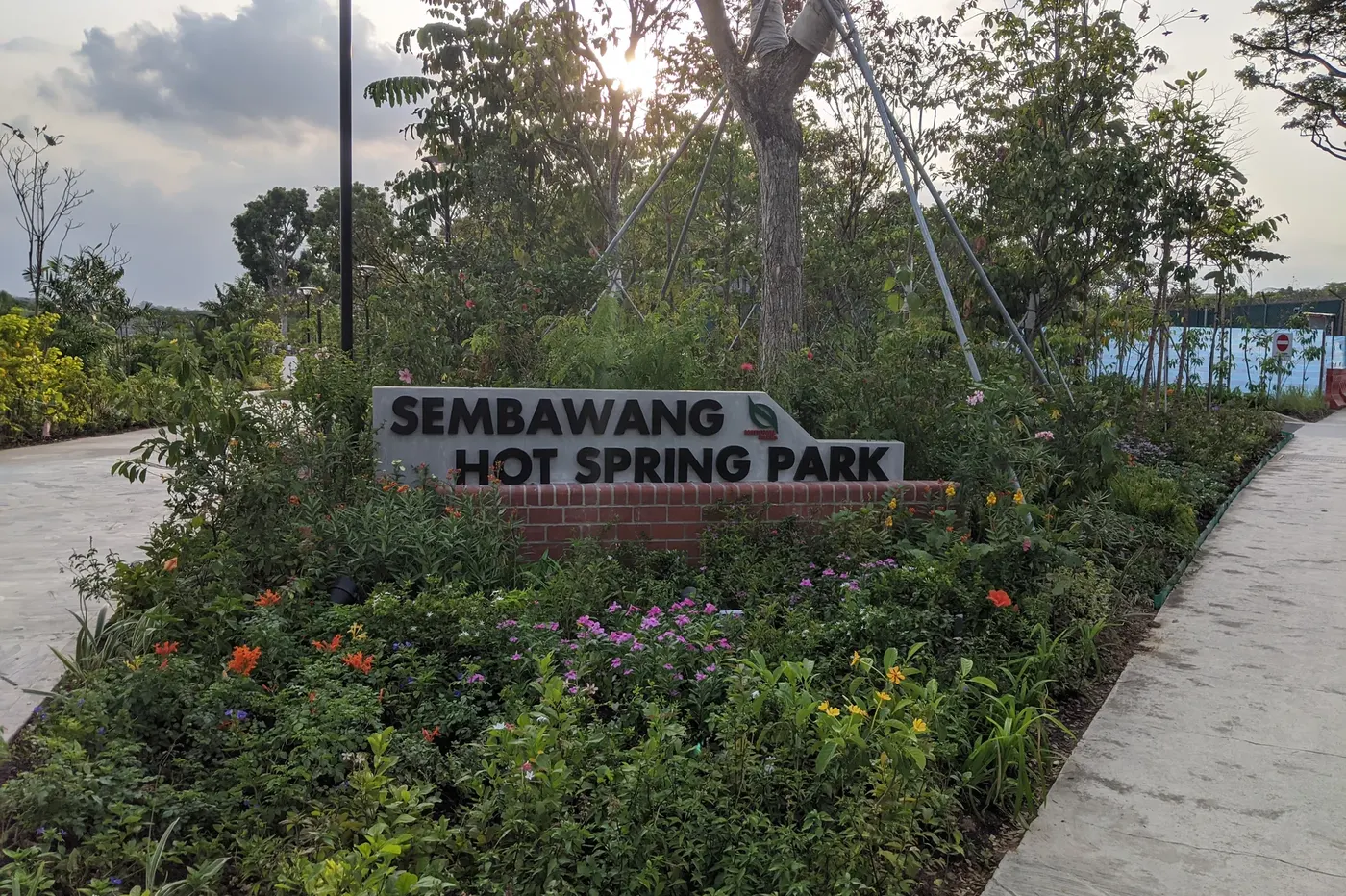
Sembawang Hot Spring Park is one of Southeast Asia's most unusual urban nature destinations: a free public hot spring facility in the residential northern district of Sembawang, on an island-state that has no volcanic activity, no tectonic boundary proximity, and no obvious geological reason to produce hot springs at all. The springs emerge at approximately 70°C from a granite basement aquifer — remarkably high for a non-volcanic setting — through a fault or fracture zone in the ancient Bukit Timah Granite that underlies much of northern Singapore. The water is then cooled to approximately 42°C in public foot-bath basins, and portable kettles are available for visitors to draw hot spring water. The springs were discovered in 1909 when British colonial engineers clearing land for a rubber plantation encountered the anomalous warm water seeping through the cleared ground. The site was subsequently a source of hot water for the local Sembawang naval base and surrounding communities during the British colonial period. It was developed as a public spa facility and then fell into disuse; the National Parks Board of Singapore (NParks) reopened it as Sembawang Hot Spring Park in December 2020 following extensive landscape restoration. The park is remarkable for combining the geological improbability of a hot spring in equatorial lowland Singapore with the cultural improbability of a barefoot, communal outdoor soaking tradition in one of the world's most climate-controlled, air-conditioned urban environments.
Sembawang Hot Spring ParkはSingapore・Sembawang, North Singaporeに位置する地熱温泉。源泉温度は70℃の豊かな温泉水が湧き出る。泉水は中性に近い(pH約7.2)の泉質、ナトリウム泉・シリカを豊富に含む、総溶解固形物320 mg/Lが特徴だ。1909年創業。リラクゼーション・足湯・都市型ウェルネスなど多様な温浴療法が行われる。施設では足湯・温水汲み(湯桶)・自然散策などが体験できる。
Minerales
Minerals
ミネラル
| Silica | 48 mg/L |
| Sodium | 62 mg/L |
| Calcium | 18 mg/L |
| Chloride | 35 mg/L |
| Fluoride | 0.8 mg/L |
Tratamientos
Treatments
トリートメント
RelaxationFoot bathingUrban Wellness
Técnicas
Techniques
技法
Foot bath soakingWarm water drawing (kettles)Nature walk
Patrimonio
Sembawang fue históricamente una aldea de pescadores malayos (kampung) antes de que el desarrollo colonial británico la transformara en un distrito naval e industrial. Las bases navales HMS Terror y HMS Sembawang dominaron la costa norte durante la mayor parte del siglo XX. El manantial termal se encuentra en una zona de transición entre la memoria del antiguo kampung malayo, la historia naval británica y las urbanizaciones de la Junta de Desarrollo de la Vivienda que sustituyeron a ambas. La anomalía geológica del manantial —agua caliente calentada por granito en unas tierras bajas ecuatoriales geológicamente estables— es en sí misma una forma de patrimonio: un recordatorio de que el presente plano, ganado al mar y climatizado de Singapur descansa sobre una historia geológica mucho más antigua.
Heritage
Sembawang was historically a Malay fishing village (kampung) before British colonial development transformed it into a naval and industrial district. The Royal Navy's HMS Terror and HMS Sembawang bases dominated the northern shore for most of the 20th century. The hot spring sits in a zone of transition between old Malay kampung memory, British naval history, and the Housing Development Board townships that replaced both. The geological anomaly of the spring — warm granite-heated water in a geologically stable equatorial lowland — is itself a form of heritage: a reminder that Singapore's flat, reclaimed, air-conditioned present sits atop a much older geological story.
文化財
センバワンは、イギリス植民地開発によって海軍・工業地区に変貌する以前は、マレー系の漁村(カンポン)であった。20世紀の大半を通じて、HMSテラーとHMSセンバワンという英国海軍基地が北岸を支配していた。この温泉は、古いマレー系カンポンの記憶、英国海軍の歴史、そしてその両方に取って代わった住宅開発庁の団地との間の過渡的な地帯に位置している。この温泉の地質学的な異例さ——地質学的に安定した赤道直下の低地における花崗岩由来の温水——それ自体がひとつの遺産の形である。平坦で、埋め立てられ、空調の効いたシンガポールの現在が、はるかに古い地質学的な物語の上に成り立っていることを思い起こさせてくれる。
Cultura
El Manantial Termal de Sembawang es un tipo de espacio público específicamente singapurense: gratuito, accesible en MRT, cuidadosamente ajardinado por un organismo gubernamental y equipado con carteles instructivos en cuatro idiomas. Y, sin embargo, lo que ocurre en su interior —pies descalzos sobre piedra caliente, cuencas compartidas de agua humeante, visitantes chinos, malayos e indios singapurenses de edad avanzada sentados juntos junto a los baños de pies— es tan antiguo y universal como lo ha sido siempre el acto de bañarse en agua caliente. El parque ganó popularidad durante el período pospandémico, cuando los singapurenses buscaban actividades al aire libre cerca de casa, y hoy atrae tanto a habituales locales como a curiosos visitantes internacionales para quienes un manantial termal en Singapur representa una auténtica sorpresa.
Culture
The Sembawang Hot Spring is a specifically Singaporean kind of public space: free, accessible by MRT, carefully landscaped by a government agency, and equipped with instructional signs in four languages. And yet what happens within it — bare feet on warm stone, shared basins of steaming water, elderly Singaporean Chinese, Malay, and Indian visitors sitting together at the foot baths — is as ancient and universal as the act of bathing in warm water has ever been. The park became popular during the post-pandemic period as Singaporeans sought outdoor recreation close to home, and it now attracts both local regulars and curious international visitors for whom a hot spring in Singapore represents a genuine surprise.
文化
センバワン温泉公園は、シンガポールらしい公共空間の一形態である——無料で、MRTでアクセスでき、政府機関によって丁寧に造園され、4か国語の案内表示が備えられている。それでいて、そこで実際に起きていること——温かい石の上に素足で立ち、湯気の立つ水を張った洗い場を共有し、年配の中華系、マレー系、インド系のシンガポール人が足湯のそばに並んで座る光景——は、温かい水に浸かるという行為そのものと同じくらい古く、普遍的である。この公園は、パンデミック後の時期にシンガポール人が自宅近くで屋外レクリエーションを求める中で人気を集めるようになり、今では地元の常連客と、シンガポールに温泉があることに純粋に驚く海外からの訪問者の両方を惹きつけている。
Sostenibilidad
El acuífero de granito de Bukit Timah que alimenta el manantial de Sembawang es una antigua formación de basamento cristalino. El manantial fluye de forma natural a un ritmo de aproximadamente 1,2 litros por segundo sin necesidad de bombeo, y la NParks monitorea el caudal y la temperatura como parte de la gestión continua del parque. El diseño paisajístico del parque canaliza el exceso de agua del manantial hacia una zona de humedal que sostiene plantas acuáticas nativas y proporciona continuidad de hábitat dentro de la red de conectores de parques de Singapur.
Sustainability
The Bukit Timah Granite aquifer feeding Sembawang's spring is an ancient crystalline basement formation. The spring flows naturally at a rate of approximately 1.2 L/s without pumping, and NParks monitors output and temperature as part of ongoing park management. The park's landscape design channels excess spring water into a wetland feature that supports native aquatic plants and provides habitat continuity within Singapore's park connector network.
持続可能性
センバワンの温泉に水を供給するブキ・ティマ花崗岩帯水層は、古代の結晶質基盤層である。この温泉はポンプを使わず、毎秒約1.2リットルの速度で自然に湧出しており、国立公園局(NParks)が公園管理の一環として湧出量と温度を継続的に監視している。公園のランドスケープデザインは、余剰の温泉水を湿地の造成地へと導いており、そこでは在来の水生植物が育ち、シンガポールのパークコネクター・ネットワーク内で生息地の連続性が保たれている。