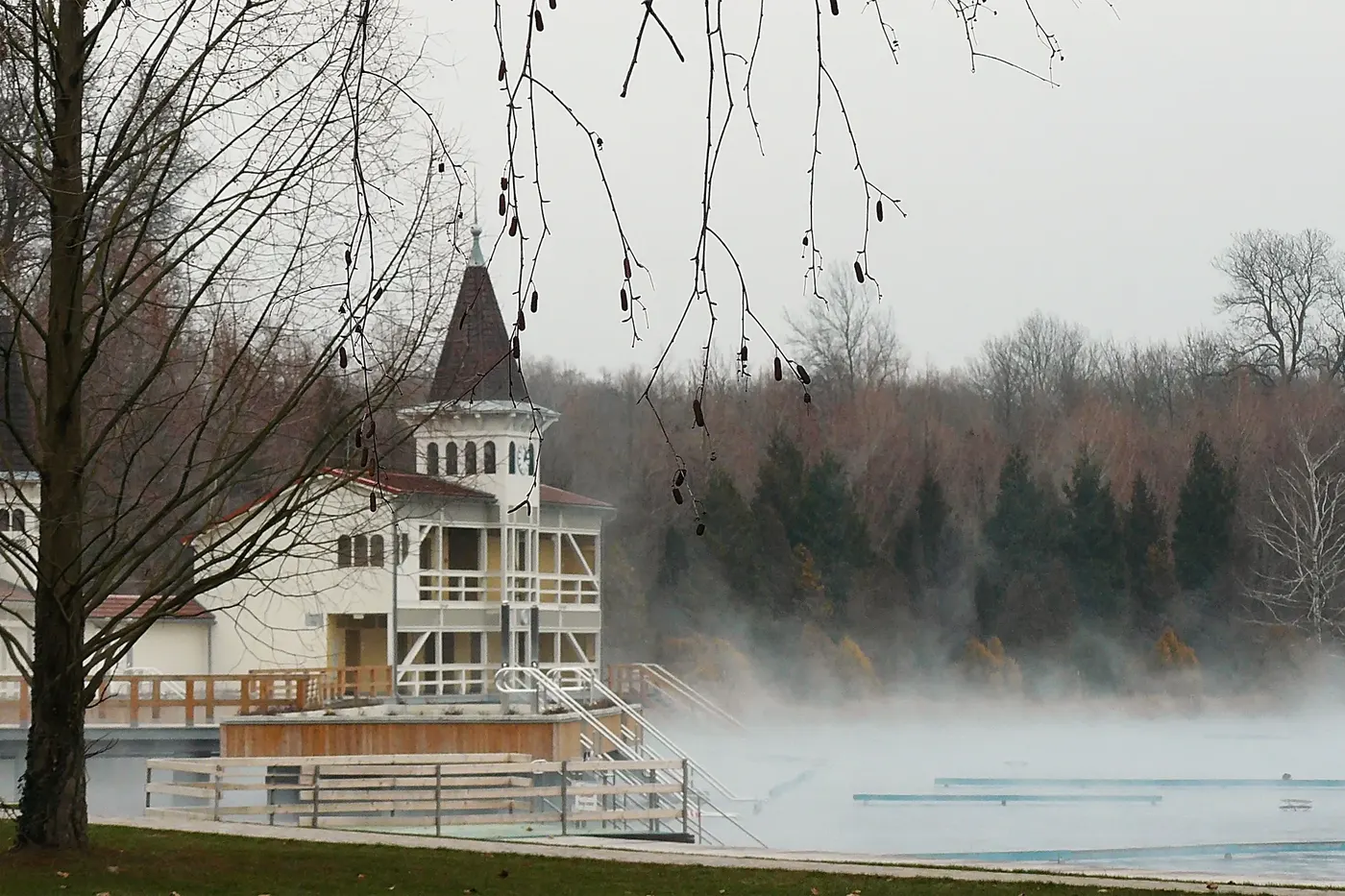
Photo by Ivanhoe65, via Wikimedia Commons (CC BY-SA 3.0)
🇭🇺 Hungary · Zala County
Photo by Ivanhoe65, via Wikimedia Commons (CC BY-SA 3.0)
🇭🇺 Hungary · Zala County
♨ Temperature
38°C
⛰ Altitude
120 m
⚗ pH
7.5
💧 TDS
1100 mg/L
🌊 Flow rate
420 L/s
📅 Established
1795
✓ Verified on 2026-07-22
Hévíz is home to the world's largest biologically active natural thermal lake — a 4.4-hectare geothermal lake fed from a crater 38 metres deep at a constant 38–41°C. Unlike any other mineral spring on earth, Hévíz is a true lake, large enough for outdoor swimming year-round even in winter, its surface sometimes steaming against the Hungarian sky. Egyptian lotus flowers and white water lilies bloom on the thermal water surface, creating an otherworldly landscape. The spa pavilion, built over the lake on stilts, is one of Europe's most distinctive bathing structures. Hévíz is connected to Budapest via Danube cruise routes and a 2-hour coach transfer.
| Sulphate | 492 mg/L |
| Bicarbonate | 356 mg/L |
| Calcium | 148 mg/L |
| Magnesium | 95 mg/L |
| Radon | 0.8 mg/L |
Hévíz's thermal lake was first described scientifically by Count György Festetics in 1795, who developed a bathing facility on the lake. Archaeological findings indicate the spring was used by Celtic and then Roman populations — Roman coins and artefacts have been recovered from the lake floor. The current covered pavilion, built over the water's surface, dates to 1898 and is a listed architectural monument.
In Hungarian folk tradition, the Hévíz lake was considered magical — a place where the sick could bathe in the same water as blooming lotus flowers, a symbol of purity and rebirth. The lake has been central to Hungarian balneology since the 18th century and plays a significant role in national wellness identity. Locals and visitors alike gather at the lake edge at dawn for morning therapeutic bathing, a practice unchanged for generations.
The Hévíz spring renews its entire volume every 28 hours through natural geothermal pressure, creating exceptional self-purification without chemical treatment. The lake's protected status under Hungarian environmental law prohibits any industrial activity within 2 km. Water lotus populations are monitored annually, and winter snow fencing protects thermal steam from excessive surface heat loss.