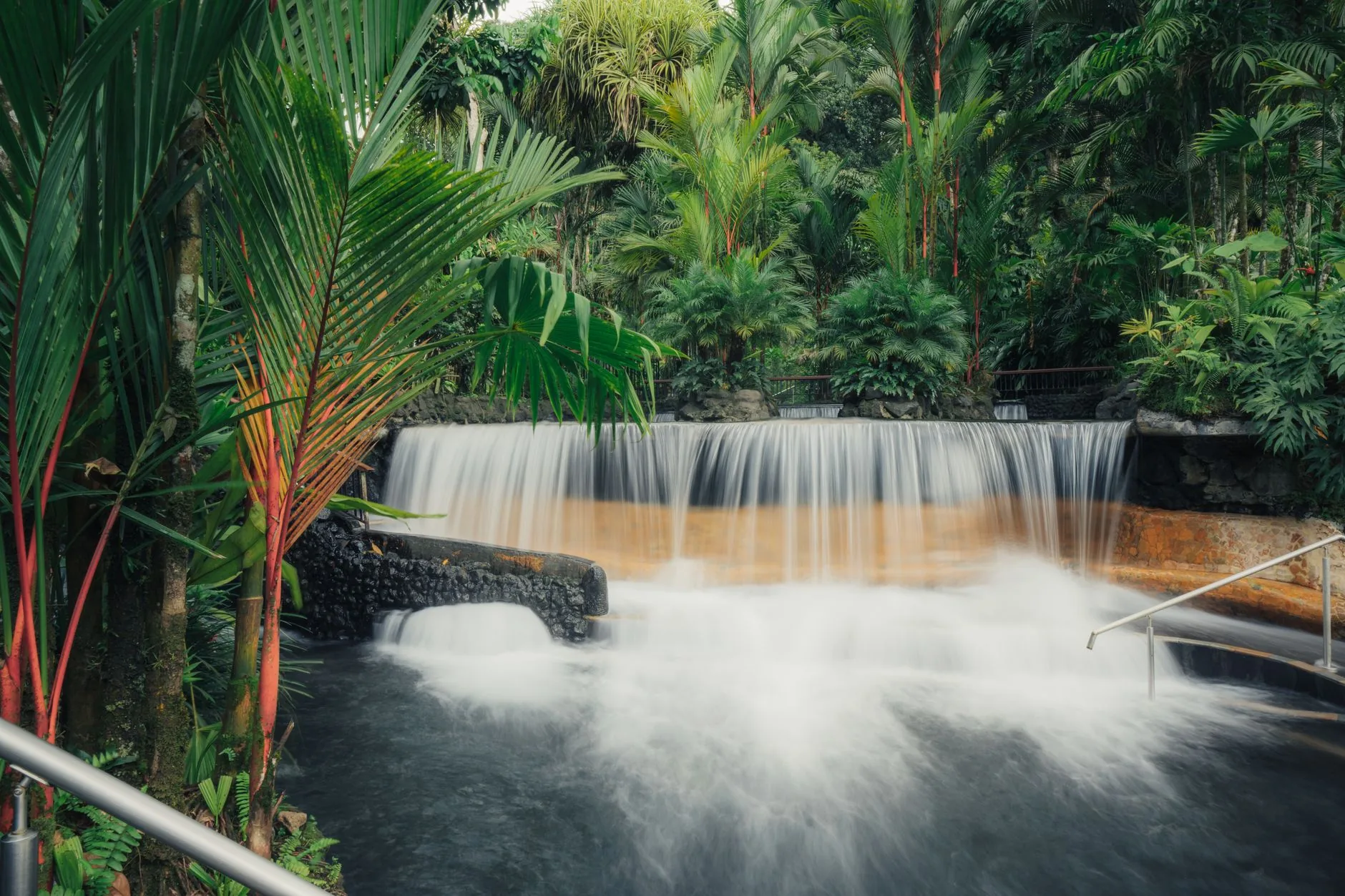
Photo by Osmany Mederos on Pexels
🇨🇷 Costa Rica · Rincón de la Vieja, Guanacaste
Photo by Osmany Mederos on Pexels
🇨🇷 Costa Rica · Rincón de la Vieja, Guanacaste
♨ Temperature
42°C
⛰ Altitude
320 m
⚗ pH
6
💧 TDS
680 mg/L
🌊 Flow rate
22 L/s
📅 Established
Natural spring; eco-lodge development 2000s
✓ Verified on 2026-07-22
Rincón de la Vieja is one of the most active volcanoes in Central America, and the geothermal energy beneath its flanks heats an extensive network of hot springs, mud pools, fumaroles, and minor geysers across the Guanacaste lowlands. The Río Negro area — named for the dark volcanic sediment that colours the river — is home to several eco-lodges that have developed natural pool systems tapping this geothermal energy. Water emerges from the earth at temperatures up to 65°C and is channelled into bathing pools typically maintained between 38°C and 45°C, surrounded by tropical dry forest and secondary rainforest. The broader Rincón de la Vieja National Park contains numerous natural thermal features accessible on foot: the 'Las Pailas' sector includes boiling mud pools (pailas de barro), a blue sulphur hot spring, and fumaroles easily reached from the park entrance. The combination of volcanic geology, biodiversity — Rincón is within the Mesoamerican Biological Corridor — and thermal bathing makes this a distinctive wellness and nature travel destination.
| Sulphate | 284 mg/L |
| Bicarbonate | 198 mg/L |
| Sodium | 86 mg/L |
| Calcium | 62 mg/L |
| Chloride | 48 mg/L |
| Silica | 36 mg/L |
The Guanacaste region was the heartland of the Chorotega civilization, one of the most developed pre-Columbian cultures in Central America, with connections to Mesoamerican cultural networks extending into modern-day Mexico. The volcanic landscape of Rincón de la Vieja carries significant presence in Chorotega oral tradition and is considered a living geological and spiritual entity. The national park protects not only thermal features but also important archaeological sites in the Guanacaste region.
Costa Rica's geothermal zone runs along the northern volcanic arc and has long been central to both Indigenous and contemporary Costa Rican identity. The country's commitment to environmental protection — it operates on more than 99% renewable energy — has shaped how thermal resources are developed and managed, with an emphasis on eco-lodge scale development rather than mass resort construction.
Rincón de la Vieja National Park covers approximately 14,000 hectares and is part of the broader Guanacaste Conservation Area (Area de Conservación Guanacaste), a UNESCO World Heritage Site for its dry forest and transitional forest ecosystems. Eco-lodges in the Río Negro area operate under Costa Rica's Certificate for Sustainable Tourism programme.
Phone+506 2666-0473
Websitewww.rincondelavieja.net
AddressRincón de la Vieja National Park, Guanacaste Province, Costa Rica