Photo by Richard Pan on Pexels
🇳🇿 New Zealand · Bay of Plenty, North Island
Photo by Richard Pan on Pexels
🇳🇿 New Zealand · Bay of Plenty, North Island
♨ Temperature
80°C
⛰ Altitude
281 m
⚗ pH
2
💧 TDS
1800 mg/L
🌊 Flow rate
5000 L/s
📅 Established
Pre-colonial Māori
✓ Verified on 2026-07-22
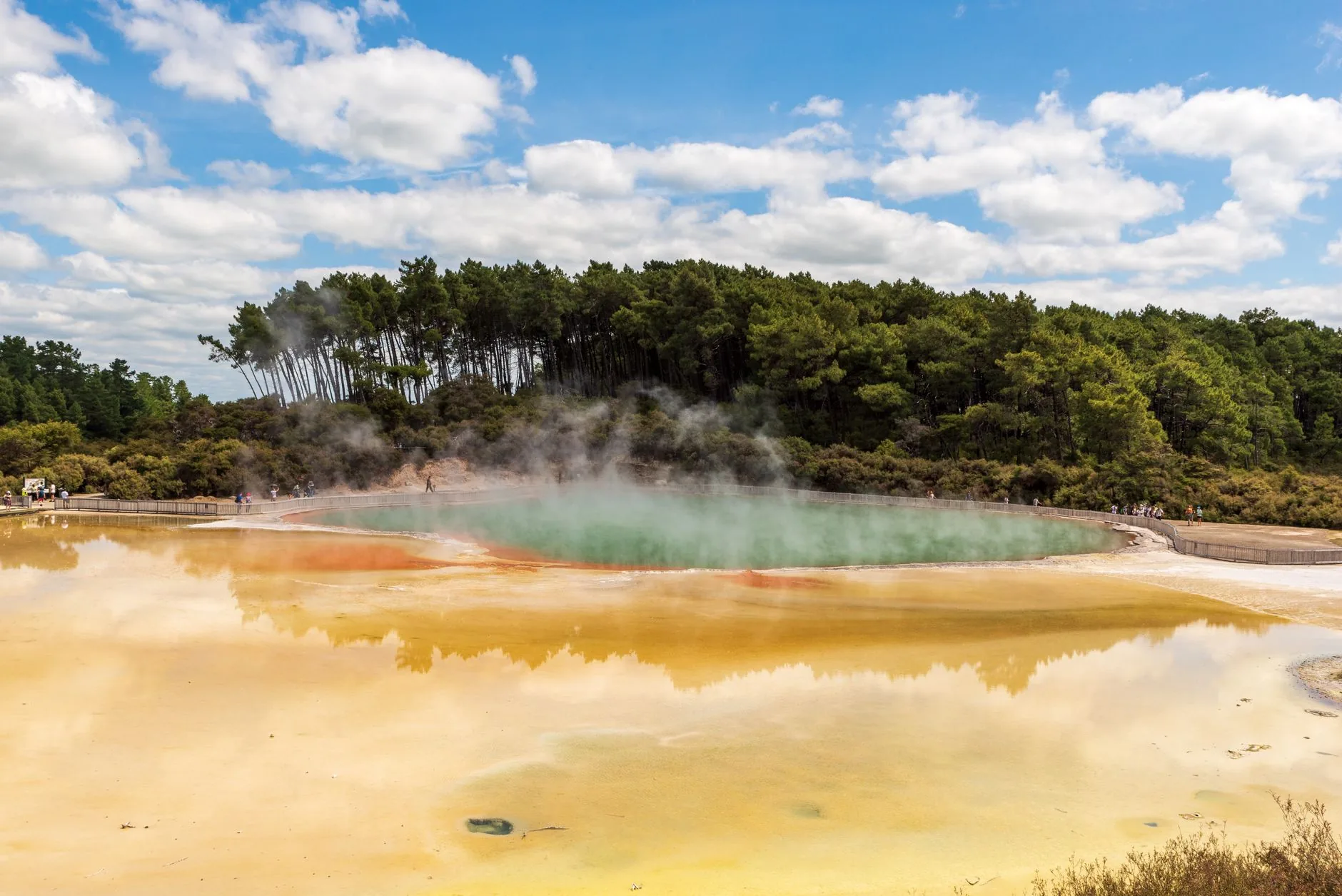
Rotorua sits directly atop one of the world's most active volcanic zones. The Māori people — who call it Te Rotorua-nui-a-Kahumatamomoe — have used the geothermal pools for cooking, bathing, healing, and spiritual ceremony for centuries. The landscape features boiling mud pools (ngāwhā), silica terraces, steaming geysers, and multi-coloured hot springs including the famous Champagne Pool at Wai-O-Tapu. The waters are intensely mineralised with sulphur, silica, arsenic, and gold.
| Sulphur | 320 mg/L |
| Silica | 480 mg/L |
| Sodium Chloride | 1200 mg/L |
| Bicarbonate | 280 mg/L |
| Arsenic (trace) | 0.8 mg/L |
Rotorua is the ancestral homeland of the Ngāti Whakaue hapū and is among the most significant Māori cultural landscapes in New Zealand. The geothermal environment is inseparable from Māori identity — wāhi tapu (sacred places) surround the springs, and the land is held in collective Māori ownership. Several geothermal areas remain restricted to prevent desecration of sacred sites.
For the Māori people of Rotorua, the geothermal waters are taonga (treasured gifts) — used for cooking, healing, and spiritual ceremony. The practice of hāngi (earth oven cooking using geothermal heat), medicinal bathing (rongoā), and steam ceremonies are living traditions, not historical artefacts. Visiting respectfully means acknowledging that you are a guest in a sacred living landscape.
Rotorua's geothermal fields are managed under a strict bore consenting regime introduced in the 1980s after excessive drilling caused springs to cease flowing. The Regional Council monitors spring levels, temperatures, and flow rates in real time. Iwi co-management of geothermal resources ensures traditional environmental values are embedded in resource decisions, and tourism is constrained to designated areas.