Manantiales / Termas de ChibiaSprings / Termas de Chibia温泉・鉱泉 / Termas de Chibia
📅 Establecido
Portuguese colonial period; developed 1930s–1960s
📅 Established
Portuguese colonial period; developed 1930s–1960s
📅 開設
Portuguese colonial period; developed 1930s–1960s
ThermalColonial HeritageNatural
✓ Verificado el 2026-07-22
✓ Verified on 2026-07-22
✓ 確認日 2026-07-22
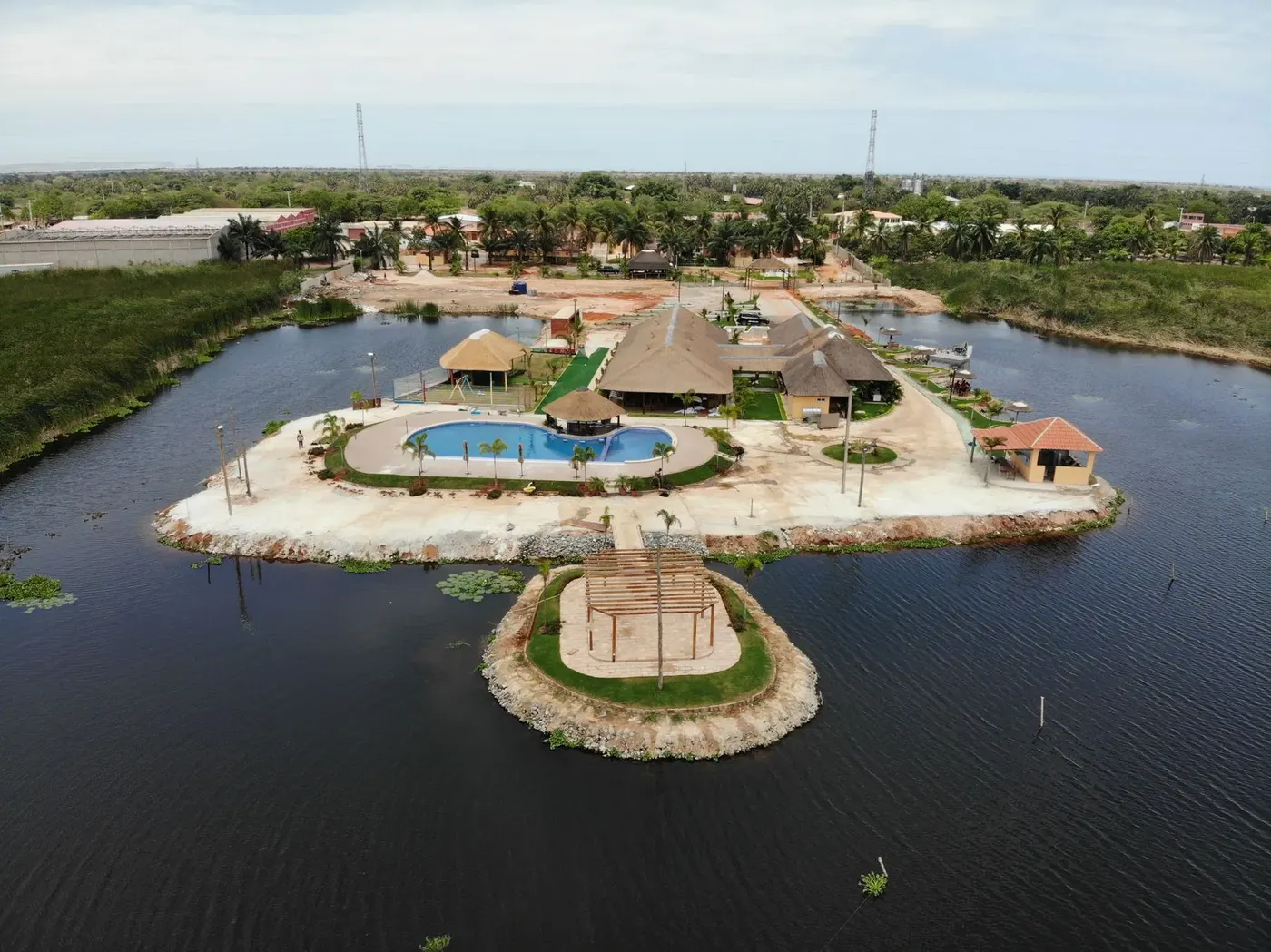
Las Termas de Chibia son manantiales termales naturales en la provincia de Huíla del altiplano meridional de Angola, ubicadas cerca de la ciudad de Chibia a unos 1.640 metros de altitud en el planalto angoleño. Los manantiales emergen a unos 45–50 °C de un sistema de fracturas en las antiguas rocas del Escudo Angoleño. La administración colonial portuguesa desarrolló instalaciones termales aquí a mediados del siglo XX, cuando la provincia de Huíla era una de las regiones más densamente pobladas por portugueses en Angola. La independencia de Angola en 1975 y la posterior guerra civil dejaron la instalación en mal estado, aunque se ha producido una rehabilitación parcial desde la reconstrucción posguerra.
The Termas de Chibia are natural thermal springs in the Huíla Province of Angola's southern highlands, located near the town of Chibia (known during the Portuguese colonial era as João de Almeida) at approximately 1,640 metres altitude on the Angolan planalto. The springs emerge at approximately 45–50°C from a geological fracture system within the ancient basement rocks of the Angolan Shield — a Precambrian geological formation shared with the Kalahari and Namibian shield to the south. The Portuguese colonial administration developed thermal facilities here in the mid-20th century, when Huíla Province (and its provincial capital, Sá da Bandeira, now Lubango) was one of the most densely Portuguese-settled regions of Angola, known for its cool highland climate and productive agriculture. The resort attracted settlers and officials seeking thermal respite in one of Portuguese Africa's most temperate landscapes. Angola's independence in 1975 and the subsequent civil war (1975–2002) left the facility in disrepair, but partial rehabilitation has taken place since the post-war reconstruction period. The springs are the most significant of a group of geothermal expressions in the Angolan planalto, a region that combines highland wellness climate, volcanic geology, and extraordinary scenic landscapes including the Serra da Leba escarpment.
Termas de ChibiaはAngola・Huíla Provinceに位置する温熱泉。源泉温度は48℃、標高1640mの地に湧出する。泉水は中性に近い(pH約7.2)の泉質、重炭酸ナトリウム泉・塩化ナトリウム泉を豊富に含む、総溶解固形物720 mg/Lが特徴だ。リラクゼーション・リウマチ療法・皮膚など多様な温浴療法が行われる。施設では入浴・温泉プール浸浴などが体験できる。
Minerales
Minerals
ミネラル
| Sodium Bicarbonate | 295 mg/L |
| Sodium Chloride | 168 mg/L |
| Sulphate | 82 mg/L |
| Calcium | 55 mg/L |
| Silica | 22 mg/L |
Tratamientos
Treatments
トリートメント
RelaxationRheumatologySkin
Técnicas
Techniques
技法
BathingThermal pool soaking
Patrimonio
El planalto angoleño —las tierras altas del sur donde se encuentra Chibia— fue el hogar del pueblo nyaneka-humbe durante siglos antes de la colonización portuguesa. Su relación con los manantiales termales era tanto práctica (como fuente de calor y agua rica en minerales) como espiritual (los fenómenos geotérmicos tenían un significado importante en muchas cosmologías bantúes como expresiones de la vida interior de la tierra). El escarpe de la Serra da Leba, donde las tierras altas caen abruptamente hacia el desierto costero del Namib, es una de las transiciones geográficas más dramáticas del África austral y enmarca todo el paisaje en torno a los manantiales.
Heritage
The Angolan planalto — the southern highlands where Chibia sits — was the homeland of the Nyaneka-Humbe people for centuries before Portuguese colonisation. Their relationship with the thermal springs was both practical (as a source of warmth and mineral-rich water) and spiritual (geothermal features held significance in many Bantu cosmologies as expressions of the earth's internal life). The Serra da Leba escarpment, where the highlands drop dramatically to the Namib coastal desert, is one of southern Africa's most dramatic geographical transitions and frames the entire landscape around the springs.
文化財
アンゴラのプラナルト(高原地帯)——チビアが位置する南部高地——は、ポルトガルによる植民地化の何世紀も前から、ニャネカ・フンベ族の故郷であった。彼らと温泉との関わりは、実用的な面(暖と、ミネラル豊富な水の供給源として)と、精神的な面(多くのバントゥー系の宇宙観において、地熱現象は大地の内なる生命の表れとして重要な意味を持っていた)の両方を備えていた。高地がナミブ沿岸砂漠へと劇的に落ち込むレバ山地の断崖は、南部アフリカで最も劇的な地理的移行のひとつであり、温泉周辺の景観全体を形づくっている。
Cultura
Las Termas de Chibia representan una forma de patrimonio termal específicamente angoleña: una instalación de la época colonial construida en un paisaje africano de altiplano que fue moldeado simultáneamente por la cultura de los colonos portugueses y por las profundas civilizaciones indígenas del planalto. La larga guerra civil de Angola interrumpió el desarrollo de la instalación, pero no pudo borrar la realidad geológica de los propios manantiales. La inversión de la Angola de posguerra en infraestructura turística ha comenzado a revalorizar los recursos termales del país como parte de un esfuerzo más amplio por diversificar la economía más allá de la dependencia del petróleo.
Culture
The Termas de Chibia represent a specifically Angolan form of thermal heritage: a colonial-era facility built in a highland African landscape that was simultaneously shaped by Portuguese settler culture and by the deep indigenous civilisations of the planalto. Angola's long civil war interrupted the development of the facility but could not erase the geological reality of the springs themselves. Post-war Angola's investment in tourism infrastructure has begun to revisit the country's thermal resources as part of a broader effort to diversify beyond petroleum dependency.
文化
テルマス・デ・チビアは、アンゴラ特有の温泉遺産の形態を体現している——ポルトガル人入植者の文化と、プラナルトの深い先住民文明の両方によって形づくられたアフリカ高地の景観の中に建設された、植民地時代の施設である。アンゴラの長い内戦は施設の開発を中断させたが、温泉そのものの地質学的な現実を消し去ることはできなかった。戦後のアンゴラによる観光インフラへの投資は、石油依存からの脱却を図るより広範な取り組みの一環として、同国の温泉資源への関心を再び呼び起こし始めている。
Sostenibilidad
El acuífero de basamento precámbrico que alimenta las Termas de Chibia es un sistema antiguo con una recarga activa limitada, típica de los ritmos propios de los entornos semiáridos de altiplano. El Ministerio de Recursos Minerales y Petróleo de Angola (MIREMPET) supervisa la gestión de los recursos geotérmicos junto con el sector turístico emergente. La rehabilitación de la instalación desde 2010 se ha centrado en la restauración de infraestructura básica más que en una expansión a gran escala.
Sustainability
The Precambrian basement aquifer feeding the Termas de Chibia is an ancient system with limited active recharge at the rates typical for highland semi-arid environments. Angola's Ministry of Mineral Resources and Petroleum (MIREMPET) oversees geothermal resource management alongside the emerging tourism sector. Rehabilitation of the facility since 2010 has focused on basic infrastructure restoration rather than large-scale expansion.
持続可能性
テルマス・デ・チビアに水を供給する先カンブリア時代の基盤岩帯水層は、高地の半乾燥環境に典型的な速度でしか涵養が進まない、活発な補給が限られた古い水系である。アンゴラ鉱物資源・石油省(MIREMPET)は、新興の観光セクターと並行して地熱資源の管理を監督している。2010年以降の施設修復は、大規模な拡張よりも基本的なインフラの復旧に重点が置かれてきた。