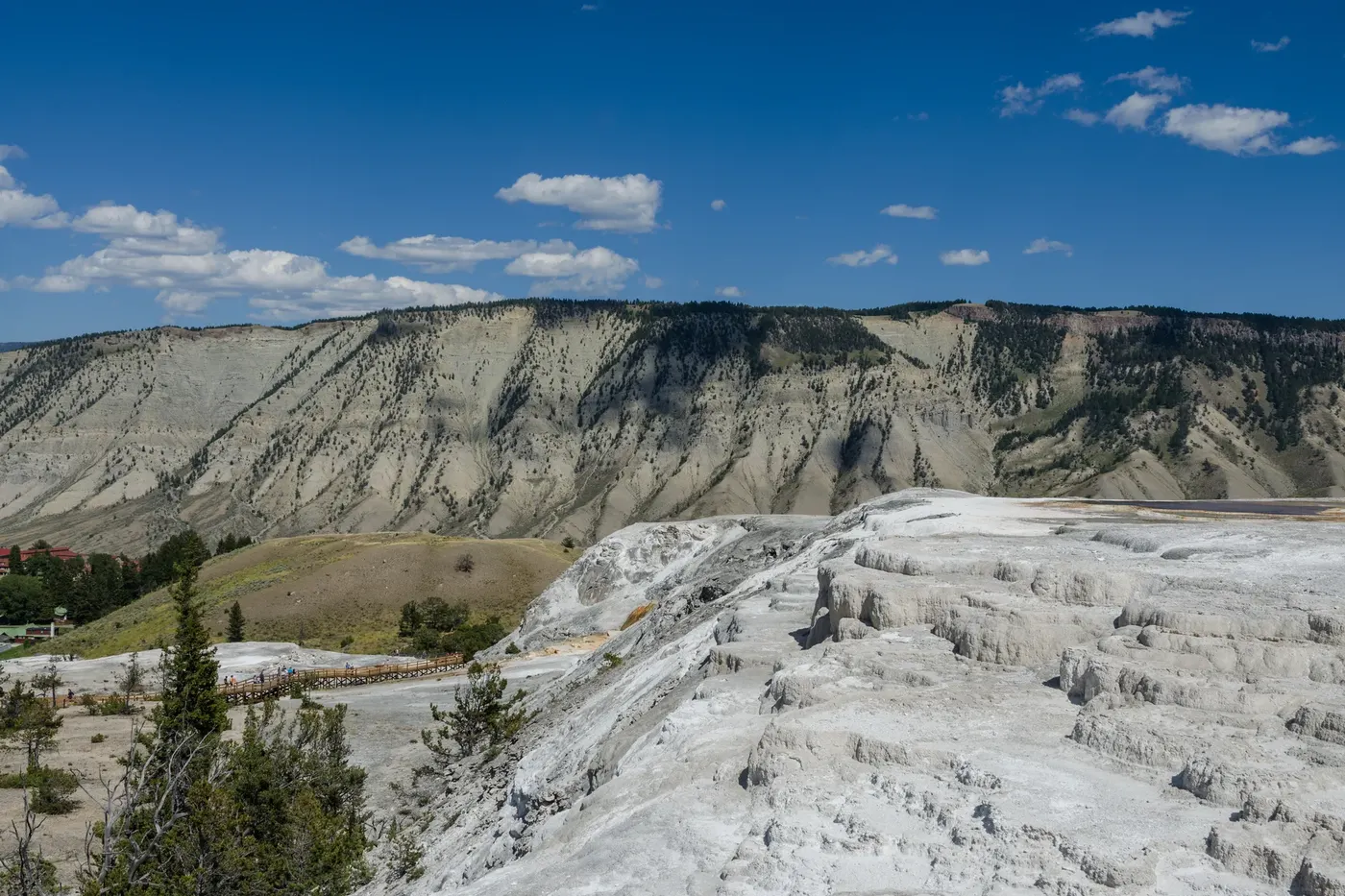
Photo by DXR, via Wikimedia Commons (CC BY-SA 4.0)
🇺🇸 USA · Wyoming / Montana / Idaho
Photo by DXR, via Wikimedia Commons (CC BY-SA 4.0)
🇺🇸 USA · Wyoming / Montana / Idaho
♨ Temperature
93°C
⛰ Altitude
2357 m
⚗ pH
3.5
💧 TDS
750 mg/L
🌊 Flow rate
50000 L/s
📅 Established
Pre-colonial Indigenous use
✓ Verified on 2026-07-22
Yellowstone contains more than half of the world's hydrothermal features — over 10,000 geysers, hot springs, fumaroles, and mud pots. The Grand Prismatic Spring is the largest hot spring in the USA and third largest in the world. The extraordinary colours are produced by mats of thermophilic microorganisms living at near-boiling temperatures. The springs were sacred to Native American peoples for thousands of years before European contact.
| Silica | 300 mg/L |
| Sulphate | 290 mg/L |
| Sodium | 190 mg/L |
| Chloride | 280 mg/L |
| Bicarbonate | 180 mg/L |
Yellowstone was designated the world's first national park in 1872, in large part to protect its extraordinary geothermal heritage. The Grand Prismatic Spring, Mammoth Hot Springs, and Old Faithful are National Natural Landmarks. Native American peoples — including the Shoshone, Crow, and Bannock — regarded Yellowstone as a sacred landscape and used its springs for healing for thousands of years.
Yellowstone's hot springs are among humanity's most vivid encounters with the living earth. Thermophilic microorganisms in the springs contributed to some of the most important discoveries in modern biology, including the heat-stable DNA polymerase enzyme used in PCR technology. The springs are simultaneously a sacred indigenous landscape, a scientific frontier, and a symbol of American wildness.
Yellowstone National Park operates under a strict no-extraction mandate — geothermal features may not be altered, extracted, or commercially exploited. Visitor boardwalks protect fragile microbial mats and thermal crust. The park is also the world's largest intact temperate ecosystem. Annual scientific monitoring tracks changes in spring temperatures, acidity, and flow as indicators of volcanic system health.