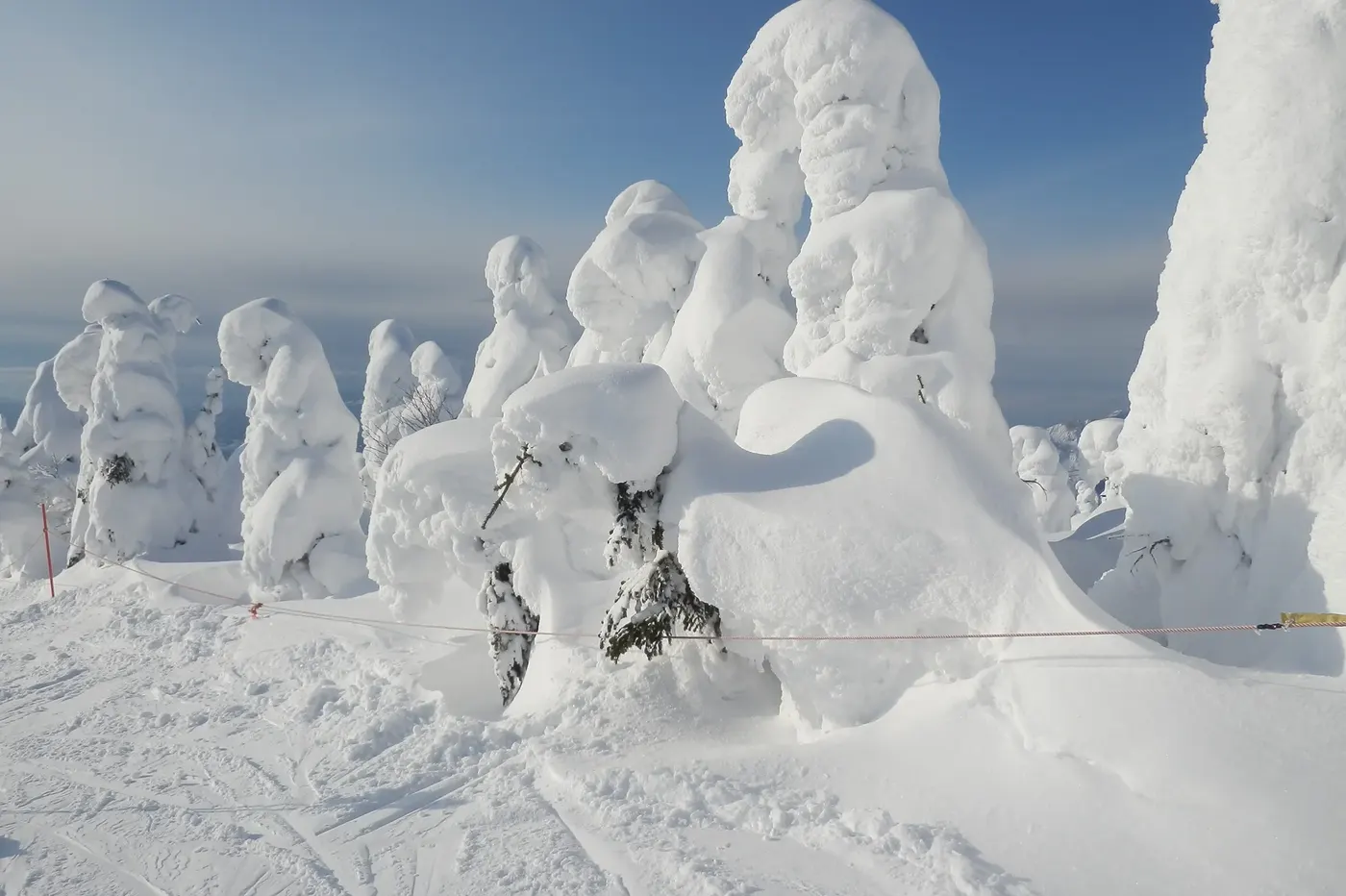
Photo by Panoramio upload bot, via Wikimedia Commons (CC BY 3.0)
🇯🇵 Japan · Yamagata Prefecture, Tohoku
Photo by Panoramio upload bot, via Wikimedia Commons (CC BY 3.0)
🇯🇵 Japan · Yamagata Prefecture, Tohoku
♨ Temperature
55°C
⛰ Altitude
880 m
⚗ pH
1.5
💧 TDS
3200 mg/L
🌊 Flow rate
multiple sources
📅 Established
Nara period (c. 720 CE)
✓ Verified on 2026-07-22
Zao Onsen sits at approximately 880 metres altitude on the western slopes of the Zao volcanic massif in Yamagata City, Yamagata Prefecture, in the Tohoku region of Honshu. The spring is one of the most strongly acidic onsen in Japan, with a pH regularly measured between 1.2 and 1.8 — a level acidic enough to corrode metal jewellery and irritate sensitive skin after prolonged immersion. The water is a sulphurous hydrogen sulfide type, milky white in colour, with a powerful rotten-egg odour and a characteristic sharp sensation on the skin. This extreme acidity, produced by volcanic gases dissolving directly into the groundwater from the active Zao caldera above, gives the water recognised antiseptic and dermatological properties in traditional Japanese bathing culture. Zao's history as a spa dates to approximately 720 CE, when the monk Gyoki is said to have discovered the spring. The resort today combines the onsen tradition with year-round mountain activities: in winter, the slopes produce the Zao juhyo phenomenon — trees encased in ice and snow, creating towering sculptural forms known as 'snow monsters' that have become one of Tohoku's most photographed natural spectacles. In 2026, National Geographic selected Yamagata Prefecture, and Zao in particular, as one of its Best of the World destinations. Multiple public outdoor baths (rotemburo) and large ryokan facilities operate in the resort town.
| Sulfuric Acid (H2SO4) | 1840 mg/L |
| Sulphur (H2S) | 12.4 mg/L |
| Aluminum | 112 mg/L |
| Iron | 38 mg/L |
| Calcium | 52 mg/L |
| Magnesium | 28 mg/L |
Zao Onsen falls within the Zao Quasi-National Park, which protects the volcanic landscape of the Zao massif including the active crater lake Okama — a vivid emerald-green caldera lake at 1,800 metres, one of the most visually striking volcanic features in Japan. The juhyo (ice trees) phenomenon at Zao is a nationally recognized natural winter spectacle, and the site was selected by National Geographic as part of its Best of the World 2026 list for Yamagata Prefecture.
Zao's extreme water chemistry has shaped a bathing culture centred on endurance and purification rather than relaxation. The strongly acidic sulphurous water was historically understood as powerfully medicinal precisely because of its intensity — an onsen that visibly changed the skin colour of bathers and corroded ordinary metal was clearly doing something. The winter juhyo (snow monster) phenomenon, in which accumulated rime ice transforms the ski-slope trees into ghostly figures, has created a secondary cultural identity for Zao as a landscape of sublime natural transformation.
The Zao volcanic system is actively monitored by the Japan Meteorological Agency for eruption risk. The ski resort and onsen operations are coordinated with national park regulations to limit development on the upper slopes. The juhyo phenomenon depends on specific climatic conditions — cold temperatures, high humidity, and prevailing northwest winds — that are sensitive to regional temperature shifts, making it a site where climate change impacts are directly observable year to year.
Phone+81-23-694-9328
Websitezaomountainresort.com
AddressZao Onsen 708-1, Yamagata City, Yamagata Prefecture 990-2301, Japan