Manantiales / Lázeňské centrum AgricolaSprings / Lázeňské centrum Agricola温泉・鉱泉 / Lázeňské centrum Agricola
📅 Establecido
1911 (first purpose-built spa house of the Jáchymov radon spa, founded 1906)
📅 Established
1911 (first purpose-built spa house of the Jáchymov radon spa, founded 1906)
📅 開設
1911 (first purpose-built spa house of the Jáchymov radon spa, founded 1906)
Radioactive (Radon)🏛 Patrimonio de la UNESCO🏛 UNESCO World Heritage🏛 世界遺産
✓ Verificado el 2026-07-31
✓ Verified on 2026-07-31
✓ 確認日 2026-07-31
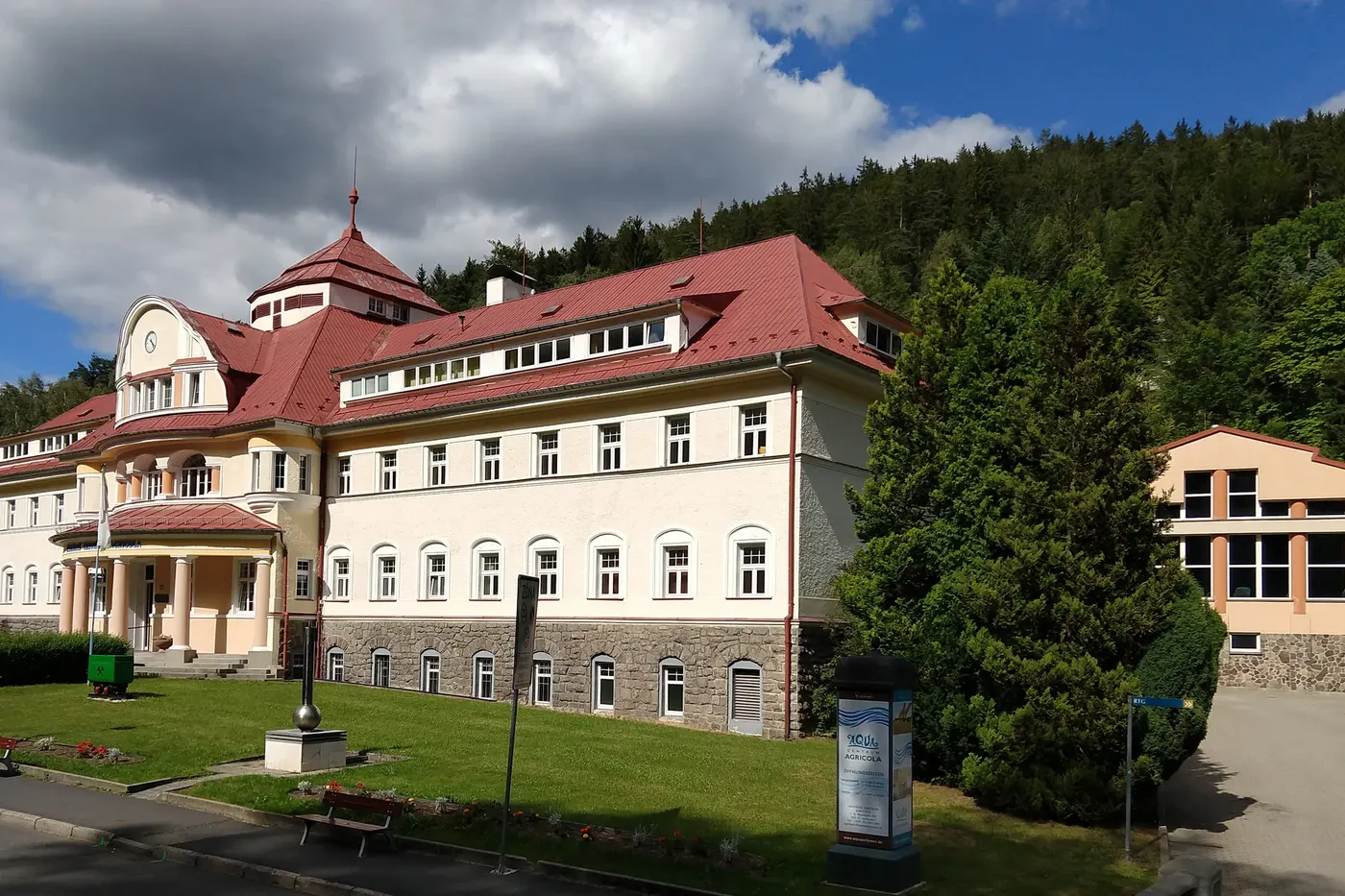
Inaugurado en 1911, el centro Agricola fue la primera instalación balnearia construida específicamente para el balneario de radón de Jáchymov, fundado en 1906 después de que el ingeniero Josef Šťastný y el doctor Leopold Gottlieb comprobaran que el agua de la mina del pozo Werner contenía radón terapéutico. Su nombre honra a Georgius Agricola, el médico y mineralogista del siglo XVI que vivió cerca de Jáchymov y documentó las vetas minerales de la región en su obra De Re Metallica, las mismas vetas que más tarde suministraron la pechblenda de uranio utilizada por los Curie. Hoy el centro aprovecha los manantiales de radón de la región, que brotan entre 29 y 36°C, para balneoterapia prescrita, y funciona además como el único parque acuático abierto todo el año en los Montes Metálicos, combinando piscinas recreativas con auténticos baños terapéuticos de radón.
Opened in 1911, the Agricola centre was the first purpose-built bathing facility of the Jáchymov radon spa, founded in 1906 after engineer Josef Šťastný and Dr. Leopold Gottlieb established that mine water from the Werner shaft carried therapeutic radon. It takes its name from Georgius Agricola, the 16th-century physician and mineralogist who lived in nearby Jáchymov and documented the region's ore veins in De Re Metallica, the same veins that later yielded the uranium pitchblende used by the Curies. Today the centre draws on the district's 29-36°C radon springs for prescribed balneotherapy while also operating as the only aquapark open year-round in the Ore Mountains, combining leisure pools with genuine radon treatment baths.
1911年に開業したアグリコラ・センターは、技師ヨセフ・シュťastnýと医師レオポルド・ゴットリープがヴェルナー坑道の鉱山水に治療効果のあるラドンが含まれることを確認し1906年に創設されたヤーヒモフ・ラドン温泉の、最初に専用建設された浴場施設である。名称は、16世紀にヤーヒモフ近郊に住み、後にキュリー夫妻が使用したウラン・ピッチブレンドと同じ鉱脈を著書『デ・レ・メタリカ』で記録した医師兼鉱物学者ゲオルギウス・アグリコラに由来する。現在センターは29〜36℃で湧出する地域のラドン泉を処方バルネオセラピーに利用する一方、エルツ山地で唯一通年営業するアクアパークとしても機能し、レジャープールと本格的なラドン治療浴を併せ持つ。
Técnicas
Techniques
技法
Bathing
Patrimonio
Inaugurado en 1911 como el primer balneario construido específicamente para el balneario de radón de Jáchymov (fundado en 1906), lleva el nombre del mineralogista del siglo XVI Georgius Agricola, quien documentó las vetas minerales de la región. Forma parte de la Región Minera del Erzgebirge/Krušnohoří de la UNESCO, inscrita en 2019.
Heritage
Opened in 1911 as the first purpose-built bathhouse of the Jáchymov radon spa (founded 1906), named for 16th-century mineralogist Georgius Agricola who documented the district's ore veins. Part of the UNESCO Erzgebirge/Krušnohoří Mining Region inscribed in 2019.
文化財
1911年、ヤーヒモフ・ラドン温泉(1906年創設)の最初の専用浴場として開業し、この地域の鉱脈を記録した16世紀の鉱物学者ゲオルギウス・アグリコラにちなんで名付けられた。2019年登録のユネスコ「エルツ山地/クルシュノホジー鉱業地域」の一部。
Otros manantiales en Czechia