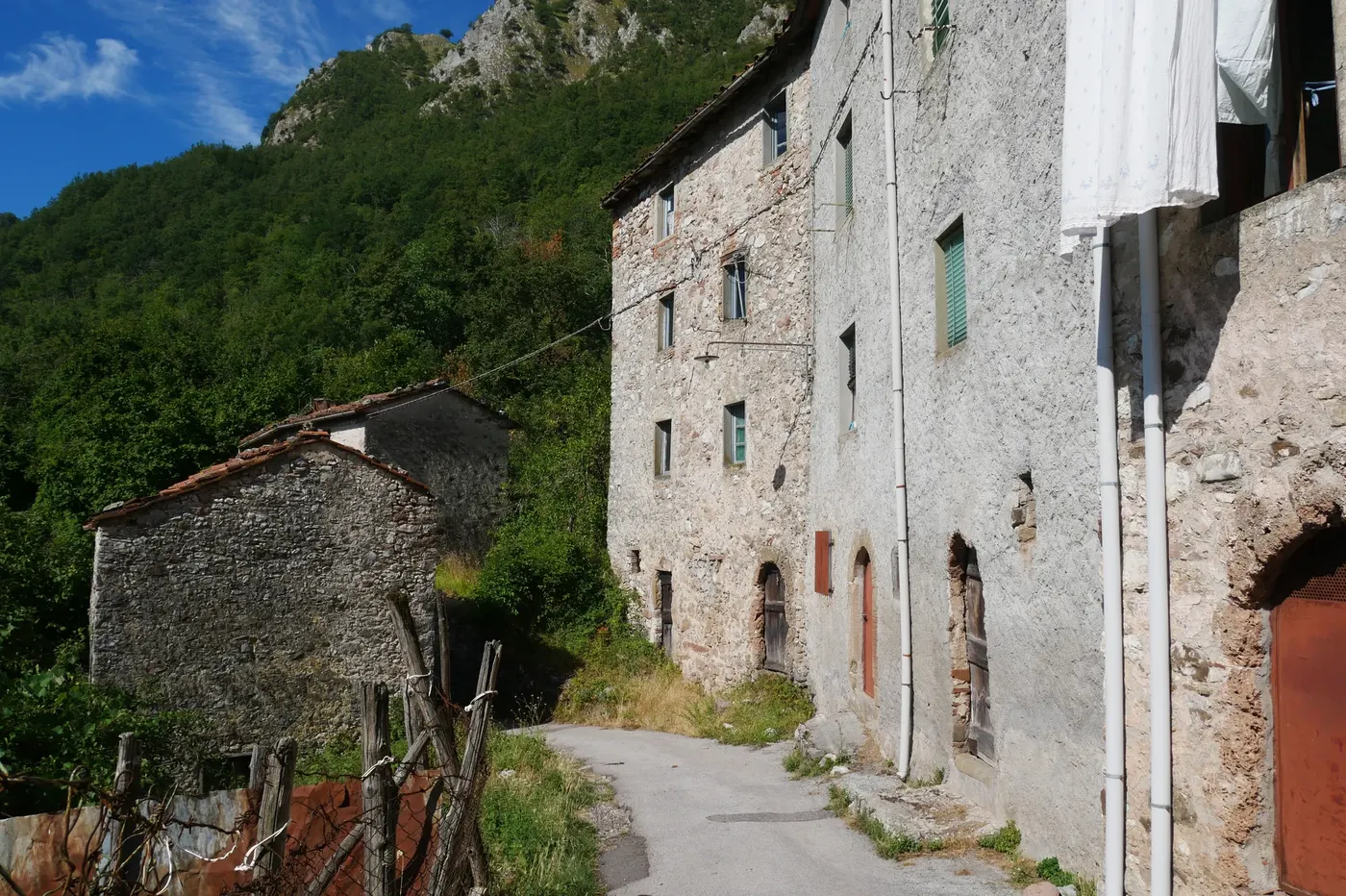
Manantiales / Bagni di LuccaSprings / Bagni di Lucca温泉・鉱泉 / Bagni di Lucca
📅 Establecido
Documented since 983; formalized as a spa town in 1810 under Elisa Baciocchi
📅 Established
Documented since 983; formalized as a spa town in 1810 under Elisa Baciocchi
📅 開設
Documented since 983; formalized as a spa town in 1810 under Elisa Baciocchi
SulphatedBicarbonated
✓ Verificado el 2026-07-28
✓ Verified on 2026-07-28
✓ 確認日 2026-07-28
Bagni di Lucca, en las colinas sobre Lucca, tiene un uso terapéutico documentado de sus aguas termales que se remonta al menos al año 983, con un periodo de renovada fama en tiempos de la condesa Matilde de Canossa, en el siglo XI. Elisa Baciocchi, hermana de Napoleón, restauró los antiguos baños entre 1805 y 1847, y la localidad se convirtió en uno de los destinos termales más elegantes de la Europa del siglo XIX. Sus manantiales sulfatado-bicarbonatado-cálcicos oscilan entre unos 36°C y 54,1°C, el más caliente en el manantial Doccione, en la zona de Bagni Caldi.
Bagni di Lucca, in the hills above Lucca, has documented therapeutic use of its thermal waters dating back to at least 983, with a period of renewed fame during the time of Countess Matilda of Canossa in the 11th century. Napoleon's sister, Elisa Baciocchi, restored the ancient baths between 1805 and 1847, and the town became one of the most elegant spa destinations in 19th-century Europe. Its sulphate-bicarbonate-calcium springs range from about 36°C to 54.1°C, the hottest at the Doccione spring in the Bagni Caldi area.
ルッカ近郊の丘陵地にあるバーニ・ディ・ルッカでは、少なくとも983年まで遡る温泉水の治療利用の記録があり、11世紀のマティルデ・ディ・カノッサ伯爵夫人の時代に再び名声を得た。ナポレオンの妹エリザ・バチョッキが1805年から1847年にかけて古代の浴場を修復し、この町は19世紀ヨーロッパで最も洗練された温泉保養地の一つとなった。硫酸塩・重炭酸塩・カルシウム泉は約36°Cから54.1°Cの範囲で、最も高温なのはバーニ・カルディ地区のドッチョーネ泉である。
Técnicas
Techniques
技法
Bathing
Patrimonio
Elisa Baciocchi, hermana de Napoleón, restauró los antiguos baños entre 1805 y 1847, y la localidad —a la que su círculo llamaba a veces 'la Suiza italiana'— atrajo a numerosos personajes destacados del siglo XIX, entre ellos Michel de Montaigne, Lord Byron, Percy Shelley, Montesquieu y Giacomo Puccini. El Ponte delle Catene, un puente de cadenas del siglo XIX diseñado por el arquitecto Lorenzo Nottolini, sigue siendo un hito de la época.
Heritage
Napoleon's sister Elisa Baciocchi restored the ancient baths from 1805 to 1847, and the town — sometimes called 'the Italian Switzerland' by her circle — attracted a roster of 19th-century notables including Michel de Montaigne, Lord Byron, Percy Shelley, Montesquieu, and Giacomo Puccini. The Ponte delle Catene, a 19th-century chain bridge by architect Lorenzo Nottolini, remains a landmark of the era.
文化財
ナポレオンの妹エリザ・バチョッキが1805年から1847年にかけて古代の浴場を修復し、この町は彼女の側近から「イタリアのスイス」と呼ばれることもあり、ミシェル・ド・モンテーニュ、バイロン卿、パーシー・シェリー、モンテスキュー、ジャコモ・プッチーニなど19世紀の著名人を惹きつけた。建築家ロレンツォ・ノットリーニによる19世紀の鎖橋「ポンテ・デッレ・カテーネ」は今もこの時代の名所として残る。
Otros manantiales en Italy