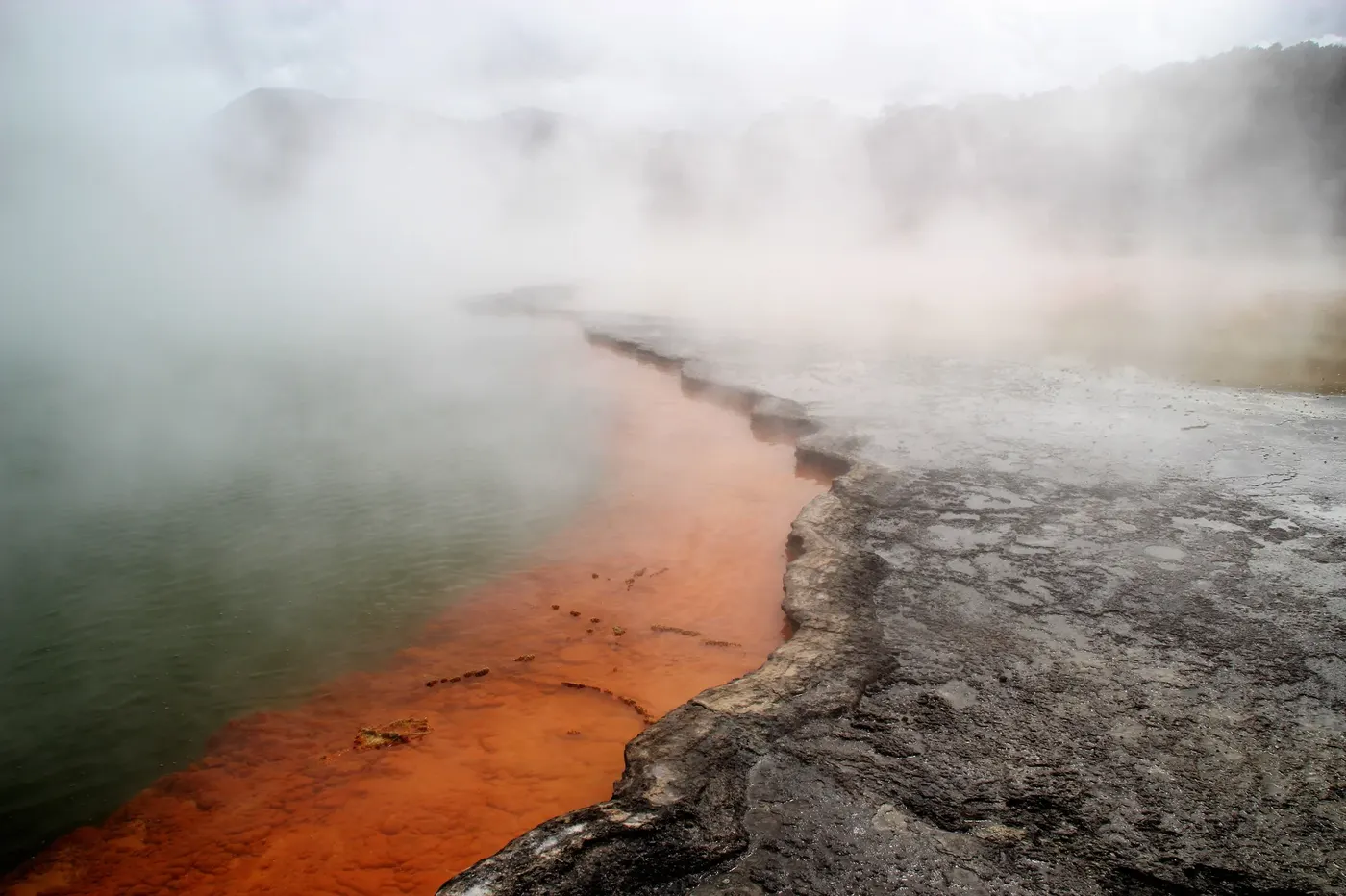
Photo by Kristina Schultheiß on Pexels
🇳🇿 New Zealand · Lewis Pass, South Island
♨ Temperatura
56°C
⛰ Altitud
586 m
⚗ pH
7.3
💧 TDS
—
🌊 Caudal
—
📅 Establecido
—
✓ Verificado el 2026-07-28
Maruia Hot Springs se encuentra junto al río Maruia, en Lewis Pass, dentro de los Alpes del Sur de la Isla Sur, en tierras usadas por los maoríes desde hace mucho tiempo; su nombre significa refugio, abrigo o lugar acogedor. Los manantiales se han utilizado durante cientos de años, incluso como parada de descanso para los comerciantes maoríes de pounamu (jade), y los colonos europeos construyeron cabañas rústicas aquí a finales del siglo XIX, antes de que el lugar se convirtiera gradualmente en un hotel. Según el operador, el agua del manantial es sulfurosa, con un pH de 7.3 y una temperatura media de origen de 56°C, y se canaliza hacia un hotel, una casa de baños de estilo japonés, spas privados y pozas de roca. La propiedad fue ampliamente renovada tras un cambio de propietarios en 2015.
Los maoríes utilizaron la zona de Maruia durante cientos de años, incluso como punto de descanso en una ruta de comercio de pounamu (jade); el nombre Maruia significa refugio, abrigo o lugar acogedor. Los colonos europeos construyeron cabañas sencillas aquí a finales del siglo XIX, y el lugar se convirtió gradualmente en un hotel a lo largo del siglo siguiente.
Hoy en día, los manantiales se disfrutan a través de una combinación de casa de baños de estilo japonés, spas privados y pozas de roca, uniendo el uso histórico maorí del lugar con un concepto de baño de influencia japonesa introducido posteriormente por el resort.
Sitio webwww.maruiahotsprings.nz
Dirección1513 State Highway 7, Lewis Pass 7847, Maruia Springs, South Island, New Zealand