Manantiales / Noboribetsu OnsenSprings / Noboribetsu Onsen温泉・鉱泉 / Noboribetsu Onsen
SulphurousFerruginousChlorinatedAcidic
✓ Verificado el 2026-07-22
✓ Verified on 2026-07-22
✓ 確認日 2026-07-22
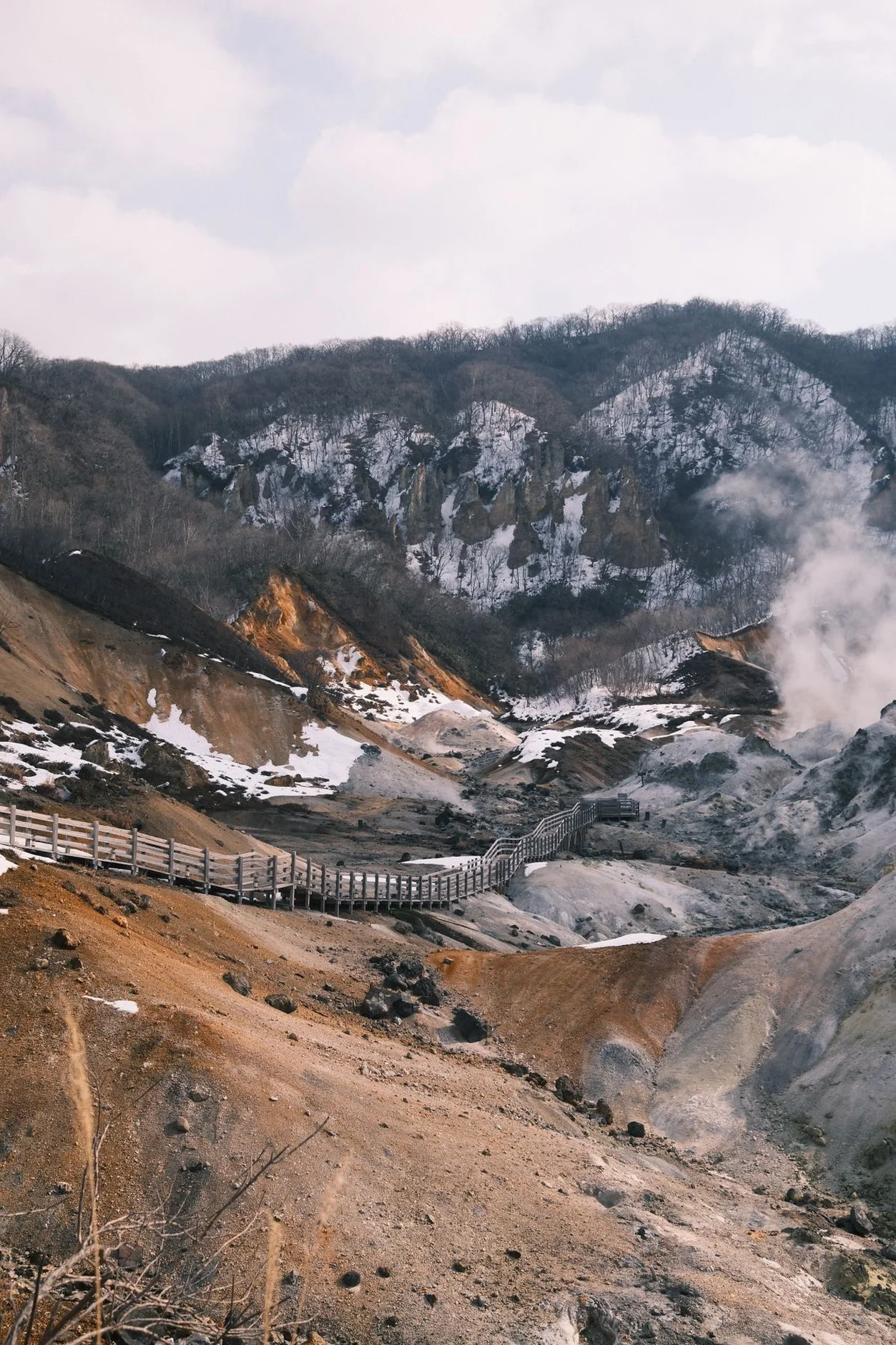
Noboribetsu, en la isla de Hokkaido, produce más agua termal que cualquier otro onsen de Japón: el valle volcánico de Jigokudani ('Valle del Infierno') vierte diariamente 10.000 toneladas de agua geotérmica en 11 composiciones minerales diferentes —sulforosa, ferruginosa, salina, ácida, alcalina y más—, convirtiendo el destino en un laboratorio termal natural. La ciudad de Noboribetsu, a los pies del valle, concentra docenas de ryokan que canalizan distintos tipos de agua hacia sus instalaciones. La zona es parte del Parque Nacional Shikotsu-Toya, y el valle del Jigokudani es visitable por una pasarela elevada sobre las pozas y fumarolas activas.
Noboribetsu is Hokkaido's premier thermal resort, centred on the dramatic Jigokudani (Hell Valley) — a volcanic caldera that erupts 10,000 tonnes of hot spring water daily in 11 different mineral compositions, making Noboribetsu the highest-volume natural onsen source in Japan. The valley's rust-red volcanic landscape, with boiling mud pools, sulphur vents, and steaming rivers, can be walked on an elevated boardwalk trail while the onsen town below draws the healing water to dozens of ryokan facilities. Each spring type — sulphurous, iron-rich, acidic, alkaline, saline, and more — has distinct therapeutic applications, making Noboribetsu unusual in its ability to offer visitors multiple spring types in a single visit.
Noboribetsu Onsenは日本・Hokkaidoに位置する硫黄泉・含鉄泉。源泉温度は95℃の豊かな温泉水が湧き出る。泉水は強酸性(pH約1.8)の泉質、塩化物泉・ナトリウム泉を豊富に含む、総溶解固形物5400 mg/Lが特徴だ。1858年創業。皮膚科治療・リウマチ療法・循環器療法など多様な温浴療法が行われる。施設では入浴・露天風呂・蒸し風呂などが体験できる。
Minerales
Minerals
ミネラル
| Sulphur | 320 mg/L |
| Iron | 850 mg/L |
| Chloride | 2800 mg/L |
| Sodium | 1950 mg/L |
| Sulphate | 1200 mg/L |
Tratamientos
Treatments
トリートメント
DermatologyRheumatologyCardiovascularSkin RejuvenationRelaxation
Técnicas
Techniques
技法
BathingOpen-Air Bath (Rotenburo)Steam BathFull-Body Immersion
Patrimonio
El desarrollo termal de Noboribetsu comenzó en 1858, cuando un guía ainu local condujo a colonos japoneses hasta los manantiales. El pueblo ainu de Hokkaido conocía los manantiales desde mucho antes y los utilizaba con fines curativos; el nombre 'Noboribetsu' deriva de la palabra ainu 'nupuri-pet', que significa 'río turbio'. La caldera de Jigokudani ha sido un lugar de ceremonias espirituales ainu relacionadas con los espíritus volcánicos de la tierra, y la tradición de respetar el terreno volcánico como una entidad viva sigue influyendo en las prácticas de conservación modernas.
Heritage
Noboribetsu's thermal development began in 1858 when a local Ainu guide led Japanese settlers to the springs. The Ainu people of Hokkaido had long been aware of the springs and used them for healing; the name 'Noboribetsu' derives from the Ainu word 'nupuri-pet' meaning 'turbid river.' The Jigokudani caldera has been a place of Ainu spiritual ceremony related to volcanic earth spirits, and the tradition of respecting the volcanic terrain as a living entity informs modern conservation practices.
文化財
登別の温泉開発は1858年、地元のアイヌの案内人が和人の入植者たちを源泉へ導いたことに始まる。北海道のアイヌの人々は古くから温泉の存在を知り、治療に用いていた。「登別」という地名はアイヌ語の「ヌプㇽペッ(nupuri-pet)」、すなわち「色の濃い川」に由来する。地獄谷のカルデラは火山の地霊にまつわるアイヌの精神的儀礼の場でもあり、火山の大地を生きた存在として敬うこの伝統は、現代の保全活動にも息づいている。
Cultura
El dramatismo volcánico de Noboribetsu lo ha convertido en un elemento destacado de la cultura popular japonesa: la estética del Valle del Infierno aparece con frecuencia como escenario de manga, anime y películas de terror. El festival anual Jigoku Matsuri (Festival del Infierno), celebrado cada septiembre, honra el manantial volcánico con procesiones de demonios y ceremonias de fuego, fusionando la herencia ainu con la religión popular budista. Para los habitantes de Hokkaido, Noboribetsu representa el poder bruto de la naturaleza volcánica de la isla norteña.
Culture
Noboribetsu's volcanic drama has made it a major character in Japanese pop culture — the Hell Valley aesthetic appears regularly in manga, anime, and horror film settings. The annual Jigoku Matsuri (Hell Festival) each September celebrates the volcanic spring with demon processions and fire ceremonies, blending Ainu heritage with Buddhist folk religion. For Hokkaido residents, Noboribetsu represents the raw power of the northern island's volcanic nature.
文化
登別の劇的な火山景観は日本のポップカルチャーにおいて重要な存在となっており、地獄谷の美意識は漫画やアニメ、ホラー映画の舞台としてたびたび登場する。毎年9月に開催される「地獄まつり」は、鬼の行列や火の儀式によって火山の温泉を祝う祭りで、アイヌの伝統と仏教系の民間信仰が融合している。北海道の住民にとって、登別はこの北の島が持つ火山の自然の生々しい力を象徴する存在である。
Sostenibilidad
El sistema de manantiales de Noboribetsu forma parte del Parque Nacional Shikotsu-Toya, el más visitado de Japón. El valle de Jigokudani está vedado al desarrollo; solo se permite el paseo elevado de madera. La localidad termal realiza un monitoreo semestral de los gases volcánicos para garantizar la seguridad de los visitantes y detectar cambios en la actividad volcánica subterránea. La temperatura y el caudal del agua del manantial se miden de forma continua en 23 estaciones de monitoreo.
Sustainability
Noboribetsu's spring system is part of Shikotsu-Toya National Park, Japan's most visited. The Jigokudani valley is off-limits to development; only the elevated boardwalk is permitted. The onsen town conducts biannual volcanic gas monitoring to ensure visitor safety and detect changes in underground volcanic activity. Spring water temperature and flow are measured continuously at 23 monitoring stations.
持続可能性
登別の源泉システムは、日本で最も来訪者数の多い支笏洞爺国立公園の一部である。地獄谷は開発が禁止されており、高架式の遊歩道の設置のみが認められている。この温泉町では、来訪者の安全確保と地下の火山活動の変化を検知するため、年2回の火山ガス調査を実施している。源泉の温度と湧出量は23か所の観測所で継続的に計測されている。
Otros manantiales en Japan