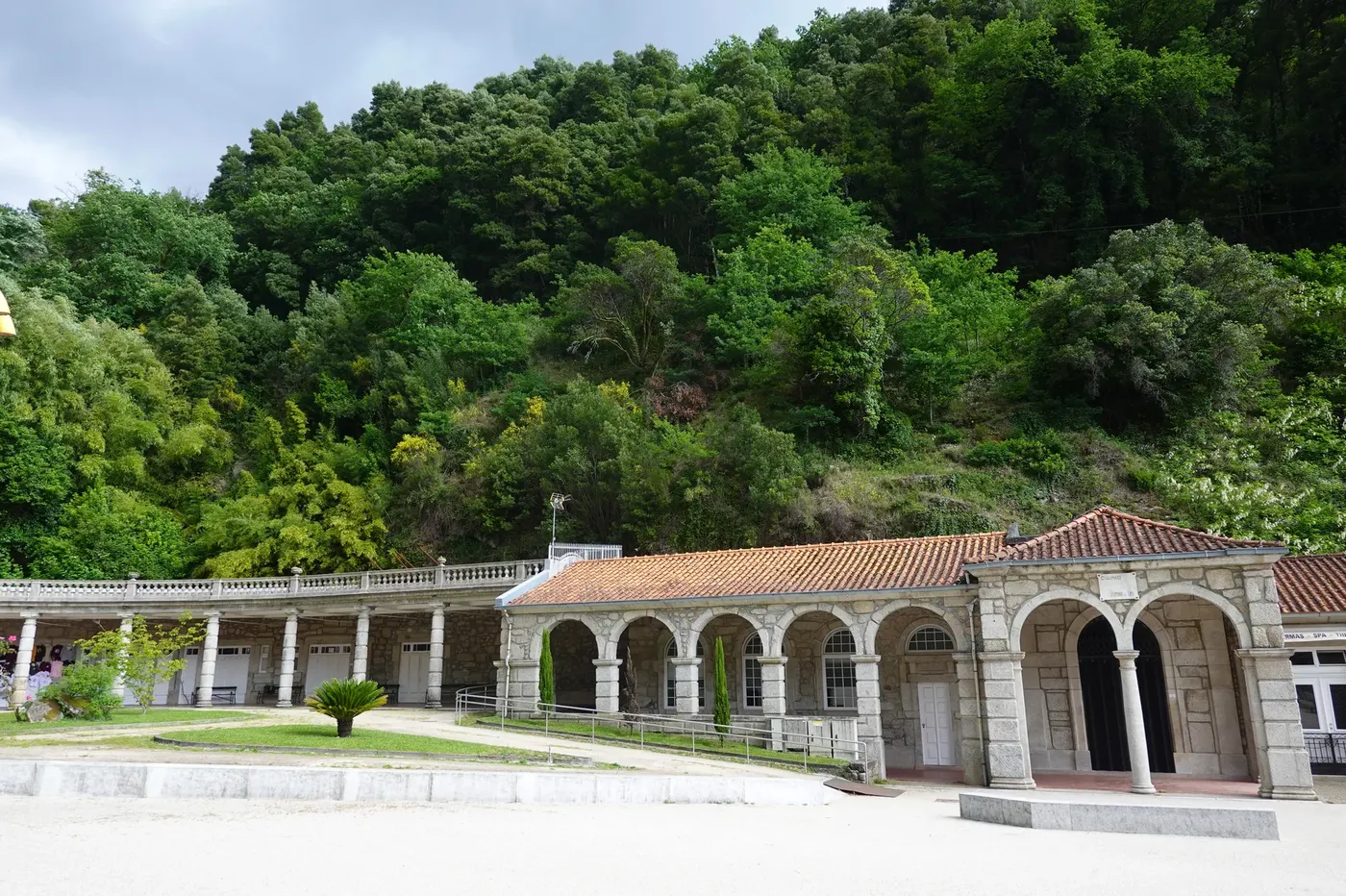
Photo by Joseolgon, via Wikimedia Commons (CC BY 4.0)
🇵🇹 Portugal · Minho (Terras de Bouro, Braga District, Peneda-Gerês National Park)
Photo by Joseolgon, via Wikimedia Commons (CC BY 4.0)
🇵🇹 Portugal · Minho (Terras de Bouro, Braga District, Peneda-Gerês National Park)
♨ Temperatura
—
⛰ Altitud
—
⚗ pH
—
💧 TDS
—
🌊 Caudal
—
📅 Establecido
Roman-era use evidenced by coins found near the springs during 1897 excavations; first bathing structures (granite tanks known as 'Os Poços') built under King João V in the early 18th century; the first formal Thermal Establishment began construction in 1897
✓ Verificado el 2026-07-30
Termas do Gerês se encuentra en el pueblo de Termas do Gerês, parroquia de Vilar da Veiga, municipio de Terras de Bouro, dentro del Parque Nacional de Peneda-Gerês. El uso en época romana está documentado por monedas halladas cerca de los manantiales durante excavaciones de 1897. Las primeras estructuras de baño —tanques de granito resguardados en refugios de piedra conocidos como 'Os Poços'— se construyeron bajo el reinado de João V a principios del siglo XVIII, y el primer establecimiento termal formal comenzó a construirse en 1897. La realeza portuguesa, incluyendo al rey Luis I y al futuro rey Carlos I, visitó el lugar en 1888. Las aguas se indican tradicionalmente para afecciones hepáticas, biliares, obesidad, diabetes, hipertensión y reumatismo crónico, aunque no se pudieron verificar cifras publicadas de temperatura, pH o contenido mineral.
El uso en época romana está documentado por monedas halladas cerca de los manantiales durante excavaciones de 1897. Las primeras estructuras de baño, tanques de granito llamados 'Os Poços', se construyeron bajo el reinado de João V a principios del siglo XVIII. La realeza portuguesa, incluyendo al rey Luis I y al futuro rey Carlos I, visitó el lugar en 1888, y el primer establecimiento termal formal comenzó a construirse en 1897.
Una leyenda local atribuye poder curativo a las aguas a través de Santa Eufemia, con la inscripción 'Aegri Surgunt Sani' ('Los enfermos se levantan sanos') exhibida en la casa del manantial.
Teléfono+351 253 390 190
Sitio webwww.aguasdogeres.pt
DirecciónAvenida Manuel Francisco da Costa, nº 296, 4845-067 Gerês, Portugal