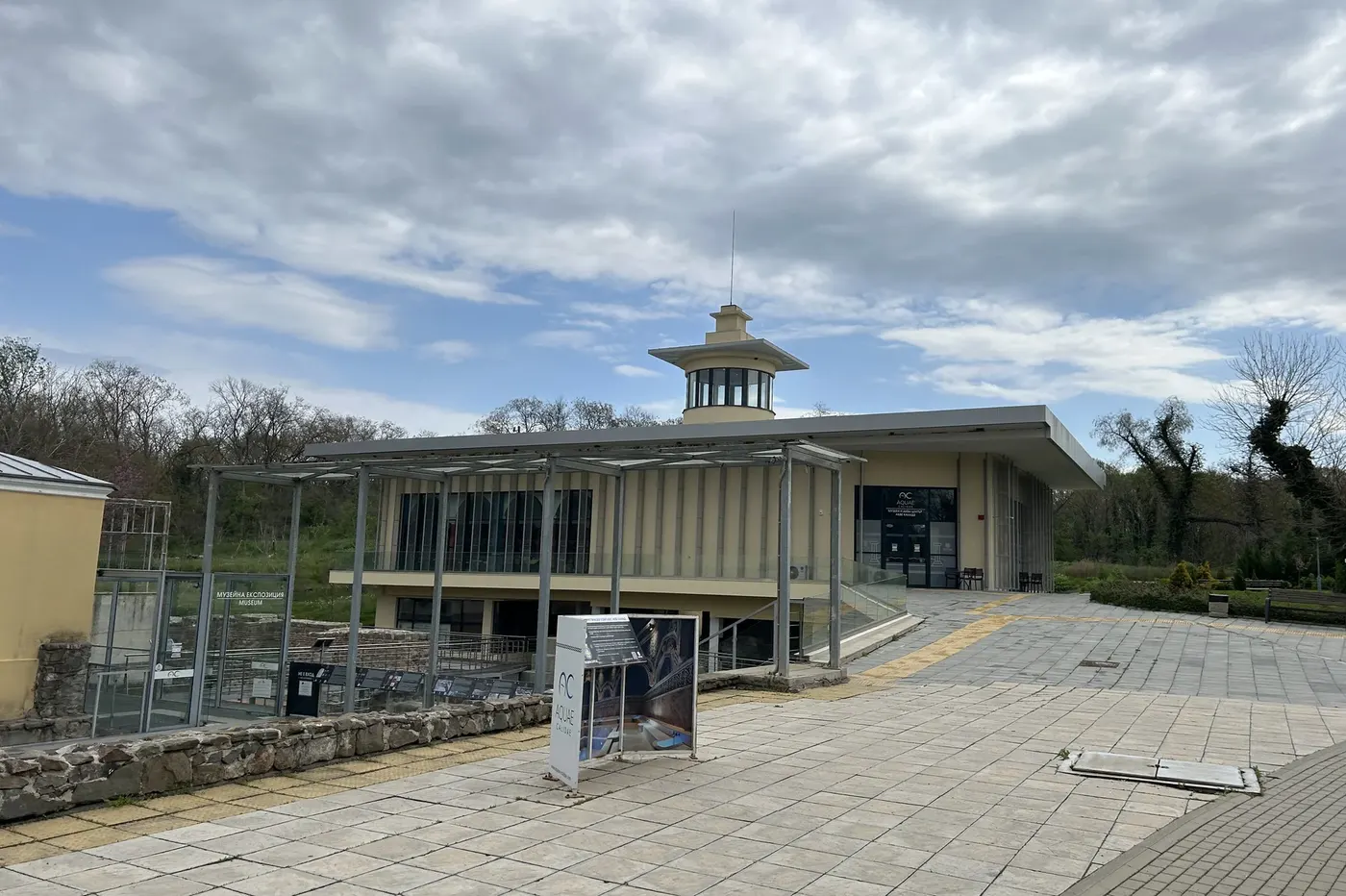
Photo by Galileo01, via Wikimedia Commons (CC BY 4.0)
🇧🇬 Bulgaria · Burgas Province
Photo by Galileo01, via Wikimedia Commons (CC BY 4.0)
🇧🇬 Bulgaria · Burgas Province
♨ Temperature
—
⛰ Altitude
—
⚗ pH
—
💧 TDS
—
🌊 Flow rate
—
📅 Established
Thracian sanctuary of the Three Nymphs (1st millennium BC); Roman baths expanded under Trajan (98–117 AD); rebuilt by Ottoman Sultan Suleiman I in 1562; archaeological reserve declared 2011, museum complex opened 2015
✓ Verified on 2026-07-31
Few thermal sites in Europe carry as unbroken a record of use as Aquae Calidae, on the edge of Burgas near the Black Sea. Thracian settlers built a sanctuary to the Three Nymphs here in the 1st millennium BC, drawn by the naturally hot spring emerging from the ground. Rome absorbed the site after the Third Mithridatic War and expanded it into a proper bath station under Emperor Trajan, linking it to the Via Pontica road network. Byzantine emperor Justinian I fortified it with walls in the 6th century, and it was known through the Middle Ages as Therma or Thermopolis, contested between Bulgaria and Byzantium until Crusaders burned the settlement in 1206. Ottoman Sultan Suleiman I restored the baths in 1562, renaming the area Lădzha. A 36,000-square-metre archaeological reserve declared in 2011 now protects the excavated layers, and a restored museum complex opened in 2015 lets visitors walk past Suleiman's rebuilt bath, mineral-water fountains and a glass viewing floor over the ongoing dig.
AddressAquae Calidae Archaeological Complex, Vetren/Banevo district, Burgas, Bulgaria