Photo by Yacàwotçã, via Wikimedia Commons (CC BY 2.0)
🇯🇵 Japan · Oita Prefecture, Kyushu
Photo by Yacàwotçã, via Wikimedia Commons (CC BY 2.0)
🇯🇵 Japan · Oita Prefecture, Kyushu
♨ Temperature
55°C
⛰ Altitude
5 m
⚗ pH
2.8
💧 TDS
4200 mg/L
🌊 Flow rate
1300 L/s
📅 Established
8th century
✓ Verified on 2026-07-22
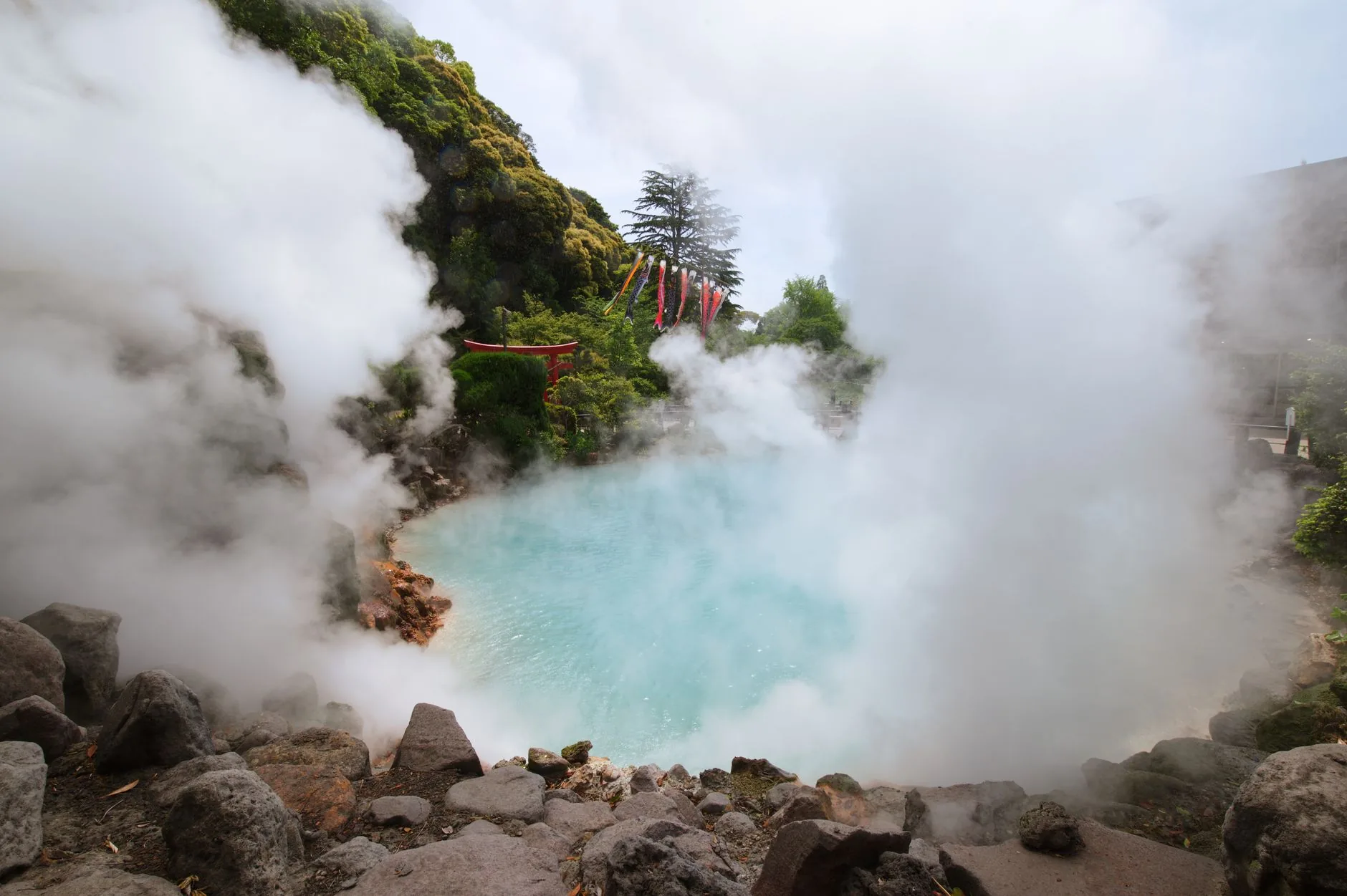
Beppu produces over 130,000 kilolitres of hot spring water daily from more than 2,800 sources — second only to Yellowstone in global output. The Eight Hells (Jigoku) range from blood-red iron springs to cobalt-blue sulphur pools, boiling mud geysers, and ultrabasic alkaline springs. Japanese onsen bathing culture has thrived here for over 1,000 years. Different source springs serve completely different therapeutic purposes.
| Sulphur | 38 mg/L |
| Sodium Chloride | 2800 mg/L |
| Bicarbonate | 450 mg/L |
| Iron | 22 mg/L |
| Radium | 0.04 mg/L |
Beppu's onsen culture dates to the 8th century, with records in the Nihon Shoki (720 AD) describing imperial visits to the region's healing springs. The Eight Hells (Jigoku) are designated national cultural assets. The Beppu Hatto — eight spring districts — represent one of Japan's most significant living thermal heritage landscapes.
In Japanese culture, onsen bathing is both a physical and spiritual practice. The concept of yu-no-hana (bathing flowers) — mineral deposits left by thermal water — is considered a gift of the earth. Beppu's scale and diversity have made it the capital of Japanese onsen culture: a place where bathing in different water types across a single day is a cherished pilgrimage tradition.
Beppu's geothermal energy is increasingly being harnessed for community heating, power generation, and food production — a model of integrated geothermal resource management. The city monitors spring flow rates to prevent over-extraction. Traditional onsen management (onsenkenri) emphasises stewardship of the shared water commons, balancing tourism with long-term spring preservation.