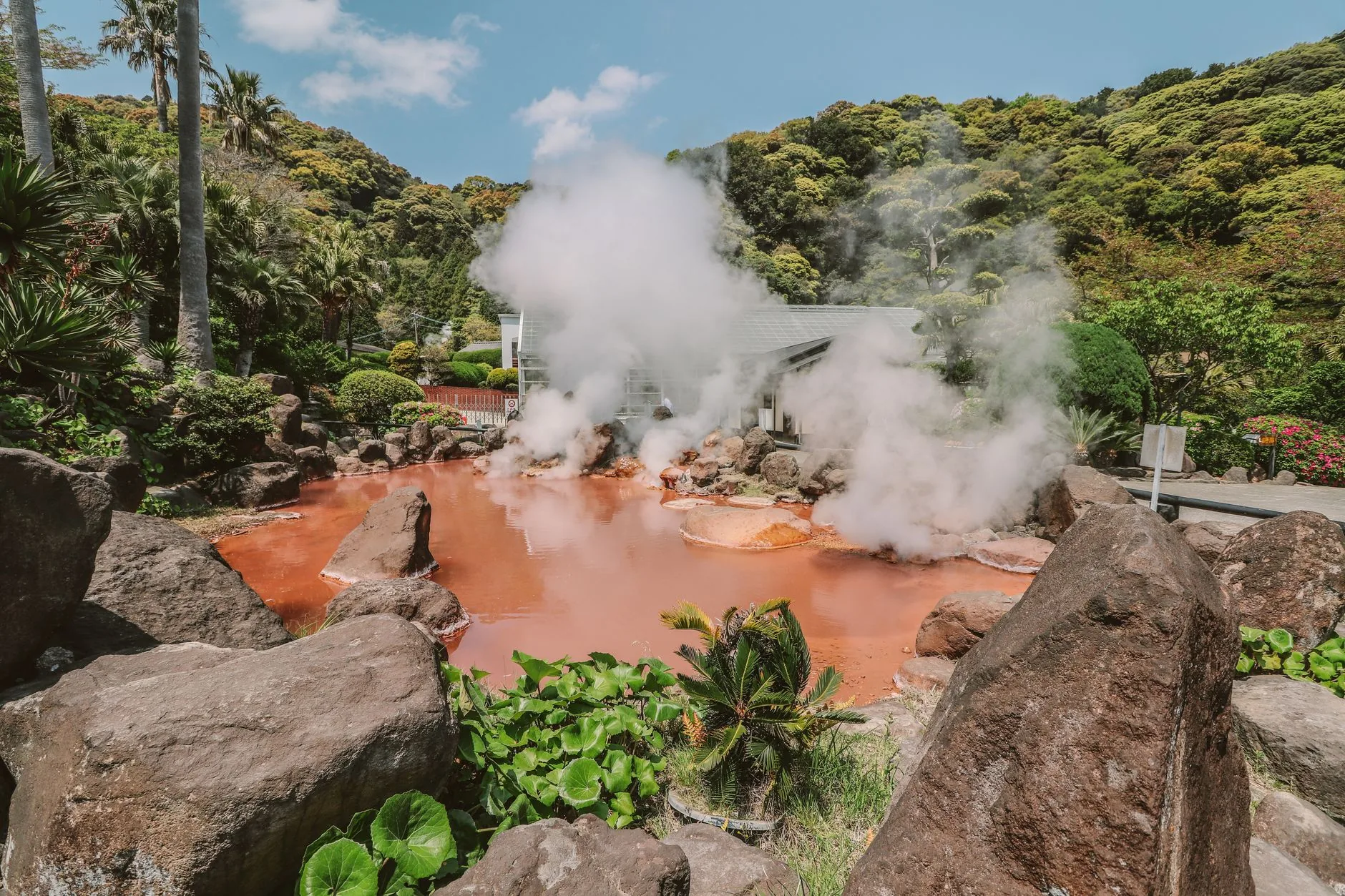
Photo by 663highland, via Wikimedia Commons (CC BY 2.5)
🇯🇵 Japan · Nagasaki
♨ Temperature
90°C
⛰ Altitude
700 m
⚗ pH
2.3
💧 TDS
1200 mg/L
🌊 Flow rate
80 L/s
📅 Established
1653
✓ Verified on 2026-07-22
Unzen Onsen sits at the heart of Japan's first national park, on the Shimabara Peninsula above Nagasaki. The Unzen Jigoku — 'Unzen Hells' — are a spectacular volcanic landscape of boiling mud pools, steaming fumaroles, and sulphurous craters that dominate the mountain plateau. The strongly acidic spring water (pH 2.3) is one of Japan's most potent therapeutic waters, renowned for its dramatic anti-bacterial and dermatological properties. Unzen's history is also dark: the site was used during the Christian persecutions of the early 17th century as a place of execution by boiling. Today it is a place of peace and healing, connecting Nagasaki's complex history of international exchange with Japan's volcanic landscape.
| Sulphate | 680 mg/L |
| Sulphur (H₂S) | 28 mg/L |
| Aluminium | 120 mg/L |
| Iron | 45 mg/L |
| Chloride | 89 mg/L |
Unzen was formally developed as a therapeutic spa resort in 1653 by the Dutch trading company VOC, making it one of the first hot spring resorts in East Asia established for Western visitors. The VOC maintained a factor here during the Edo period isolation, and Western diplomats from Nagasaki's Dejima island used Unzen as a summer retreat. The first Western-style hotel in Japan was built at Unzen in 1878 to accommodate international visitors from Nagasaki.
Unzen occupies a unique position in Japan's cultural history as a place where volcanic nature, Christian martyrdom, and international exchange converge. The jigoku — volcanic hell vents — are a major aesthetic motif in Japanese art, representing nature's power and impermanence. Local culture combines Buddhist mountain worship traditions with a Nagasaki openness to international influence, creating a distinctive cultural identity that mirrors the port city's cosmopolitan history.
Unzen is part of the Unzen-Amakusa National Park, Japan's oldest (designated 1934), with strict land use controls protecting volcanic terrain and spring catchment areas. The active Unzen-Fugen-dake volcano, which erupted in 1991, requires continuous geological monitoring that also safeguards the spring water system. Visitor infrastructure was redesigned after the 1991 eruption to redirect tourism pressure away from the most geologically sensitive zones.