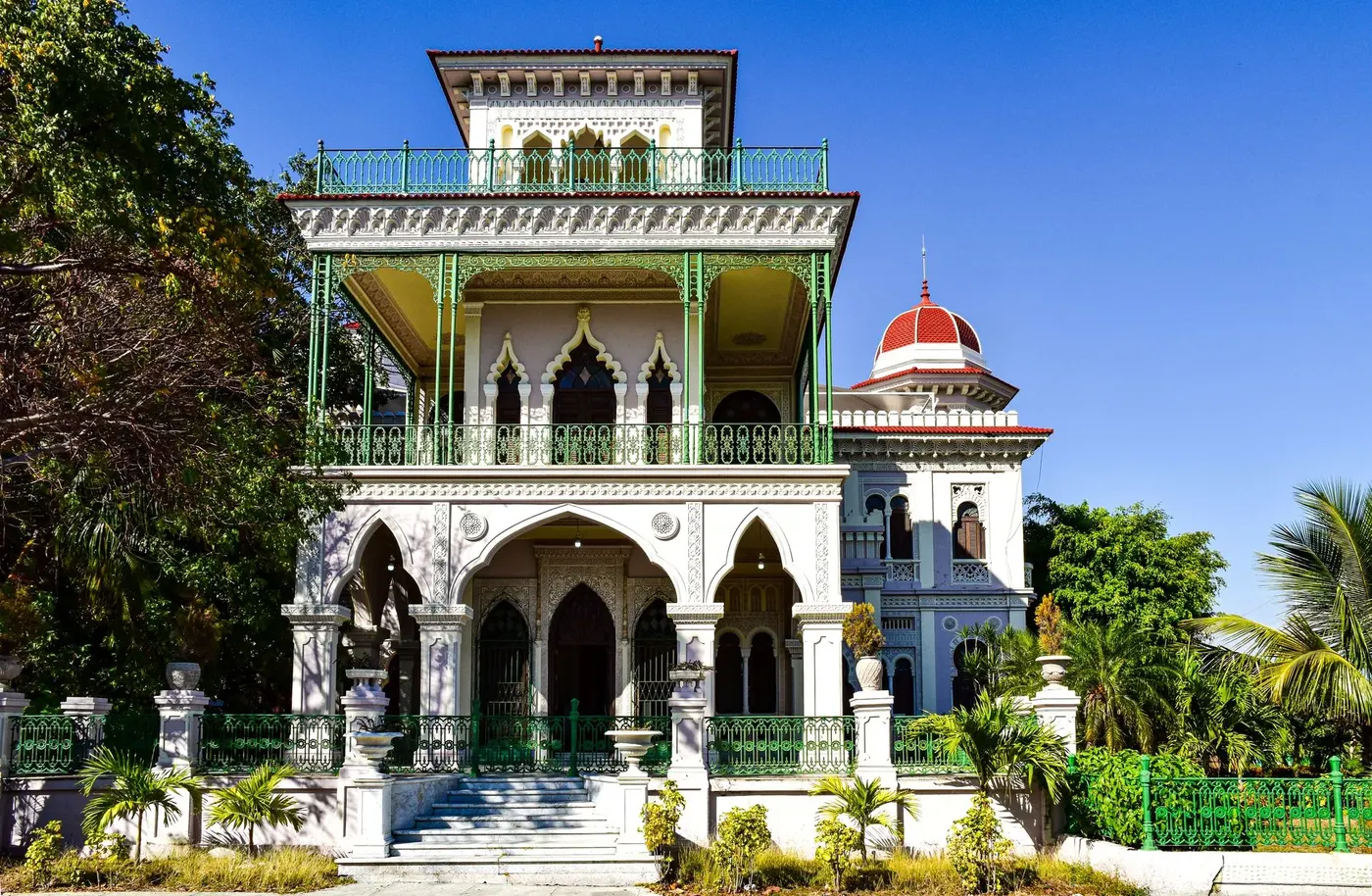
Balneario Elguea

🇨🇺 Cuba · Villa Clara Province

Balneario Elguea

Manantiales / Balneario ElgueaSprings / Balneario Elguea温泉・鉱泉 / Balneario Elguea

♨ Temperatura

47°C

⛰ Altitud

15 m

⚗ pH

7.6

💧 TDS

1840 mg/L

🌊 Caudal

18 L/s

📅 Establecido

Springs discovered mid-19th century; Soviet-era resort complex built 1960s–1980s

♨ Temperature

47°C

⛰ Altitude

15 m

⚗ pH

7.6

💧 TDS

1840 mg/L

🌊 Flow rate

18 L/s

📅 Established

Springs discovered mid-19th century; Soviet-era resort complex built 1960s–1980s

♨ 温度

47°C

⛰ 標高

15 m

⚗ pH

7.6

💧 TDS

1840 mg/L

🌊 流量

18 L/s

📅 開設

Springs discovered mid-19th century; Soviet-era resort complex built 1960s–1980s

ThermalRadioactiveBalneologySoviet Architecture

✓ Verificado el 2026-07-22

✓ Verified on 2026-07-22

✓ 確認日 2026-07-22

El Balneario Elguea es el balneario termal más célebre y médicamente significativo de Cuba, situado en las planicies costeras bajas de la provincia de Villa Clara. Los manantiales naturales emergen a unos 44–49 °C desde un acuífero profundo de caliza, con un contenido mineral caracterizado por compuestos de azufre, cloruro de sodio, bicarbonato de calcio y radón traza. Tras la Revolución de 1959 y la alineación de Cuba con la Unión Soviética, Elguea fue notablemente ampliado en uno de los más grandes complejos balneológicos médicos del Caribe, siguiendo el modelo soviético de sanatorio: instalaciones residenciales de gran capacidad donde los pacientes realizaban cursos de tratamiento supervisados por personal médico.

Balneario Elguea is Cuba's most celebrated and medically significant thermal spa, set on the flat coastal lowlands of Villa Clara Province near the town of Corralillo. The natural springs emerge at approximately 44–49°C from a deep limestone aquifer, carrying a mineral load characterised by sulphur compounds, sodium chloride, calcium bicarbonate, and trace radon — a combination that Cuban and Soviet medical tradition associated with treatment of musculoskeletal, dermatological, and nervous system conditions. The springs were discovered in the 19th century and initially developed as a modest spa by Cuban landowners. Following the 1959 Revolution and Cuba's alignment with the Soviet Union, Elguea was substantially expanded into one of the largest medical balneological complexes in the Caribbean, following the Soviet sanatorium model: large-capacity residential facilities where patients underwent prescribed treatment courses supervised by medical staff. At peak capacity the complex accommodated hundreds of patients simultaneously, administered by specialised physicians in thermal medicine. The resort's architecture is a characteristic expression of late Soviet functionalism — austere concrete blocks set in a flat tropical landscape — at odds with the traditional aesthetic of European spa towns but consistent with the Soviet view of thermal medicine as a branch of clinical healthcare rather than luxury leisure. Elguea continues to operate and attracts international medical tourists alongside domestic Cuban patients, who access treatment at subsidised rates under Cuba's universal healthcare system.

Balneario Elgueaはキューバ・Villa Clara Provinceに位置する温熱泉・放射能泉。源泉温度は47℃の豊かな温泉水が湧き出る。泉水はアルカリ性(pH約7.6)の泉質、塩化ナトリウム泉・重炭酸カルシウムを豊富に含む、総溶解固形物1840 mg/Lが特徴だ。数世紀にわたる歴史を持つ。リウマチ療法・皮膚科治療・神経科など多様な温浴療法が行われる。施設では温泉浸浴・泥パック・水治療法などが体験できる。

Minerales

Minerals

ミネラル

Sodium Chloride620 mg/L
Calcium Bicarbonate285 mg/L
Sulphate198 mg/L
Hydrogen Sulphide12 mg/L
Radon1.4 mg/L
Magnesium65 mg/L

Tratamientos

Treatments

トリートメント

RheumatologyDermatologyNeurologyMusculoskeletalPhysiotherapy

Técnicas

Techniques

技法

Thermal immersion bathMud packHydrotherapyMedical physiotherapy

Patrimonio

La provincia de Villa Clara es una de las regiones históricamente más significativas de Cuba: fue allí donde el Che Guevara dirigió la decisiva Batalla de Santa Clara en diciembre de 1958, la batalla final de la Revolución Cubana que dio a las fuerzas revolucionarias el control de la isla. Los manantiales termales de Elguea tienen una historia más larga que la Revolución: documentados en registros coloniales cubanos del siglo XIX como destino de familias acaudaladas de La Habana en busca de un respiro terapéutico frente al calor húmedo de la ciudad. El desarrollo del balneario durante la era soviética representa un capítulo particular de la historia cubana: la aplicación del modelo de sanatorio soviético a un contexto caribeño, donde la filosofía médica del tratamiento balneológico administrado por el Estado se encontró con los manantiales minerales de las Antillas.

Heritage

Villa Clara Province is one of Cuba's most historically significant regions: it was here that Che Guevara led the decisive Battle of Santa Clara in December 1958, the final battle of the Cuban Revolution that gave the revolutionary forces control of the island. The thermal springs at Elguea have a longer history than the Revolution — documented in Cuban colonial records from the 19th century as a destination for wealthy Havana families seeking therapeutic respite from the city's humid heat. The Soviet-era development of the resort represents a specific chapter in Cuban history: the application of the Soviet sanatorium model to a Caribbean context, where the medical philosophy of state-administered balneological treatment met the mineral springs of the Antilles.

文化財

ビジャクララ州はキューバの歴史上最も重要な地域のひとつである。1958年12月、チェ・ゲバラがサンタクララの決戦を指揮したのはここであり、これはキューバ革命の最終決戦となり、革命勢力に島の支配権をもたらした。エルグエアの温泉は革命よりも長い歴史を持ち、19世紀のキューバ植民地時代の記録には、湿った暑さから逃れる療養地として裕福なハバナの家族が訪れる場所として記されている。ソビエト時代のこの施設の開発は、キューバ史特有の一章を成している——ソビエト式サナトリウム・モデルをカリブ海の文脈に適用し、国家が管理する温泉治療という医学思想がアンティル諸島の鉱泉と出会ったのである。

Cultura

La cultura termal cubana, tal como se expresa en Elguea, está moldeada por la confluencia de dos tradiciones: el aprecio colonial español por las aguas termales, heredado de la costumbre balneológica ibérica, y el enfoque médico-materialista soviético del tratamiento en aguas termales como una forma de terapia clínica prescrita más que de bienestar recreativo. El resultado es un balneario de atmósfera clínica poco habitual en el Caribe: los pacientes llegan no en busca de placer, sino de tratamientos, y acuden a las piscinas y a las instalaciones terapéuticas según horarios determinados por sus evaluaciones médicas. Esta seriedad de propósito le confiere a Elguea un carácter distinto al de casi cualquier otro destino de spa caribeño.

Culture

Cuban thermal culture, as expressed at Elguea, is shaped by the convergence of two traditions: the Spanish colonial appreciation for aguas termales, inherited from Iberian balneological custom, and the Soviet medical-materialist approach to hot spring therapy as a form of prescribed clinical treatment rather than recreational wellness. The result is a resort with a clinical atmosphere unusual for the Caribbean — patients arrive not for pleasure but for courses of treatment, attending pools and therapy facilities on schedules determined by their medical assessments. This seriousness of purpose gives Elguea a character distinct from almost every other Caribbean spa destination.

文化

エルグエアに見られるキューバの温泉文化は、二つの伝統の合流によって形づくられている。イベリア半島の温泉療法の慣習を受け継いだスペイン植民地時代の温泉に対する評価と、レクリエーション的なウェルネスというより処方された臨床治療の一形態として温泉療法を捉えるソビエト式の医学的唯物主義的アプローチである。その結果生まれたのは、カリブ海では珍しい臨床的な雰囲気を持つ施設だ。患者たちは快楽のためではなく治療のコースのために訪れ、医学的評価によって決められたスケジュールに従ってプールや治療施設に通う。この目的の真剣さが、エルグエアをほぼすべての他のカリブ海のスパ地とは一線を画す性格にしている。

Sostenibilidad

El acuífero calcáreo que alimenta los manantiales de Elguea es un sistema artesiano confinado inmerso en la geología cárstica de baja altitud del norte de Villa Clara, alimentado por la lenta circulación de las lluvias a través del interior cubano. El relativo aislamiento de Cuba respecto a los mercados de capital internacionales ha protegido, paradójicamente, el acuífero de la sobreexplotación comercial que ha reducido el caudal de manantiales en otros balnearios del Caribe. Los manantiales han mantenido un caudal constante durante todo el tiempo que existen registros.

Sustainability

The limestone aquifer feeding Elguea's springs is a confined artesian system embedded in the low-lying karst geology of northern Villa Clara, fed by the slow circulation of rainfall across the Cuban interior. Cuba's relative isolation from international capital markets has paradoxically protected the aquifer from the commercial overexploitation that has diminished spring flow at resorts elsewhere in the Caribbean. The springs have maintained consistent output for as long as records exist.

持続可能性

エルグエアの温泉に水を供給する石灰岩帯水層は、ビジャクララ州北部の低地カルスト地形に埋め込まれた被圧型の被圧地下水系であり、キューバ内陸部を通るゆっくりとした雨水循環によって涵養されている。国際資本市場からのキューバの相対的な孤立は、逆説的にこの帯水層を、カリブ海の他の温泉地で湧出量を減少させてきたような商業的な過剰開発から守ってきた。この温泉は記録が存在する限り一貫した湧出量を維持している。

Contacto

Sitio webwww.cubatravel.cu

DirecciónCorralillo, Villa Clara, Cuba

Contact

Websitewww.cubatravel.cu

AddressCorralillo, Villa Clara, Cuba

連絡先

ウェブサイトwww.cubatravel.cu

住所Corralillo, Villa Clara, Cuba

Otros manantiales en Cuba

Other springs in Cuba

近隣の温泉・鉱泉: Cuba

← Volver al directorio completo Ver en el mapa interactivo← Back to the full directory View on the interactive map← ディレクトリ全体に戻る インタラクティブマップで見る