Photo by Panoramio upload bot, via Wikimedia Commons (CC BY-SA 3.0)
🇲🇽 Mexico · Hidalgo
Photo by Panoramio upload bot, via Wikimedia Commons (CC BY-SA 3.0)
🇲🇽 Mexico · Hidalgo
♨ Temperature
38°C
⛰ Altitude
1100 m
⚗ pH
7.3
💧 TDS
680 mg/L
🌊 Flow rate
40 L/s
📅 Established
1970s (developed)
✓ Verified on 2026-07-22
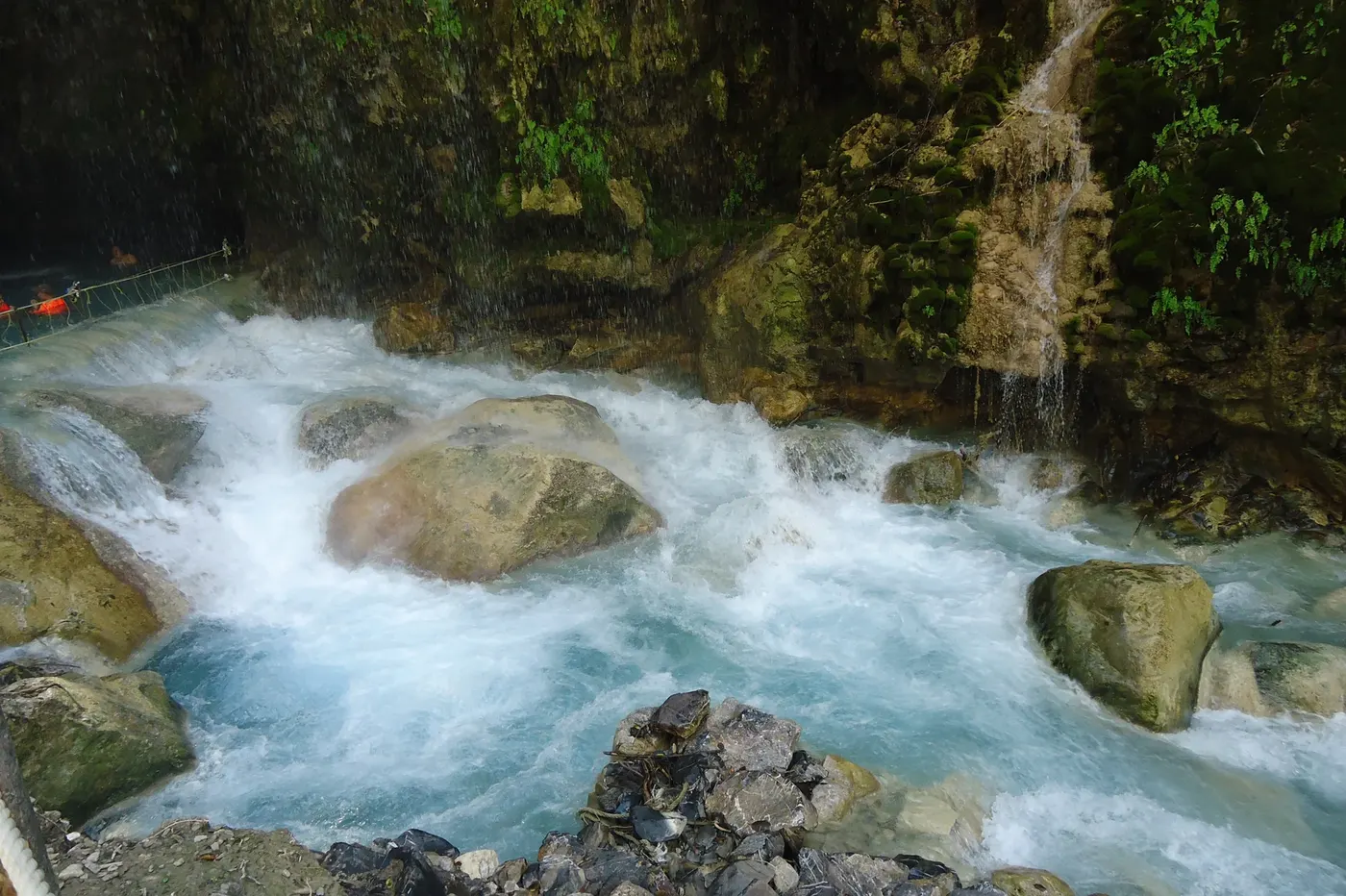
Grutas de Tolantongo is a geological wonder — a series of thermal springs that flow from a cave system carved into a limestone and volcanic canyon in the semi-arid highlands of Hidalgo state. The water, rich in calcium carbonate and minerals, has deposited natural travertine formations along the cave walls and created a series of connected turquoise pools that overflow in cascades down the canyon face. The temperature throughout the pools hovers around 38°C. The site includes both a cave interior where water emerges from the mountain and an extensive terraced pool system on the canyon slopes, with views across the Sierra Juárez landscape.
| Calcium | 185 mg/L |
| Bicarbonate | 310 mg/L |
| Magnesium | 42 mg/L |
| Sulphate | 95 mg/L |
The canyon and cave system at Tolantongo has been part of the Otomí cultural landscape of the Mezquital Valley for centuries. The thermal waters were known to the indigenous communities of Hidalgo long before the site was developed for tourism in the 1970s.
Tolantongo is managed by the local Ejido San Cristóbal community, making it one of the most successful examples of indigenous community-led thermal tourism in Mexico. Proceeds from visitor fees support health, education, and infrastructure in the surrounding villages.
Community management by the ejido system provides direct economic benefit to local families while controlling visitor numbers and infrastructure development. The natural travertine formations are protected from direct physical contact in the cave interior.
Websitewww.tolantongo.com.mx
AddressSan Cristóbal, Cardonal, Hidalgo, México