Manantiales / Kusatsu OnsenSprings / Kusatsu Onsen温泉・鉱泉 / Kusatsu Onsen
SulphurousAcidicChlorinated
✓ Verificado el 2026-07-22
✓ Verified on 2026-07-22
✓ 確認日 2026-07-22
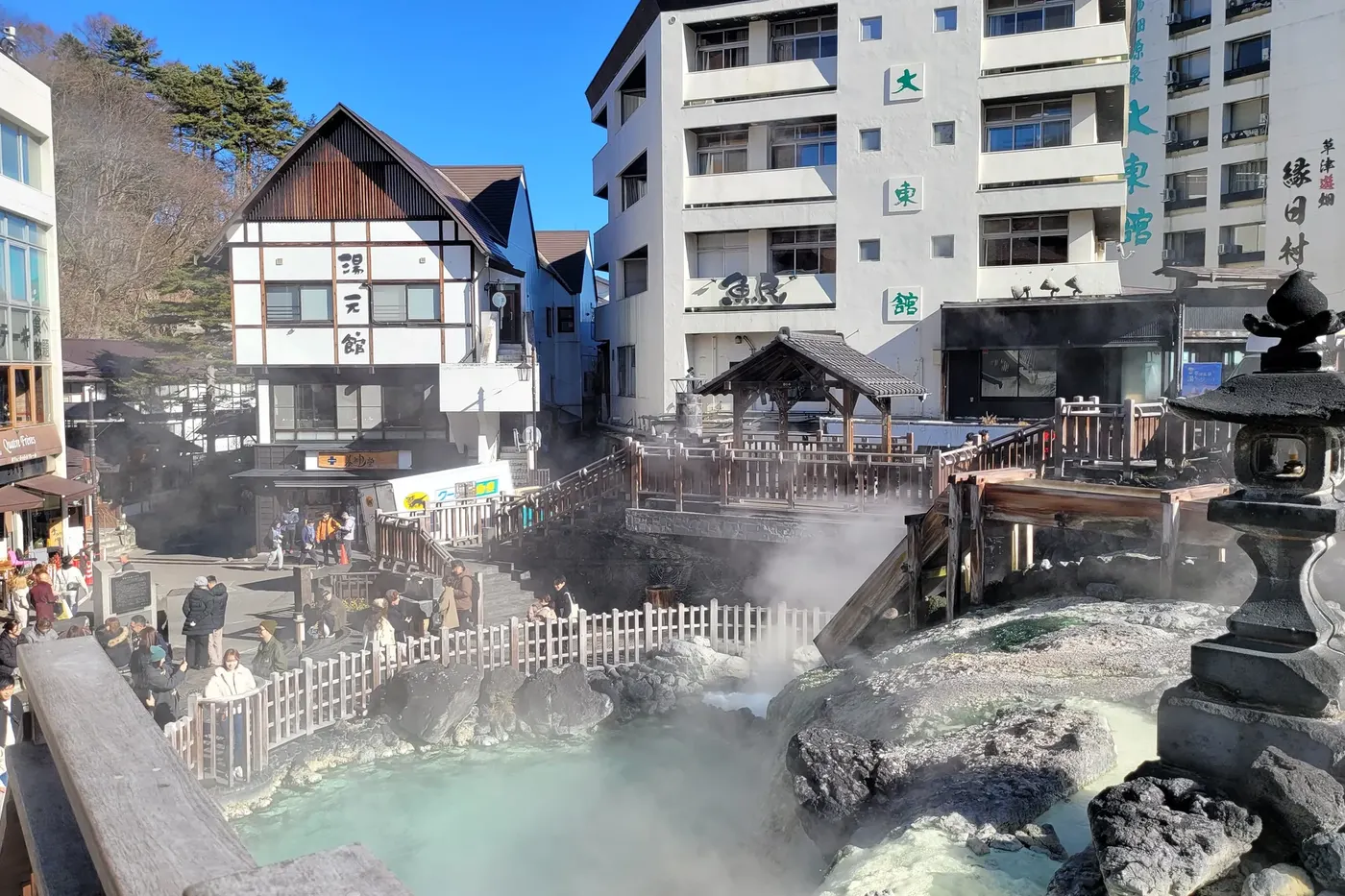
Kusatsu Onsen, a mas de 1.100 metros en las tierras altas de Gunma, ha sido celebrado en la literatura y la poesia japonesa durante mas de 1.300 anos. Su elemento mas caracteristico es el Yubatake — una cuadricula de madera en la plaza del pueblo por donde el agua mineral fluye a 95°C antes de ser enfriada para el bano. El agua es una de las mas acidas de los grandes onsen japoneses, con un pH de aproximadamente 2,1.
Kusatsu Onsen sits at over 1,100 metres in the Gunma highlands and has been celebrated in Japanese literature and poetry for more than 1,300 years. Its defining feature is the Yubatake — a wooden grid of channels in the town square where steaming mineral water flows at 95°C before being cooled for bathing. The water is among the most acidic of any major Japanese onsen, with a pH around 2.1, produced by volcanic hydrothermal activity beneath Mount Shirane. Kusatsu's traditional bathing method, jikan-yu, involves immersing in very hot water for precisely three minutes — a practice maintained in several communal bathhouses. The town's high elevation means snow-covered streets in winter, making the contrast of outdoor hot baths against snowfall one of Japan's classic seasonal experiences.
Kusatsu Onsenは日本・Gunmaに位置する硫黄泉・酸性泉。源泉温度は95℃、標高1156mの地に湧出する。泉水は強酸性(pH約2.1)の泉質、硫酸塩泉・塩化物泉を豊富に含む、総溶解固形物1580 mg/Lが特徴だ。720年頃から利用されてきた。スキンケア・リラクゼーション・血行など多様な温浴療法が行われる。施設では入浴・蒸し風呂・全身浴などが体験できる。
Minerales
Minerals
ミネラル
| Sulphur | 56 mg/L |
| Chloride | 512 mg/L |
| Sulphate | 780 mg/L |
| Aluminium | 73 mg/L |
Tratamientos
Treatments
トリートメント
Skin CareRelaxationCirculation
Técnicas
Techniques
技法
BathingSteam BathFull-Body ImmersionTime-Bathing (Jikan-yu)
Patrimonio
Los manantiales de Kusatsu están documentados en las crónicas del Nihon Shoki del año 720. La cultura de baño comunitario del pueblo evolucionó a lo largo de los siglos hasta convertirse en un sistema de casas de baños públicas llamadas sotoyu, cada una mantenida por asociaciones vecinales locales.
Heritage
Kusatsu's springs are documented in the Nihon Shoki chronicles of 720 AD. The town's communal bathing culture evolved over centuries into a system of public bathhouses called sotoyu, each maintained by local neighbourhood associations.
文化財
草津の温泉は、720年の『日本書紀』の記述に記録が残っている。この町の共同浴場文化は、数世紀をかけて「外湯」と呼ばれる公衆浴場の仕組みへと発展し、それぞれが地元の町内会によって維持されてきた。
Cultura
Kusatsu es tema de numerosas canciones populares japonesas, entre las que destaca la melodía Kusatsu Bushi, cantada por generaciones de bañistas. La tradición del yumomi —enfriar el agua removiéndola rítmicamente con grandes remos de madera— se ha representado como espectáculo público en la casa de baños Netsu-no-Yu desde la era Meiji.
Culture
Kusatsu is the subject of numerous Japanese folk songs, most famously the Kusatsu Bushi melody sung by bathers for generations. The tradition of yumomi — cooling the water by rhythmically stirring with large wooden paddles — has been performed as public entertainment at the Netsu-no-Yu bathhouse since the Meiji era.
文化
草津は数多くの日本の民謡の題材となっており、中でも「草津節」の旋律は世代を超えて湯治客に歌い継がれてきた。大きな木製の板を使って湯をリズミカルにかき混ぜて冷やす「湯もみ」の伝統は、明治時代以来、熱の湯で公開の見世物として披露されてきた。
Sostenibilidad
El caudal y la temperatura del Yubatake son monitoreados de forma continua por el municipio de Kusatsu como parte de un programa más amplio de observación volcánica vinculado a la actividad del monte Shirane. El caudal del manantial se ha mantenido estable durante décadas, y el municipio limita las perforaciones comerciales para proteger el acuífero natural.
Sustainability
The Yubatake flow and temperature are monitored continuously by Kusatsu Town as part of a broader volcanic observation programme linked to Mount Shirane's activity. Spring output has remained stable for decades, and the town limits commercial drilling to protect the natural aquifer.
持続可能性
湯畑の湧出量と温度は、草津町によって、白根山の活動と連動したより広範な火山観測プログラムの一環として継続的に監視されている。温泉の湧出量は数十年にわたり安定を保っており、町は天然の帯水層を保護するため商業的な掘削を制限している。
Otros manantiales en Japan