Manantiales / Nyuto OnsenSprings / Nyuto Onsen温泉・鉱泉 / Nyuto Onsen
🌊 Caudal
multiple wild sources (kakke-nagashi)
📅 Establecido
Edo period (17th century)
🌊 Flow rate
multiple wild sources (kakke-nagashi)
📅 Established
Edo period (17th century)
🌊 流量
multiple wild sources (kakke-nagashi)
📅 開設
Edo period (17th century)
SulphurousSodium BicarbonateMilky WhiteOnsenRotemburo
✓ Verificado el 2026-07-22
✓ Verified on 2026-07-22
✓ 確認日 2026-07-22
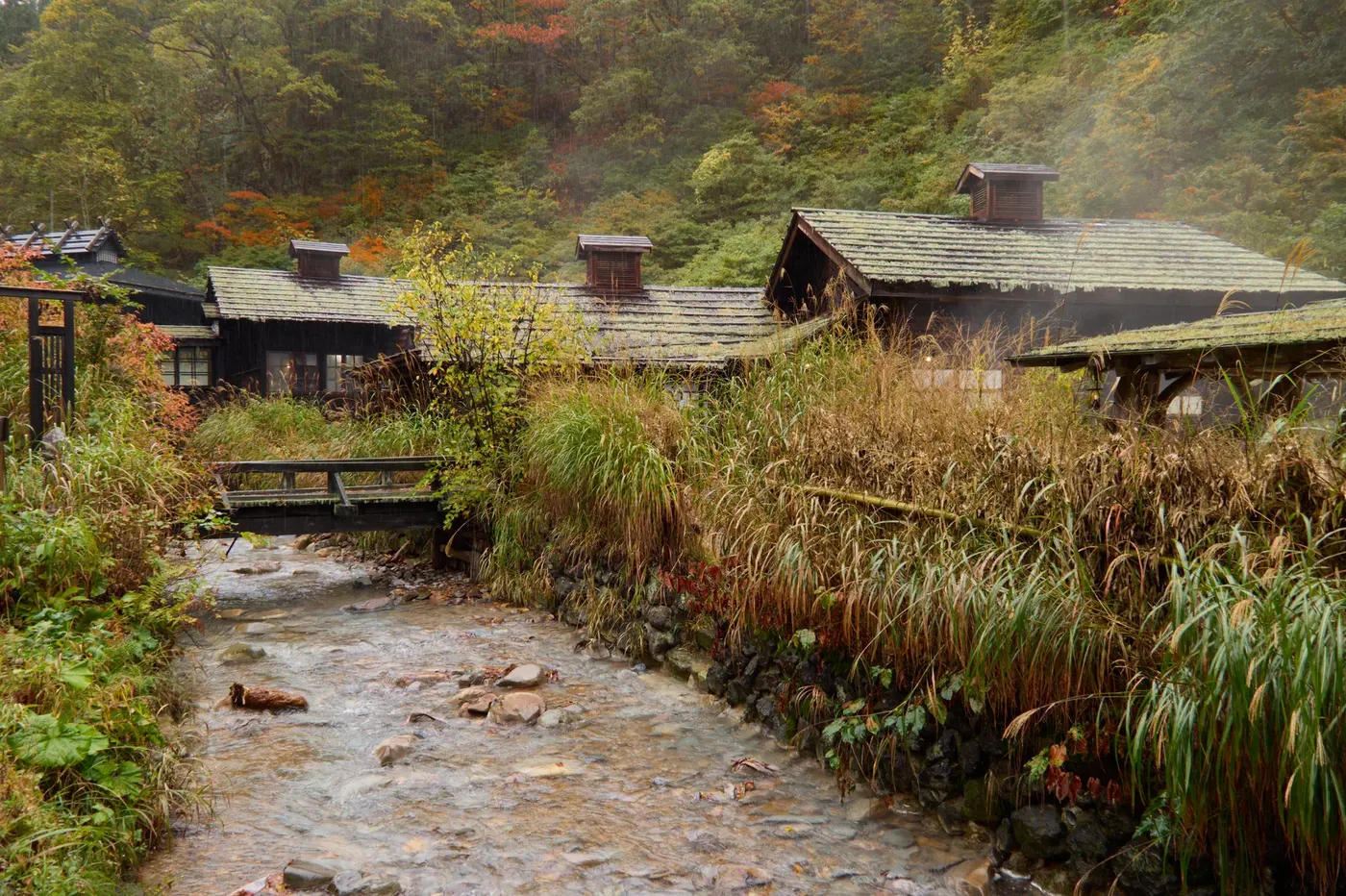
Nyuto Onsen no es un manantial unico sino un grupo de siete posadas de onsen dispersas por los bosques de hayas del monte Nyuto, en Akita, cerca del Lago Tazawa. Cada posada tiene su propia fuente geotermica silvestre: desde las famosas piscinas blancas y sulfurosas de Tsurunoyu hasta las aguas ferruginosas oscuras de Kuroyu. El tipo predominante es sulfuroso-bicarbonato sodico, con la opacidad lechosa caracteristica causada por particulas de azufre coloidal en suspension. Un pase compartido de bano de madera (yu-meguri tegata) permite visitar varias posadas en un mismo dia. La imagen mas iconic del Japon termal — el bano mixto al aire libre de Tsurunoyu, con agua blanca opaca bajo abedules nevados — procede de este lugar.
Nyuto Onsen is not a single spring but a cluster of seven distinct onsen inns (tsurunoyu, magoroku, kuroyu, ganiba, ookama, myojinnoyu, and taenoyu) scattered through the ancient beech forests on the southern slopes of the Nyuto mountain in Akita Prefecture, near Lake Tazawa. Each inn sits beside its own wild geothermal source, and the seven springs have dramatically different water characters — from the famous milky-white sulphurous pools of Tsurunoyu to the iron-rich brown waters of Kuroyu. The predominant type across the cluster is sulphurous-sodium bicarbonate, with the characteristic milky opacity caused by colloidal sulphur particles in suspension. All seven operate on the kakke-nagashi principle: water flows directly from the source with no recirculation or reheating. A shared wooden bath pass (yu-meguri tegata) allows visitors to experience multiple inns on a single day. The most iconic image of Nyuto — and one of the most reproduced photographs in Japanese travel publishing — is Tsurunoyu's outdoor mixed bath: a wide stone pool of opaque white water beneath snow-laden beech trees, open-air, and roofless, with a 17th-century thatched farmhouse ryokan as backdrop. The area is within the Towada-Hachimantai National Park and is accessible only by a winding mountain road, which has preserved its character against large-scale development.
Nyuto Onsenは日本・Akita Prefecture, Tohokuに位置する硫黄泉・炭酸水素ナトリウム泉。源泉温度は52℃、標高740mの地に湧出する。泉水は中性に近い(pH約6.2)の泉質、炭酸水素塩泉・ナトリウム泉を豊富に含む、総溶解固形物890 mg/Lが特徴だ。数世紀にわたる歴史を持つ。皮膚科治療・リウマチ療法・循環器系など多様な温浴療法が行われる。施設では露天風呂・混浴・湯めぐりパス(複数旅館めぐり)などが体験できる。
Minerales
Minerals
ミネラル
| Sulphur (H2S) | 3.2 mg/L |
| Sodium | 198 mg/L |
| Bicarbonate | 412 mg/L |
| Calcium | 44 mg/L |
| Silica | 68 mg/L |
| Iron | 2.1 mg/L |
Tratamientos
Treatments
トリートメント
DermatologyRheumatologyCirculatoryRelaxationRespiratory
Técnicas
Techniques
技法
Rotemburo (open-air)Mixed bathing (konyoku)Yu-meguri pass (multi-inn circuit)Kakke-nagashiRyokan stay
Patrimonio
Nyuto Onsen se encuentra dentro del Parque Nacional Towada-Hachimantai, una de las zonas de naturaleza salvaje de tierras altas más protegidas de Japón. Los bosques de hayas que rodean las siete posadas forman parte de la zona de biosfera de Shirakami-Sanchi, en Tohoku. Tsurunoyu, la más antigua de las siete posadas, ha funcionado ininterrumpidamente desde principios del periodo Edo (c. 1638), y su estructura de granja con techo de paja es uno de los últimos ejemplos que se conservan de la arquitectura tradicional de posada de montaña en Japón. El sistema de pase yu-meguri, compartido entre las siete posadas independientes, es un modelo de gestión cooperativa de onsen que se estudia en la política turística japonesa.
Heritage
Nyuto Onsen lies within the Towada-Hachimantai National Park, one of Japan's most protected highland wilderness areas. The beech forests surrounding the seven inns are part of the Shirakami-Sanchi biosphere zone of Tohoku. Tsurunoyu, the oldest of the seven inns, has operated continuously since the early Edo period (c. 1638) and its thatched farmhouse structure is one of the last remaining examples of traditional mountain inn architecture in Japan. The yu-meguri pass system, shared across all seven independent inns, is a model of cooperative onsen management studied in Japanese tourism policy.
文化財
乳頭温泉は、日本で最も保護された高地の原生地域のひとつである十和田八幡平国立公園の中に位置している。七つの宿を取り囲むブナ林は、東北の白神山地生物圏保存地域の一部である。七湯の中で最も古い鶴の湯は、江戸時代初期(1638年頃)から途切れることなく営業を続けており、その茅葺きの農家造りの建物は、日本に残る伝統的な山宿建築の最後の例のひとつである。七つの独立した宿すべてで共有される「湯めぐり帖」の仕組みは、日本の観光政策で研究される協働的な温泉管理のモデルとなっている。
Cultura
La identidad cultural de Nyuto es inseparable de su lejanía. Las siete posadas nunca han permitido un desarrollo a gran escala —sin máquinas expendedoras, sin karaoke, sin televisión en la mayoría de las habitaciones— y esta preservación deliberada del aislamiento se ha convertido en su atractivo definitorio. El pase de baño compartido se introdujo no por razones comerciales, sino para animar a los huéspedes a experimentar toda la gama de caracteres del agua del conjunto. El baño mixto al aire libre de Tsurunoyu en invierno, con su vapor sulfuroso blanco elevándose entre el bosque de cedros y la nieve, se ha convertido en la imagen definitoria de la cultura salvaje del onsen japonés para un público global.
Culture
Nyuto's cultural identity is inseparable from its remoteness. The seven inns have never permitted large-scale development — no vending machines, no karaoke, no television in most rooms — and this deliberate preservation of isolation has become the defining draw. The shared bath pass was introduced not for commercial reasons but to encourage guests to experience the full spectrum of the cluster's water characters. Tsurunoyu's outdoor mixed bath in winter, with its white sulphurous steam rising into cedar forest and snow, has become the defining image of wild Japanese onsen culture for a global audience.
文化
乳頭のアイデンティティは、その人里離れた立地と切り離すことができない。七つの宿は大規模な開発を一切許してこなかった——自動販売機もカラオケもなく、ほとんどの部屋にテレビもない——この意図的に守られた隔絶性こそが、この地の決定的な魅力となっている。共通入浴パスは商業的な理由からではなく、宿泊客にこの一帯の多様な湯の個性を余すことなく体験してもらうために導入された。冬、鶴の湯の混浴露天風呂から白い硫黄の湯気が杉林と雪の中へ立ちのぼる光景は、世界の人々にとって野趣あふれる日本の温泉文化を象徴するイメージとなっている。
Sostenibilidad
Las siete posadas de Nyuto funcionan con kakke-nagashi (baño de manantial en flujo libre), sin bombeo, recalentamiento ni tratamiento químico: el agua sale directamente hacia el drenaje natural tras un único uso. El acceso vehicular al conjunto está limitado por la única carretera de montaña, lo que restringe de forma natural el volumen de visitantes. El parque nacional circundante prohíbe el desarrollo comercial dentro de la zona de amortiguamiento forestal. El pase yu-meguri distribuye el flujo de visitantes entre las siete posadas, evitando la sobreconcentración en la más famosa (Tsurunoyu).
Sustainability
All seven Nyuto inns operate kakke-nagashi (free-flow source bathing) with no pumping, reheating, or chemical treatment — the water exits directly to the natural drainage after a single use. Vehicle access to the cluster is limited by the single mountain road, naturally capping visitor volumes. The surrounding national park prohibits commercial development within the forest buffer. The yu-meguri pass distributes visitor traffic across all seven inns, preventing overconcentration at the most famous (Tsurunoyu).
持続可能性
乳頭の七つの宿はすべて、ポンプも再加熱も化学処理も行わない「かけ流し」方式で運営されており、湯は一度使われると自然の排水路へと直接流れ出ていく。この一帯への車両アクセスは一本の山道に限られており、それが自然に来訪者数の上限となっている。周辺の国立公園は、森林緩衝地帯内での商業開発を禁止している。「湯めぐり帖」は来訪者の流れを七つの宿すべてに分散させ、最も有名な鶴の湯への過度な集中を防いでいる。
Otros manantiales en Japan