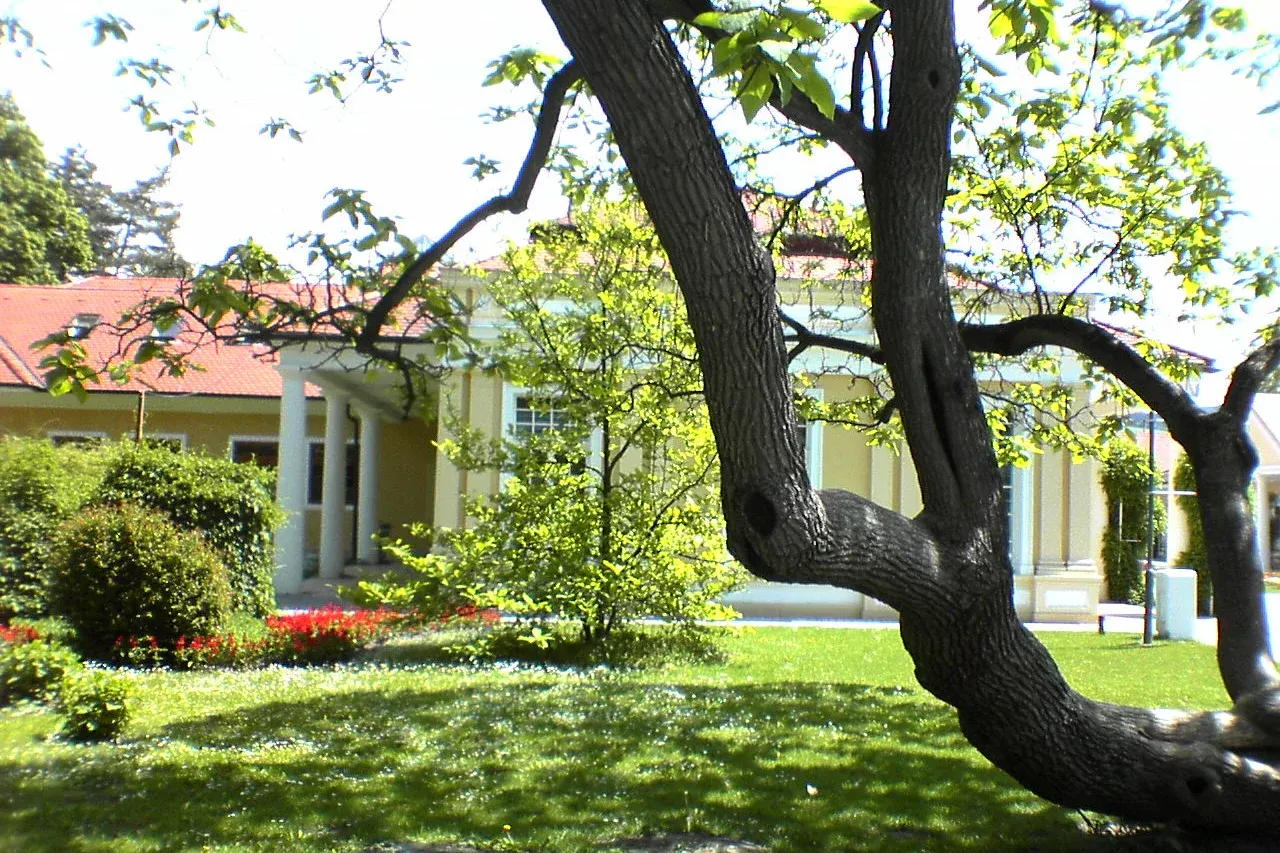
Photo by Robzle, via Wikimedia Commons (Public domain)
🇸🇰 Slovakia · Trnava
♨ Temperature
69°C
⛰ Altitude
163 m
⚗ pH
7.2
💧 TDS
1480 mg/L
🌊 Flow rate
35 L/s
📅 Established
1642
✓ Verified on 2026-07-22
Piešťany is Central Europe's most renowned balneological resort, built on a Váh River island and famous worldwide for the therapeutic quality of its sulphurous mud. The town's symbol — a man breaking his crutches — represents the healing transformation achieved by patients who arrive on crutches and leave cured of rheumatic disorders. Piešťany's mud, mixed from the sulphurous spring water and sediment, has a unique lipid content that allows it to retain heat for extended periods, making it ideal for joint therapy. The spa island's architecture — Art Nouveau hotels, colonnades, and thermal establishments built in the 1910s–1930s — is among the finest preserved spa townscapes in Europe.
| Sulphate | 680 mg/L |
| Calcium | 290 mg/L |
| Magnesium | 108 mg/L |
| Sulphur (H₂S) | 12 mg/L |
| Bicarbonate | 245 mg/L |
The first written record of Piešťany's therapeutic waters dates to 1642, though the spring was likely used in prehistoric times — Neolithic flint tools have been found near the spring site. The spa developed under the patronage of the Erdődy noble family in the 17th–18th centuries and achieved European fame when Napoleon's generals were treated here after the Battle of Austerlitz in 1805. The Art Nouveau spa island was developed under the Winter family management from 1889 to 1940.
Piešťany's healing culture is embodied in its iconic symbol — the crutch-breaker — which has become one of Central Europe's most recognizable healing emblems. The tradition of long-stay thermal cure (4–6 weeks) is maintained here, unlike most European spas that have shifted to weekend treatments. Patients from across Europe, the Middle East, and Russia come for the full Piešťany protocol, creating a cosmopolitan healing community.
The Váh River island setting creates natural hydrological protection for the spring aquifer. Piešťany's spa management conducts annual geological surveys to monitor spring pressure and mineral composition. The historic thermal buildings have been renovated with modern insulation to reduce energy consumption while preserving listed architectural facades. Mud harvesting is regulated by permits that limit annual volumes to ensure aquifer recovery.