Manantiales / Terme Libere di Bagno VignoniSprings / Terme Libere di Bagno Vignoni温泉・鉱泉 / Terme Libere di Bagno Vignoni
📅 Establecido
Etruscan and Roman period; central basin dates to 16th century
📅 Established
Etruscan and Roman period; central basin dates to 16th century
📅 開設
Etruscan and Roman period; central basin dates to 16th century
✓ Verificado el 2026-07-28
✓ Verified on 2026-07-28
✓ 確認日 2026-07-28
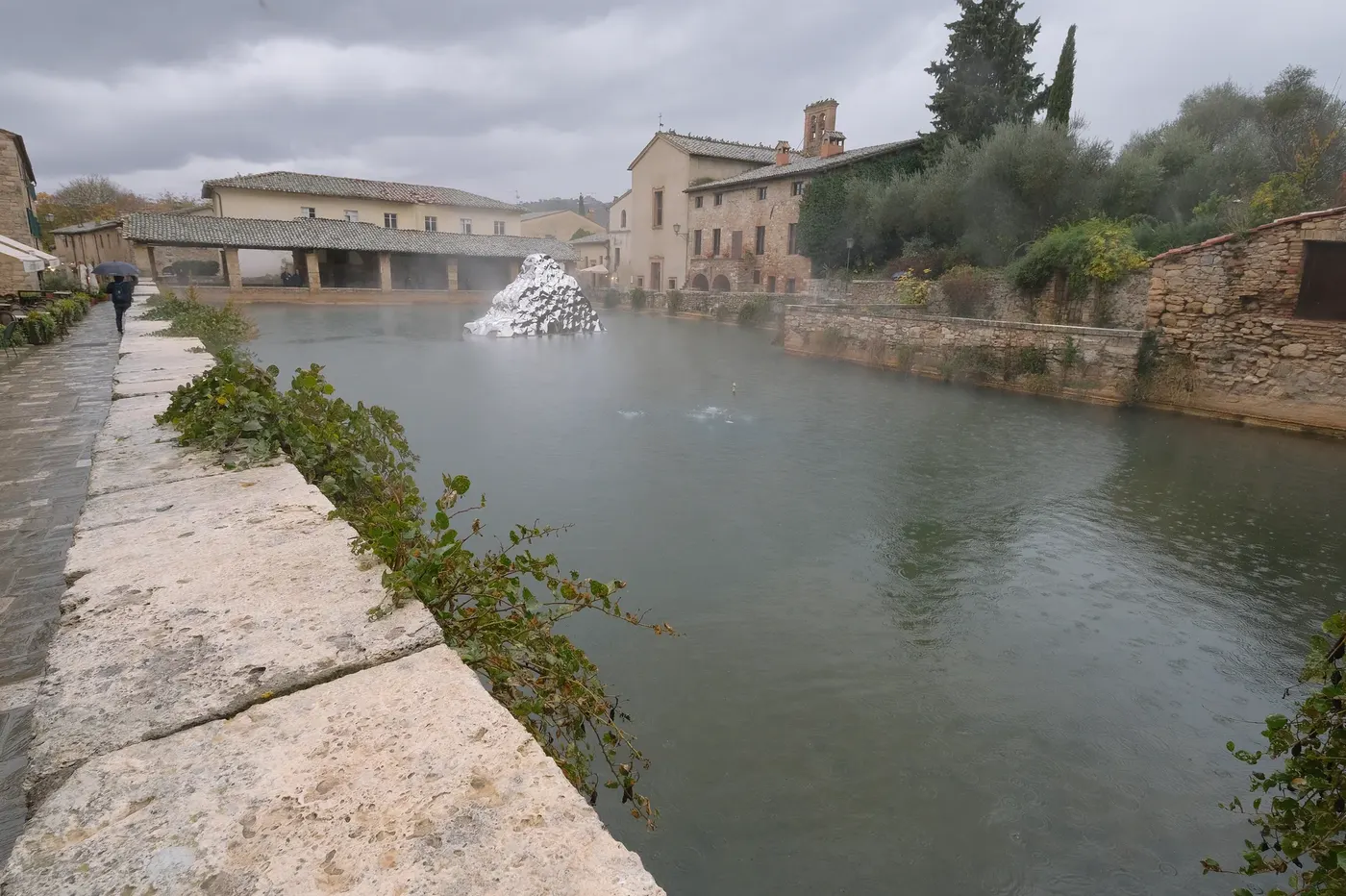
Bagno Vignoni, en el municipio de San Quirico d'Orcia, en el Val d'Orcia toscano, se ha utilizado para baños termales desde época etrusca y romana. Su elemento central es una piscina rectangular de agua termal de origen volcánico, cuya forma actual data del siglo XVI, que hoy constituye la plaza principal del pueblo en lugar de una piscina de baño. El agua asciende desde unos 1.000 metros de profundidad, emergiendo cerca de la superficie a más de 50°C y estabilizándose alrededor de 38°C en la piscina histórica; las piscinas públicas cercanas (en la zona del Parco dei Mulini) oscilan aproximadamente entre 28 y 38°C. Entre los visitantes históricos se cuentan, según se dice, el papa Pío II, Catalina de Siena y Lorenzo de Médici, y el flujo termal llegó a alimentar molinos que funcionaban todo el año.
Bagno Vignoni, in the municipality of San Quirico d'Orcia in Tuscany's Val d'Orcia, has been used for thermal bathing since Etruscan and Roman times. Its centerpiece is a rectangular basin of volcanic-origin thermal water dating in its current form to the 16th century, which today forms the village's main square rather than a swimming pool. The water rises from around 1,000 metres depth, emerging near the surface at over 50°C and stabilizing around 38°C in the historic basin; nearby public pools (in the Parco dei Mulini area) range roughly 28-38°C. Historical visitors are said to have included Pope Pius II, Catherine of Siena, and Lorenzo de' Medici, and the thermal flow once powered mills that operated year-round.
トスカーナ州ヴァル・ドルチャのサン・クイリコ・ドルチャ自治体にあるバーニョ・ヴィニョーニは、エトルリアおよびローマ時代から温泉浴に利用されてきた。その中心となるのは、火山起源の温泉水をたたえる長方形の水槽で、現在の形は16世紀に遡り、今日では水浴用のプールではなく村の中心広場となっている。水は地下約1,000メートルから上昇し、地表近くでは50℃を超える温度で湧出し、この歴史的な水槽では約38℃に安定する。近隣の公共プール(パルコ・デイ・ムリーニ地区)はおよそ28〜38℃の範囲である。歴史上の訪問者には教皇ピウス2世、シエナのカタリナ、ロレンツォ・デ・メディチが含まれると伝えられ、この温泉の流れはかつて年間を通じて稼働する水車を動かしていた。
Técnicas
Techniques
技法
Bathing
Patrimonio
El uso termal aquí se remonta a la época etrusca y romana. La piscina histórica en el centro del pueblo, en su forma actual, data del siglo XVI. Entre los visitantes históricos destacados se cuentan, según se dice, el papa Pío II, Catalina de Siena y Lorenzo de Médici.
Heritage
Thermal use here dates to Etruscan and Roman times. The historic basin at the center of the village, in its current form, dates to the 16th century. Notable historical visitors are said to have included Pope Pius II, Catherine of Siena, and Lorenzo de' Medici.
文化財
この地での温泉利用はエトルリアおよびローマ時代に遡る。村の中心にある現在の形の歴史的水槽は16世紀のものである。歴史上の著名な訪問者には教皇ピウス2世、シエナのカタリナ、ロレンツォ・デ・メディチが含まれると伝えられている。
Cultura
El flujo termal constante durante todo el año llegó a alimentar un conjunto de molinos en el vecino Parco dei Mulini que, a diferencia de otros molinos de la región dependientes del agua estacional, podían funcionar durante todo el año.
Culture
The thermal water's constant year-round flow once powered a set of mills in the adjacent Parco dei Mulini, which — unlike other regional mills dependent on seasonal water — could operate throughout the year.
文化
年間を通じて絶えることのない温泉の流れは、隣接するパルコ・デイ・ムリーニにある水車群を動かしていた。季節によって水量が変わる地域の他の水車とは異なり、これらは一年中稼働することができた。
Otros manantiales en Italy