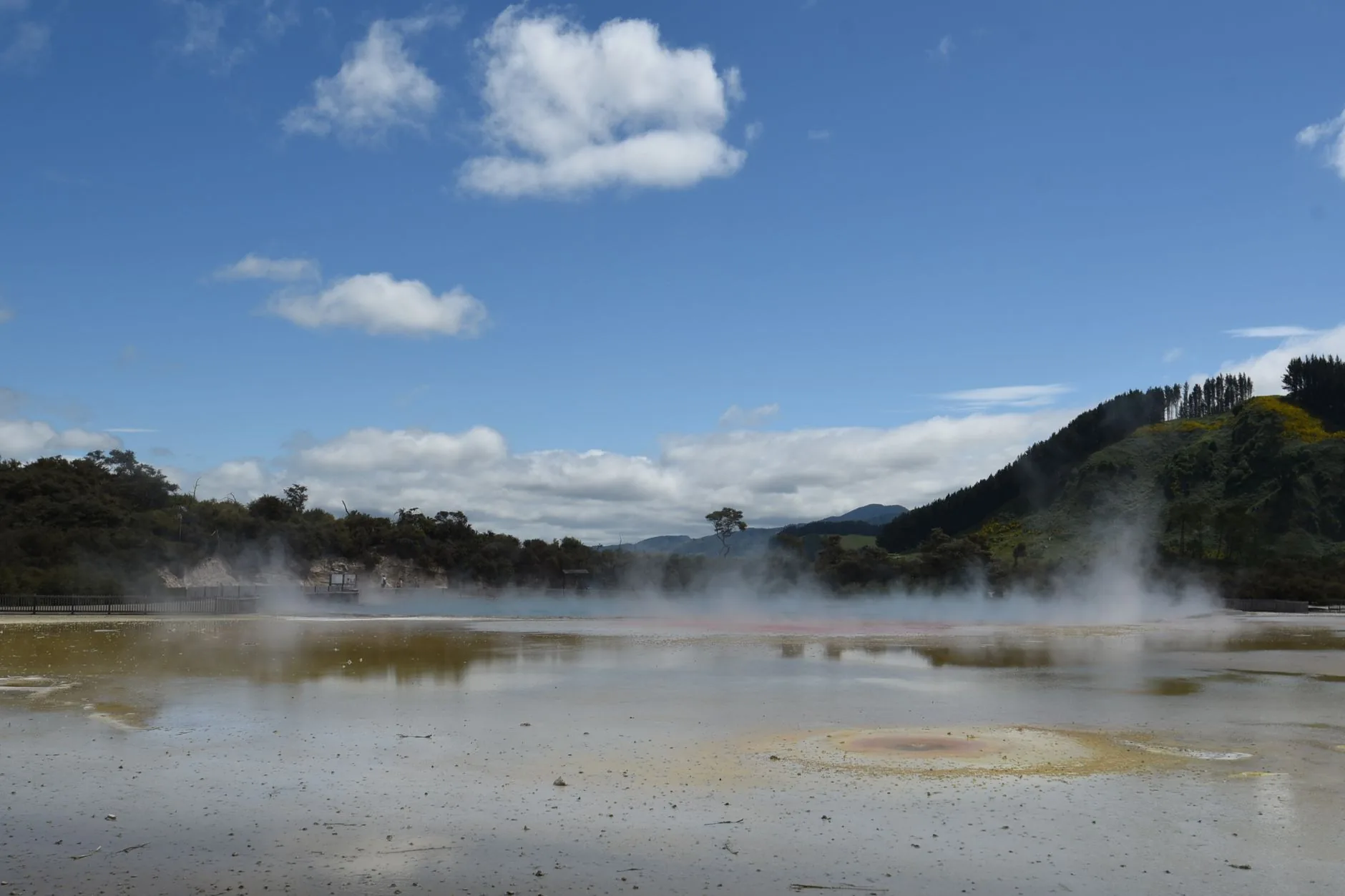
Waimangu Volcanic Valley

🇳🇿 New Zealand · Bay of Plenty, Rotorua

Waimangu Volcanic Valley

Manantiales / Waimangu Volcanic ValleySprings / Waimangu Volcanic Valley温泉・鉱泉 / Waimangu Volcanic Valley

♨ Temperatura

55°C

⛰ Altitud

280 m

⚗ pH

3.5

💧 TDS

4800 mg/L

🌊 Caudal

N/A (lake system)

📅 Establecido

Formed 1886 after Mount Tarawera eruption

♨ Temperature

55°C

⛰ Altitude

280 m

⚗ pH

3.5

💧 TDS

4800 mg/L

🌊 Flow rate

N/A (lake system)

📅 Established

Formed 1886 after Mount Tarawera eruption

♨ 温度

55°C

⛰ 標高

280 m

⚗ pH

3.5

💧 TDS

4800 mg/L

🌊 流量

N/A (lake system)

📅 開設

Formed 1886 after Mount Tarawera eruption

VolcanicGeothermalHot LakeFumarolic

✓ Verificado el 2026-07-22

✓ Verified on 2026-07-22

✓ 確認日 2026-07-22

El Valle Volcánico Waimangu no existía antes del 10 de junio de 1886. Esa noche, el monte Tarawera irrumpió en una de las erupciones más violentas de la historia registrada de Nueva Zelanda, enterrando las Terrazas Rosa y Blanca y abriendo una fisura de 8 km. El Frying Pan Lake es el manantial de agua caliente natural más grande del mundo. El Inferno Crater Lake oscila entre 60°C y 80°C en ciclos geotérmicos profundos. El paisaje es surrealista: lagos turquesa enmarcados en sinter de sílice, fumarolas y nueva vegetación nativa.

Waimangu Volcanic Valley did not exist before June 10, 1886. On that night, Mount Tarawera erupted in one of the most violent volcanic events in recorded New Zealand history, killing more than 150 people, burying the Pink and White Terraces — the country's most celebrated natural wonder of the era — under metres of ash and debris, and ripping open an 8-kilometre rift across the Rotorua landscape. Within a few years, geothermal activity had established itself in the new depression: hot springs, fumaroles, mud pools, and the extraordinary acid lakes that now define the valley. Frying Pan Lake is the world's largest natural hot spring — a single body of water covering 3.8 hectares at around 50–60°C. Inferno Crater Lake, smaller and more intensely active, fluctuates in temperature between 60°C and 80°C and rises and falls in a rhythmic cycle tied to deep geothermal pressure. The landscape is surreal: vivid turquoise lakes edged with silica sinter, steaming vents, and the charred remnants of the 1886 forest interspersed with new native growth. Waimangu is managed as a private reserve with guided walks through the valley to Lake Rotomahana.

Waimangu Volcanic Valleyはニュージーランド・Bay of Plenty, Rotoruaに位置する地熱温泉。源泉温度は55℃の豊かな温泉水が湧き出る。泉水は酸性(pH約3.5)の泉質、硫酸塩泉・ナトリウム泉を豊富に含む、総溶解固形物4800 mg/Lが特徴だ。1886年創業。景観遺産・地質調査など多様な温浴療法が行われる。施設ではガイド付きウォーキングツアー・ボートツアー(ロトマハナ湖)などが体験できる。

Minerales

Minerals

ミネラル

Silica480 mg/L
Sulphate1240 mg/L
Sodium680 mg/L
Chloride390 mg/L
Bicarbonate80 mg/L
Carbon Dioxide220 mg/L

Tratamientos

Treatments

トリートメント

Scenic heritageGeological study

Técnicas

Techniques

技法

Guided walking tourBoat tour (Lake Rotomahana)

Patrimonio

El valle se encuentra dentro del rohe (territorio) de Ngāti Rangitihi y Tūhourangi (iwi Te Arawa). El lago Rotomahana, situado en la base del valle, albergaba las célebres Terrazas Rosa y Blanca (Te Otukapuarangi y Te Tarata), que los māori consideraban tapu (sagradas) y que los observadores europeos del siglo XIX consideraban entre las maravillas naturales del mundo. La erupción del Tarawera de 1886 destruyó las terrazas y mató a decenas de aldeanos māori en Te Wairoa. Una investigación publicada en 2017 sugirió que aún podrían existir restos de las terrazas bajo el lago Rotomahana.

Heritage

The valley sits within the rohe (territory) of Ngāti Rangitihi and Tūhourangi (Te Arawa iwi). Lake Rotomahana — the lake at the base of the valley — held the celebrated Pink and White Terraces (Te Otukapuarangi and Te Tarata), which Māori regarded as tapu (sacred) and which 19th-century European observers considered among the natural wonders of the world. The 1886 Tarawera eruption destroyed the terraces and killed dozens of Māori villagers at Te Wairoa. Research published in 2017 suggested remnants of the terraces may still exist beneath Lake Rotomahana.

文化財

この渓谷は、ンガーティ・ランギティヒおよびトゥーホウランギ(テ・アラワ族)のロヘ(領域)に位置する。渓谷の麓にあるロトマハナ湖には、かつて有名なピンク・テラスとホワイト・テラス(テ・オトゥカプアランギとテ・タラタ)があり、マオリはこれをタプ(神聖なもの)とみなし、19世紀のヨーロッパ人観察者たちは世界の自然の驚異の一つとみなした。1886年のタラウェラ噴火はこれらのテラスを破壊し、テ・ワイロアで数十人のマオリの村人の命を奪った。2017年に発表された研究では、テラスの一部がロトマハナ湖の底に今も残存している可能性が示唆されている。

Cultura

La erupción de 1886 fue una de las catástrofes que definieron la historia colonial de Nueva Zelanda. La célebre guía Sophia Hinerangi condujo a los supervivientes desde la devastada aldea de Te Wairoa hasta un lugar seguro durante la noche. La erupción alteró permanentemente el paisaje geotérmico de Rotorua y atrajo a científicos de todo el mundo interesados en estudiar cómo se veía en sus primeras etapas el sistema geotérmico más joven de la Tierra.

Culture

The 1886 eruption was one of the defining catastrophes in New Zealand's settler history. The guide Sophia Hinerangi famously led survivors from the devastated village of Te Wairoa to safety overnight. The eruption permanently altered the Rotorua geothermal landscape and drew scientists from around the world to study what the youngest geothermal system on earth looked like in its earliest stages.

文化

1886年の噴火は、ニュージーランドの入植史における決定的な惨事の一つであった。案内人ソフィア・ヒネランギが、壊滅した村テ・ワイロアの生存者たちを一晩かけて安全な場所へ導いたことはよく知られている。この噴火はロトルアの地熱景観を永続的に変え、地球上で最も若い地熱系がその最初期にどのような姿をしていたかを研究しようと、世界中から科学者を惹きつけた。

Sostenibilidad

Waimangu se gestiona como una reserva patrimonial de administración privada, sin subvenciones públicas. Los senderos para visitantes están cuidadosamente trazados para proteger las formaciones geotérmicas activas. El valle se ha convertido en un importante centro de investigación geotérmica, en particular sobre las comunidades de microorganismos extremófilos que prosperan en aguas de alta acidez y temperatura.

Sustainability

Waimangu is operated as a privately-managed heritage reserve without public subsidies. Visitor paths are carefully routed to protect active geothermal features. The valley has become an important site for geothermal research, particularly into extremophile microorganism communities that thrive in the highly acidic, high-temperature water.

持続可能性

ワイマング渓谷は、公的補助を受けない民間管理の遺産保護区として運営されている。来訪者用の歩道は、活発な地熱地形を保護するよう慎重にルート設計されている。この渓谷は、特に高酸性・高温の水中で繁殖する好極限性微生物群集の研究において、重要な地熱研究の拠点となっている。

Contacto

Teléfono+64 7-366-6137

Sitio webwww.waimangu.co.nz

Dirección587 Waimangu Road, RD1, Rotorua 3077, New Zealand

Contact

Phone+64 7-366-6137

Websitewww.waimangu.co.nz

Address587 Waimangu Road, RD1, Rotorua 3077, New Zealand

連絡先

電話+64 7-366-6137

ウェブサイトwww.waimangu.co.nz

住所587 Waimangu Road, RD1, Rotorua 3077, New Zealand

← Volver al directorio completo Ver en el mapa interactivo← Back to the full directory View on the interactive map← ディレクトリ全体に戻る インタラクティブマップで見る