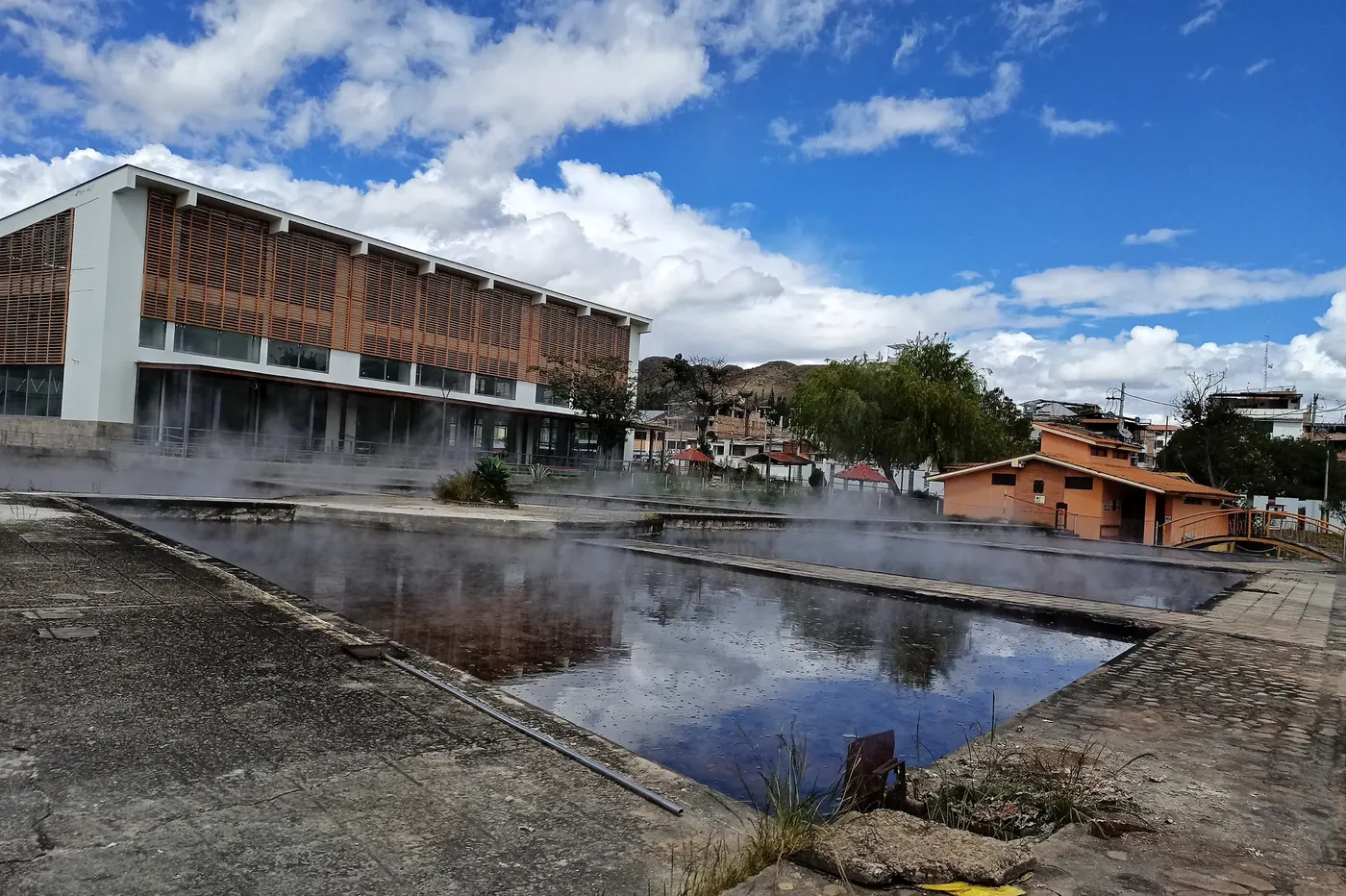
Baños del Inca

🇵🇪 Peru · Cajamarca

Baños del Inca

Manantiales / Baños del IncaSprings / Baños del Inca温泉・鉱泉 / Baños del Inca

♨ Temperatura

72°C

⛰ Altitud

2667 m

⚗ pH

6.8

💧 TDS

890 mg/L

🌊 Caudal

60 L/s

📅 Establecido

Inca period; pools in use since at least 15th century

♨ Temperature

72°C

⛰ Altitude

2667 m

⚗ pH

6.8

💧 TDS

890 mg/L

🌊 Flow rate

60 L/s

📅 Established

Inca period; pools in use since at least 15th century

♨ 温度

72°C

⛰ 標高

2667 m

⚗ pH

6.8

💧 TDS

890 mg/L

🌊 流量

60 L/s

📅 開設

Inca period; pools in use since at least 15th century

ThermalHistoricalNatural

✓ Verificado el 2026-07-22

✓ Verified on 2026-07-22

✓ 確認日 2026-07-22

Los Baños del Inca, cerca de Cajamarca, son uno de los sitios termales con mayor peso histórico del mundo. El 15 de noviembre de 1532, Francisco Pizarro llegó a Cajamarca mientras el emperador Atahualpa se bañaba en estos mismos manantiales, un momento que llevaría a la captura del emperador y al inicio de la conquista española del Imperio Inca. Los manantiales emergen a 72 °C de una fractura geotérmica andina y fluyen hacia piscinas individuales de piedra mantenidas a temperaturas de baño de 38–42 °C. El complejo municipal gestiona más de 70 recintos de baño privados junto a piscinas públicas más amplias.

The Baños del Inca near Cajamarca are among the most historically charged hot spring sites in the world. On 15 November 1532, the Spanish conquistador Francisco Pizarro arrived at Cajamarca while the Inca emperor Atahualpa was bathing at these same thermal springs — a moment that led directly to the capture of the emperor and the beginning of the Spanish conquest of the Inca Empire. The springs emerge at 72°C from a geothermal fracture in the Andes and flow into individual semi-enclosed stone-edged pools, each fed by a mix of hot spring water and cooled run-off, maintaining bathing temperatures of approximately 38–42°C. The pools retain their Inca-era stone construction and layout. A municipal complex manages over 70 private bathing enclosures alongside larger public pools, visited by thousands of Peruvians and international travellers who come both for the thermal experience and for the extraordinary weight of history these springs carry. The bathing tradition at Cajamarca predates the Inca — the Cajamarca culture was already using the springs from approximately 200 AD.

Baños del Incaはペルー・Cajamarcaに位置する温熱泉。源泉温度は72℃、標高2667mの地に湧出する。泉水は中性に近い(pH約6.8)の泉質、炭酸水素塩泉・ナトリウム泉を豊富に含む、総溶解固形物890 mg/Lが特徴だ。数世紀にわたる歴史を持つ。リウマチ療法・皮膚・筋肉の回復など多様な温浴療法が行われる。施設では個室プール入浴・共同プールでの浸浴などが体験できる。

Minerales

Minerals

ミネラル

Sodium195 mg/L
Bicarbonate420 mg/L
Chloride88 mg/L
Calcium72 mg/L
Sulphate45 mg/L

Tratamientos

Treatments

トリートメント

RheumatologySkinMuscle RecoveryRelaxation

Técnicas

Techniques

技法

Individual private pool bathingCommunal pool soaking

Patrimonio

Los Baños del Inca son uno de los sitios físicos históricamente más significativos de América. El encuentro de Cajamarca en 1532 —la captura de Atahualpa mientras se bañaba aquí, su rescate con una habitación llenada dos veces de plata y una de oro, y su posterior ejecución— fue el punto de inflexión decisivo que puso fin al Imperio inca. Se cree que las pozas de piedra son construcciones de la época incaica. El centro histórico de Cajamarca figura en la lista indicativa del Perú ante la UNESCO.

Heritage

The Baños del Inca are one of the most historically significant physical sites in the Americas. The encounter at Cajamarca in 1532 — Atahualpa's capture while bathing here, his ransom with a room filled twice with silver and once with gold, and his subsequent execution — was the decisive turning point ending the Inca Empire. The stone bathing pools are believed to be Inca-period constructions. Cajamarca's historic centre is on Peru's UNESCO tentative list.

文化財

インカ浴場(バーニョス・デル・インカ)は、アメリカ大陸において歴史的に最も重要な実在の地の一つである。1532年のカハマルカでの出来事——アタワルパがこの地で入浴中に捕らえられ、銀で二度、金で一度満たした部屋を身代金として要求され、その後処刑されたこと——は、インカ帝国の終焉を決定づけた転換点であった。石造りの浴槽群はインカ時代の建造物であると考えられている。カハマルカの歴史地区は、ペルーのユネスコ暫定リストに掲載されている。

Cultura

Sumergirse en las mismas aguas termales que utilizó el último emperador inca libre es participar en una continuidad física que abarca casi quinientos años. Los manantiales siguen siendo utilizados a diario por los habitantes de Cajamarca —familias, trabajadores, estudiantes— junto al flujo de turistas históricos que llegan en autobús y parten antes del anochecer. Esta superposición entre lo cotidiano y lo trascendental es lo que hace excepcionales a los Baños del Inca: un sitio de baño vivo que, pese a su peso histórico, no se ha convertido en museo.

Culture

To lower oneself into the same warm spring water that the last free Inca emperor used is to participate in a physical continuum spanning nearly five hundred years. The springs remain in daily use by Cajamarca's inhabitants — families, workers, students — alongside the flow of historical tourists who arrive by bus and depart before dark. This overlap of the everyday and the momentous is what makes Baños del Inca exceptional: a living bathing site that has not been museified despite its historical weight.

文化

最後の自由なインカ皇帝が浸かったのと同じ温泉水に身を沈めることは、およそ500年にわたる身体的な連続性に参加することを意味する。この温泉は今もカハマルカの住民——家族連れ、労働者、学生たち——によって日常的に利用されており、バスで訪れて日暮れ前に去っていく歴史観光の来訪者の流れとも重なり合っている。この日常と歴史的重みとの重なりこそが、インカ浴場を特別な場所にしている——それは、これほどの歴史的重みを背負いながらも博物館化されていない、生きた入浴の場である。

Sostenibilidad

Los Baños del Inca son administrados por el gobierno municipal de Cajamarca, con una estructura de tarifas modesta que los hace accesibles para los residentes locales. Los manantiales fluyen de forma natural a 72 °C, sin bombeo mecánico. La conservación de la infraestructura histórica de piedra emplea técnicas de mampostería tradicionales. El complejo es uno de los mayores empleadores locales de la zona, y los fondos generados se reinvierten en su mantenimiento.

Sustainability

The Baños del Inca are managed by the municipal government of Cajamarca on a modest fee structure making them accessible to local residents. The springs flow naturally at 72°C without mechanical pumping. Conservation of the historic stone pool infrastructure uses traditional masonry techniques. The complex is one of the largest local employers in the immediate area and funds are reinvested in maintenance.

持続可能性

インカ浴場はカハマルカ市当局によって管理されており、料金体系は控えめに設定されているため、地元住民にとっても利用しやすい。この温泉は機械的な汲み上げなしに、摂氏72度で自然に湧出している。歴史的な石造りの浴槽施設の保存には伝統的な石工技術が用いられている。この施設は周辺地域で最大級の雇用主の一つであり、収益は維持管理に再投資されている。

Contacto

Sitio webwww.mincetur.gob.pe

DirecciónBaños del Inca, Cajamarca, Peru

Contact

Websitewww.mincetur.gob.pe

AddressBaños del Inca, Cajamarca, Peru

連絡先

ウェブサイトwww.mincetur.gob.pe

住所Baños del Inca, Cajamarca, Peru

← Volver al directorio completo Ver en el mapa interactivo← Back to the full directory View on the interactive map← ディレクトリ全体に戻る インタラクティブマップで見る