Manantiales / Ginzan OnsenSprings / Ginzan Onsen温泉・鉱泉 / Ginzan Onsen
Sodium ChlorideSulphurous
✓ Verificado el 2026-07-22
✓ Verified on 2026-07-22
✓ 確認日 2026-07-22
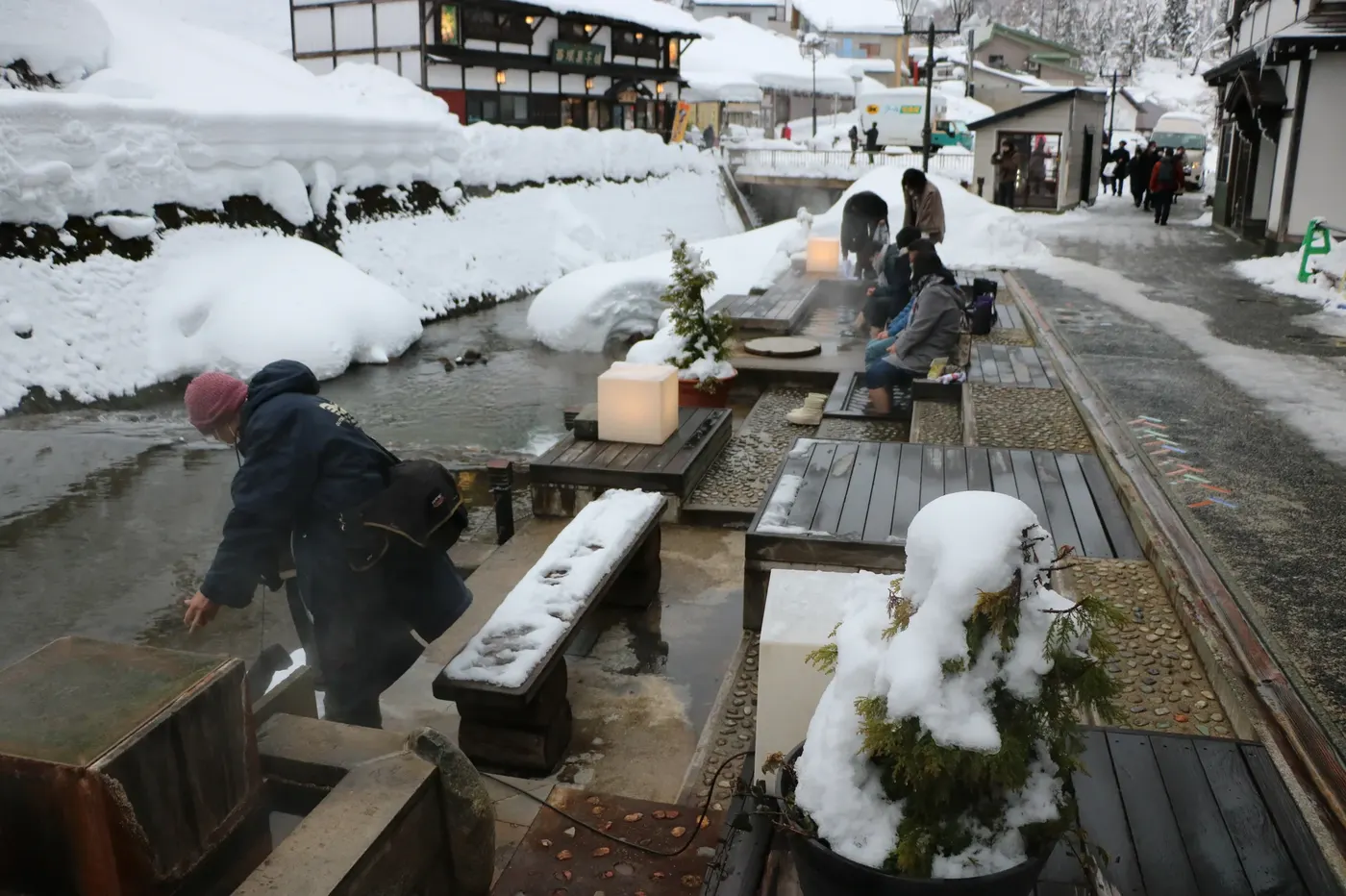
Ginzan Onsen ocupa un estrecho desfiladero fluvial en la prefectura de Yamagata, con ryokan de madera de varios pisos elevandose directamente sobre las orillas del arroyo en una configuracion sin cambios desde el periodo Taisho (1912-1926). Las linternas de gas iluminan las fachadas por la noche.
Ginzan Onsen occupies a narrow river gorge in Yamagata Prefecture, its multi-storey wooden ryokan rising directly from the stream banks in a configuration unchanged since the Taisho period (1912–1926). Gas lanterns illuminate the facades at night, and in winter the deep mountain snowfall transforms the village into a scene that appears to belong to another century. The springs are moderate in temperature, allowing longer immersion, and their sodium chloride and bicarbonate composition produces water with a silky quality on the skin.
Ginzan Onsenは日本・Yamagataに位置する食塩泉・硫黄泉。源泉温度は48℃、標高550mの地に湧出する。泉水は中性に近い(pH約6.9)の泉質、塩化ナトリウム泉・炭酸水素塩泉を豊富に含む、総溶解固形物580 mg/Lが特徴だ。1600年創業。リラクゼーション・疲労回復・スキンケアなど多様な温浴療法が行われる。施設では入浴・露天風呂・屋内共同浴場などが体験できる。
Minerales
Minerals
ミネラル
| Sodium Chloride | 420 mg/L |
| Sulphur | 38 mg/L |
| Calcium | 65 mg/L |
| Bicarbonate | 180 mg/L |
Tratamientos
Treatments
トリートメント
RelaxationFatigue RecoverySkin Care
Técnicas
Techniques
技法
BathingOpen-Air Bath (Rotenburo)Indoor Communal Bath
Patrimonio
Ginzan se desarrolló como un asentamiento minero de plata a principios del periodo Edo —su nombre significa 'montaña de plata'— y los mineros utilizaban las aguas termales. Cuando las minas de plata cerraron, el pueblo se transformó en un balneario.
Heritage
Ginzan developed as a silver-mining settlement in the early Edo period — the name means silver mountain — and the hot springs were used by miners. When the silver mines closed, the village transformed into a spa resort.
文化財
銀山は江戸時代初期、銀鉱山の集落として発展した——その名は「銀の山」を意味する——鉱夫たちが温泉を利用していた。銀山が閉山すると、村は温泉リゾートへと姿を変えた。
Cultura
Se cree ampliamente que Ginzan Onsen inspiró la película de animación El viaje de Chihiro (2001), específicamente el escenario de la casa de baños. Exista o no una conexión directa, las semejanzas visuales han convertido a Ginzan en un lugar de peregrinación para los aficionados a la animación de todo el mundo.
Culture
Ginzan Onsen is widely believed to have inspired the animated film Spirited Away (2001), specifically the bathhouse setting. Whether or not the connection is direct, the visual similarities have made Ginzan a pilgrimage site for animation fans worldwide.
文化
銀山温泉は、アニメーション映画『千と千尋の神隠し』(2001年)、特にその湯屋の舞台のモデルになったと広く信じられている。直接的な関連の有無にかかわらず、その視覚的な類似性は銀山を世界中のアニメファンにとっての巡礼地にしてきた。
Sostenibilidad
El valle de Ginzan forma parte del Parque Natural Mogami Dewa. La comunidad ha limitado voluntariamente el número de habitaciones para huéspedes y exige que todos los edificios se ajusten a los estándares arquitectónicos tradicionales de la era Taisho.
Sustainability
The Ginzan valley is part of the Mogami Dewa Nature Park. The community has voluntarily limited the number of guest rooms and requires all buildings to conform to traditional Taisho-era architectural standards.
持続可能性
銀山の渓谷は最上川県立自然公園の一部である。地域社会は自主的に客室数を制限し、すべての建物が大正時代の伝統的な建築様式に従うことを義務付けている。
Otros manantiales en Japan