Manantiales / Zao OnsenSprings / Zao Onsen温泉・鉱泉 / Zao Onsen
📅 Establecido
Nara period (c. 720 CE)
🌊 Flow rate
multiple sources
📅 Established
Nara period (c. 720 CE)
📅 開設
Nara period (c. 720 CE)
SulphurousStrongly AcidicHydrogen SulfideOnsen
✓ Verificado el 2026-07-22
✓ Verified on 2026-07-22
✓ 確認日 2026-07-22
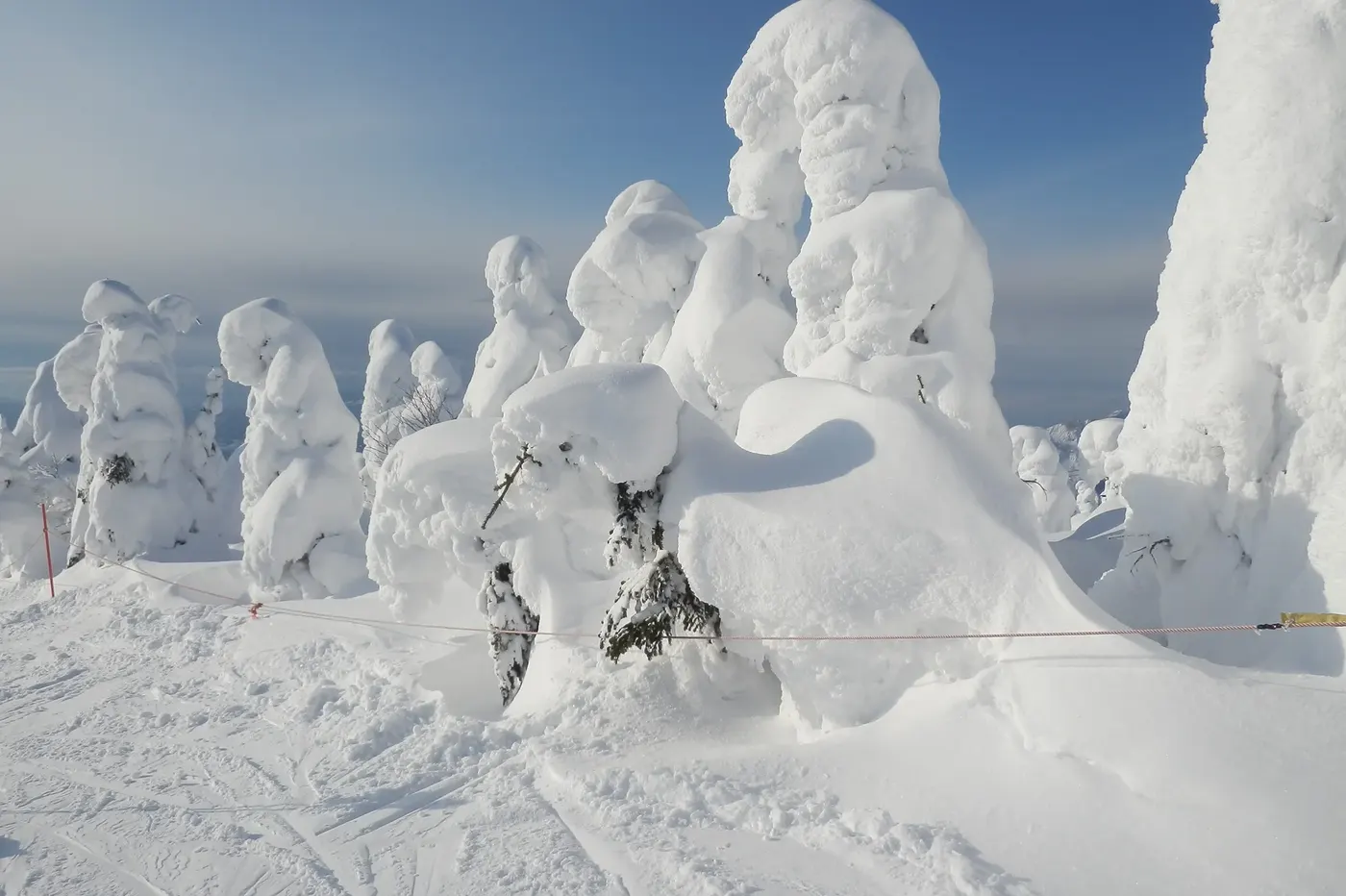
Zao Onsen se encuentra a unos 880 metros de altitud en las laderas occidentales del macizo volcanico Zao, en la ciudad de Yamagata. El manantial es uno de los onsen mas acidos de Japon, con un pH de entre 1,2 y 1,8, suficientemente acido para corroer joyas metalicas. El agua es del tipo sulfuroso de sulfuro de hidrogeno, blanca lechosa, con un intenso olor a azufre. En invierno, el fenomeno juhyo transforma los arboles de las pistas de esqui en figuras esculturicas de hielo conocidas como monstruos de nieve, uno de los espectaculos naturales mas fotografiados del Tohoku. National Geographic selecciono Yamagata — y Zao en particular — como uno de sus destinos Best of the World 2026.
Zao Onsen sits at approximately 880 metres altitude on the western slopes of the Zao volcanic massif in Yamagata City, Yamagata Prefecture, in the Tohoku region of Honshu. The spring is one of the most strongly acidic onsen in Japan, with a pH regularly measured between 1.2 and 1.8 — a level acidic enough to corrode metal jewellery and irritate sensitive skin after prolonged immersion. The water is a sulphurous hydrogen sulfide type, milky white in colour, with a powerful rotten-egg odour and a characteristic sharp sensation on the skin. This extreme acidity, produced by volcanic gases dissolving directly into the groundwater from the active Zao caldera above, gives the water recognised antiseptic and dermatological properties in traditional Japanese bathing culture. Zao's history as a spa dates to approximately 720 CE, when the monk Gyoki is said to have discovered the spring. The resort today combines the onsen tradition with year-round mountain activities: in winter, the slopes produce the Zao juhyo phenomenon — trees encased in ice and snow, creating towering sculptural forms known as 'snow monsters' that have become one of Tohoku's most photographed natural spectacles. In 2026, National Geographic selected Yamagata Prefecture, and Zao in particular, as one of its Best of the World destinations. Multiple public outdoor baths (rotemburo) and large ryokan facilities operate in the resort town.
Zao Onsenは日本・Yamagata Prefecture, Tohokuに位置する硫黄泉・強酸性泉。源泉温度は55℃、標高880mの地に湧出する。泉水は強酸性(pH約1.5)の泉質、Sulfuric Acid・アルミニウムを豊富に含む、総溶解固形物3200 mg/Lが特徴だ。720年頃から利用されてきた。皮膚科治療・リウマチ療法・慢性皮膚疾患治療など多様な温浴療法が行われる。施設では露天風呂・大型公衆浴場・旅館滞在などが体験できる。
Minerales
Minerals
ミネラル
| Sulfuric Acid (H2SO4) | 1840 mg/L |
| Sulphur (H2S) | 12.4 mg/L |
| Aluminum | 112 mg/L |
| Iron | 38 mg/L |
| Calcium | 52 mg/L |
| Magnesium | 28 mg/L |
Tratamientos
Treatments
トリートメント
DermatologyRheumatologyChronic Skin ConditionsRelaxation
Técnicas
Techniques
技法
Rotemburo (open-air)Large public bathsRyokan staySki-onsen combination
Patrimonio
Zao Onsen se encuentra dentro del Parque Cuasi Nacional de Zao, que protege el paisaje volcánico del macizo de Zao, incluido el lago cratérico activo Okama, un vívido lago de caldera de color esmeralda a 1.800 metros de altitud, uno de los rasgos volcánicos visualmente más impactantes de Japón. El fenómeno de los juhyo (árboles de hielo) de Zao es un espectáculo natural invernal reconocido a nivel nacional, y el sitio fue seleccionado por National Geographic dentro de su lista Best of the World 2026 para la prefectura de Yamagata.
Heritage
Zao Onsen falls within the Zao Quasi-National Park, which protects the volcanic landscape of the Zao massif including the active crater lake Okama — a vivid emerald-green caldera lake at 1,800 metres, one of the most visually striking volcanic features in Japan. The juhyo (ice trees) phenomenon at Zao is a nationally recognized natural winter spectacle, and the site was selected by National Geographic as part of its Best of the World 2026 list for Yamagata Prefecture.
文化財
蔵王温泉は、活火山湖であるお釜——標高1800メートルに広がる鮮やかなエメラルドグリーンのカルデラ湖で、日本で最も視覚的に印象深い火山地形のひとつ——を含む蔵王連峰の火山景観を保護する蔵王国定公園内に位置している。蔵王の樹氷現象は全国的に知られる冬の自然の見どころであり、この地は『ナショナル ジオグラフィック』誌の「Best of the World 2026」リストに山形県の代表として選出された。
Cultura
La extrema composición química del agua de Zao ha moldeado una cultura de baño centrada en la resistencia y la purificación más que en la relajación. El agua sulfurosa fuertemente ácida se entendía históricamente como poderosamente medicinal precisamente por su intensidad: un onsen que cambiaba visiblemente el color de la piel de los bañistas y corroía el metal común, sin duda, estaba haciendo algo. El fenómeno invernal de los juhyo (monstruos de nieve), en el que el hielo acumulado transforma los árboles de las pistas de esquí en figuras fantasmales, ha creado una identidad cultural secundaria para Zao como paisaje de sublime transformación natural.
Culture
Zao's extreme water chemistry has shaped a bathing culture centred on endurance and purification rather than relaxation. The strongly acidic sulphurous water was historically understood as powerfully medicinal precisely because of its intensity — an onsen that visibly changed the skin colour of bathers and corroded ordinary metal was clearly doing something. The winter juhyo (snow monster) phenomenon, in which accumulated rime ice transforms the ski-slope trees into ghostly figures, has created a secondary cultural identity for Zao as a landscape of sublime natural transformation.
文化
蔵王の極端な泉質は、くつろぎよりも忍耐と浄化を中心とした入浴文化を形づくってきた。強酸性の硫黄泉は、その強烈さゆえにこそ、歴史的に強力な薬効を持つものと理解されてきた——入浴者の肌の色を目に見えて変え、普通の金属を腐食させるような温泉は、明らかに何かを起こしているに違いないというわけである。積もった樹氷がスキー場の木々を幽玄な姿へと変える冬の樹氷(スノーモンスター)現象は、崇高な自然の変容の景観として、蔵王にもうひとつの文化的アイデンティティを与えてきた。
Sostenibilidad
El sistema volcánico de Zao es monitoreado activamente por la Agencia Meteorológica de Japón por riesgo de erupción. Las operaciones de la estación de esquí y del onsen se coordinan con la normativa del parque nacional para limitar el desarrollo en las laderas altas. El fenómeno de los juhyo depende de condiciones climáticas específicas —temperaturas frías, alta humedad y vientos predominantes del noroeste— que son sensibles a los cambios regionales de temperatura, lo que convierte al lugar en un sitio donde los efectos del cambio climático pueden observarse directamente año tras año.
Sustainability
The Zao volcanic system is actively monitored by the Japan Meteorological Agency for eruption risk. The ski resort and onsen operations are coordinated with national park regulations to limit development on the upper slopes. The juhyo phenomenon depends on specific climatic conditions — cold temperatures, high humidity, and prevailing northwest winds — that are sensitive to regional temperature shifts, making it a site where climate change impacts are directly observable year to year.
持続可能性
蔵王の火山系は、噴火のリスクについて気象庁により継続的に監視されている。スキーリゾートと温泉の運営は、上部斜面での開発を制限する国立公園の規制と調整されている。樹氷現象は、低温、高湿度、卓越する北西の風という特定の気象条件に依存しており、これらは地域の気温変化に敏感であるため、この地は気候変動の影響を年ごとに直接観察できる場所となっている。
Otros manantiales en Japan