Manantiales / Hévíz Thermal LakeSprings / Hévíz Thermal Lake温泉・鉱泉 / Hévíz Thermal Lake
SulphurousBicarbonatedRadioactive
✓ Verificado el 2026-07-22
✓ Verified on 2026-07-22
✓ 確認日 2026-07-22
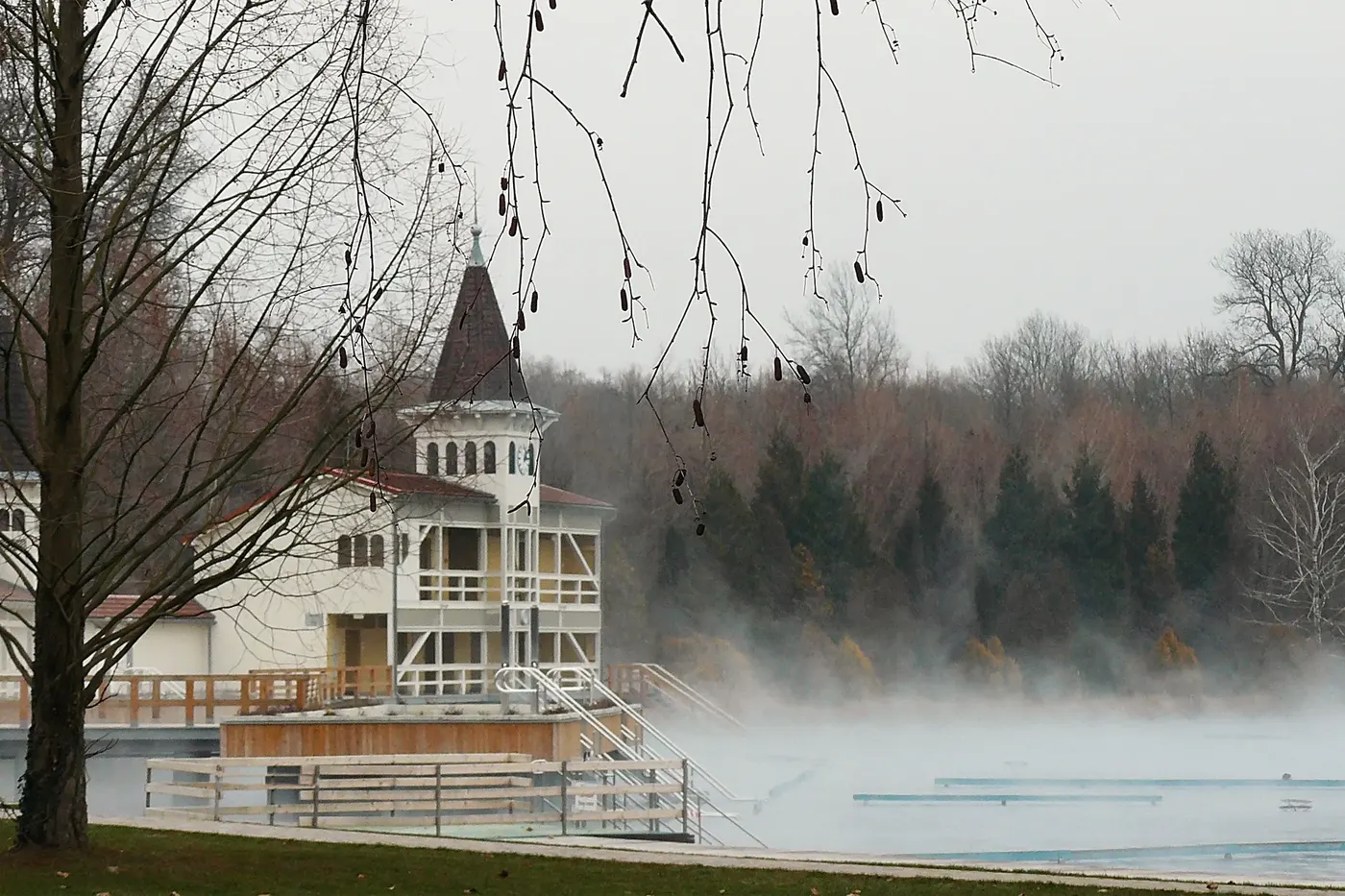
Hévíz alberga el mayor lago termal biológicamente activo del mundo: una lámina de agua de 4,4 hectáreas alimentada desde un cráter de 38 metros de profundidad, con temperatura constante de 38-41 °C en verano e invierno. Única en el planeta, la lámina de agua es suficientemente grande para nadar al aire libre durante todo el año, y en su superficie florecen loto egipcio y nenúfares blancos que prosperan en el agua geotérmica. El pabellón de baños, construido sobre el lago en palafitos, es uno de los edificios termales más singulares de Europa. El agua renueva todo su volumen en 28 horas por presión geotérmica natural.
Hévíz is home to the world's largest biologically active natural thermal lake — a 4.4-hectare geothermal lake fed from a crater 38 metres deep at a constant 38–41°C. Unlike any other mineral spring on earth, Hévíz is a true lake, large enough for outdoor swimming year-round even in winter, its surface sometimes steaming against the Hungarian sky. Egyptian lotus flowers and white water lilies bloom on the thermal water surface, creating an otherworldly landscape. The spa pavilion, built over the lake on stilts, is one of Europe's most distinctive bathing structures. Hévíz is connected to Budapest via Danube cruise routes and a 2-hour coach transfer.
Hévíz Thermal Lakeはハンガリー・Zala Countyに位置する硫黄泉・重炭酸泉。源泉温度は38℃の豊かな温泉水が湧き出る。泉水はアルカリ性(pH約7.5)の泉質、硫酸塩泉・炭酸水素塩泉を豊富に含む、総溶解固形物1100 mg/Lが特徴だ。1795年創業。リウマチ療法・運動器障害・皮膚科治療など多様な温浴療法が行われる。施設では入浴・泥療法・理学療法などが体験できる。
Minerales
Minerals
ミネラル
| Sulphate | 492 mg/L |
| Bicarbonate | 356 mg/L |
| Calcium | 148 mg/L |
| Magnesium | 95 mg/L |
| Radon | 0.8 mg/L |
Tratamientos
Treatments
トリートメント
RheumatologyLocomotor DisordersDermatologyNervous SystemRelaxation
Técnicas
Techniques
技法
BathingMud TherapyPhysiotherapyUnderwater Massage
Patrimonio
El lago termal de Hévíz fue descrito científicamente por primera vez en 1795 por el conde György Festetics, quien desarrolló unas instalaciones de baño sobre el lago. Hallazgos arqueológicos indican que el manantial fue utilizado primero por poblaciones celtas y después romanas: se han recuperado monedas y artefactos romanos del fondo del lago. El actual pabellón cubierto, construido sobre la superficie del agua, data de 1898 y está catalogado como monumento arquitectónico.
Heritage
Hévíz's thermal lake was first described scientifically by Count György Festetics in 1795, who developed a bathing facility on the lake. Archaeological findings indicate the spring was used by Celtic and then Roman populations — Roman coins and artefacts have been recovered from the lake floor. The current covered pavilion, built over the water's surface, dates to 1898 and is a listed architectural monument.
文化財
ヘーヴィーズの温泉湖は、1795年にジェルジ・フェシュテティチ伯爵によって初めて科学的に記述され、彼はこの湖に入浴施設を建設した。考古学的発見によれば、この泉はまずケルト人、後にローマ人の集団によって利用されており、湖底からはローマ時代の硬貨や遺物が発見されている。水面上に建てられた現在の屋根付きパビリオンは1898年に遡り、登録建築記念物となっている。
Cultura
En la tradición popular húngara, el lago de Hévíz era considerado mágico: un lugar donde los enfermos podían bañarse en la misma agua en la que florecían los lotos, símbolo de pureza y renacimiento. El lago ha sido central en la balneología húngara desde el siglo XVIII y desempeña un papel significativo en la identidad nacional del bienestar. Tanto los lugareños como los visitantes se reúnen a orillas del lago al amanecer para el baño terapéutico matutino, una práctica que permanece inalterada durante generaciones.
Culture
In Hungarian folk tradition, the Hévíz lake was considered magical — a place where the sick could bathe in the same water as blooming lotus flowers, a symbol of purity and rebirth. The lake has been central to Hungarian balneology since the 18th century and plays a significant role in national wellness identity. Locals and visitors alike gather at the lake edge at dawn for morning therapeutic bathing, a practice unchanged for generations.
文化
ハンガリーの民間伝承において、ヘーヴィーズ湖は魔法の湖とされ、病人が純粋さと再生の象徴である蓮の花が咲くのと同じ水に浸かることができる場所と考えられていた。この湖は18世紀以来ハンガリーの温泉医学の中心であり、国民の健康アイデンティティにおいて重要な役割を果たしている。地元の人々も訪問者も、夜明けとともに湖畔に集い朝の治療入浴を行うが、これは何世代にもわたり変わらず続けられてきた習慣である。
Sostenibilidad
El manantial de Hévíz renueva la totalidad de su volumen de agua cada 28 horas gracias a la presión geotérmica natural, lo que genera una excepcional autopurificación sin necesidad de tratamiento químico. El estatus de protección del lago bajo la legislación ambiental húngara prohíbe cualquier actividad industrial en un radio de 2 km. Las poblaciones de loto acuático se monitorean anualmente, y en invierno se instalan barreras contra la nieve para proteger el vapor termal de una pérdida excesiva de calor en la superficie.
Sustainability
The Hévíz spring renews its entire volume every 28 hours through natural geothermal pressure, creating exceptional self-purification without chemical treatment. The lake's protected status under Hungarian environmental law prohibits any industrial activity within 2 km. Water lotus populations are monitored annually, and winter snow fencing protects thermal steam from excessive surface heat loss.
持続可能性
ヘーヴィーズ湖の水は、自然の地熱圧力によって28時間ごとに全量が入れ替わっており、化学処理を要しない卓越した自浄作用を生み出している。ハンガリーの環境法のもとで湖に与えられた保護地位により、半径2キロメートル以内でのあらゆる産業活動が禁じられている。スイレン(水生蓮)の個体群は毎年モニタリングされており、冬季には雪よけの柵が設置され、湯気からの過度な表面熱損失を防いでいる。
Otros manantiales en Hungary