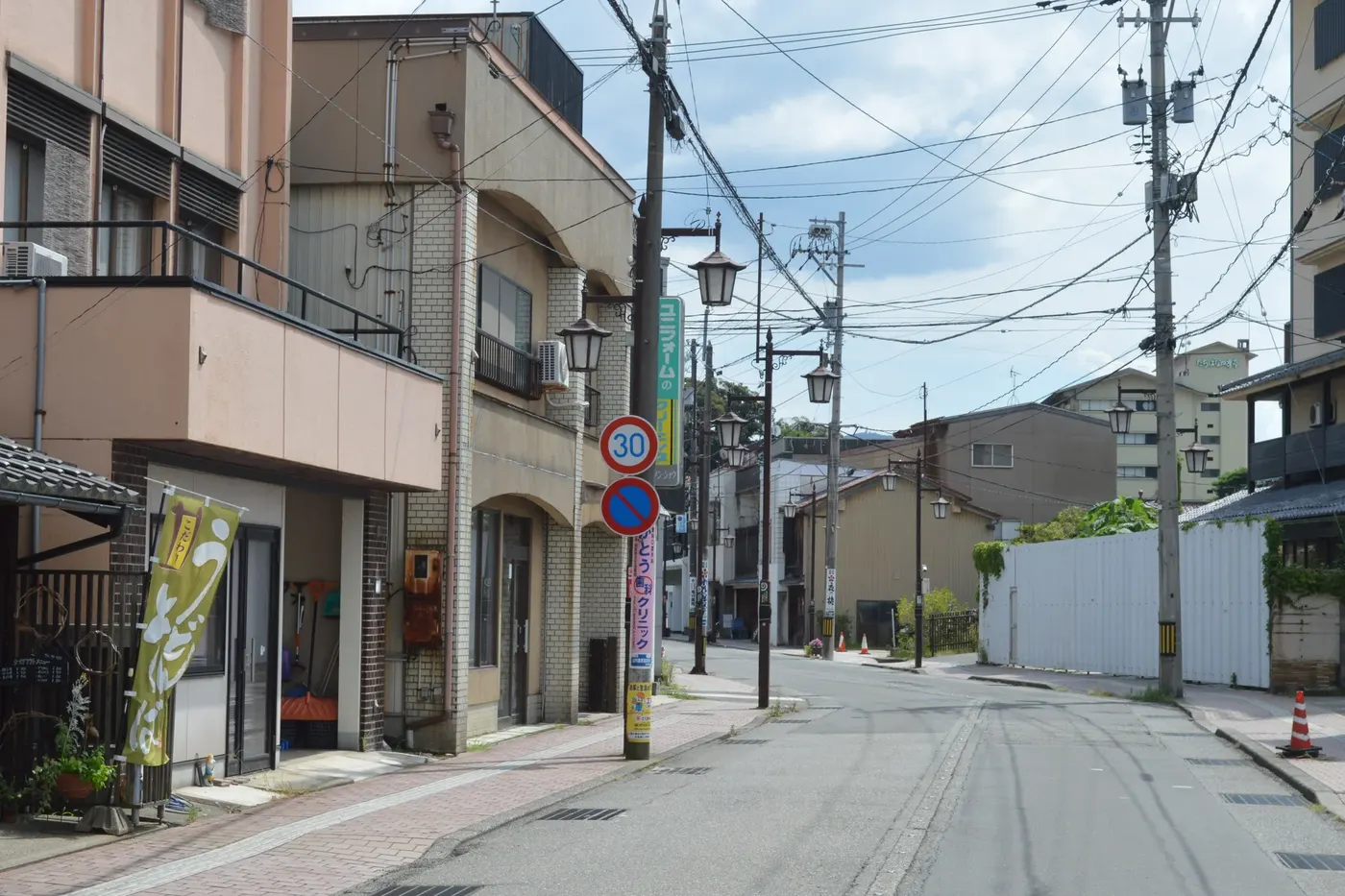
Yamashiro Onsen

🇯🇵 Japan · Ishikawa Prefecture, Hokuriku

Yamashiro Onsen

Manantiales / Yamashiro OnsenSprings / Yamashiro Onsen温泉・鉱泉 / Yamashiro Onsen

♨ Temperatura

61°C

⛰ Altitud

60 m

⚗ pH

7.4

💧 TDS

1850 mg/L

🌊 Caudal

multiple sources

📅 Establecido

Asuka period (c. 689 CE)

♨ Temperature

61°C

⛰ Altitude

60 m

⚗ pH

7.4

💧 TDS

1850 mg/L

🌊 Flow rate

multiple sources

📅 Established

Asuka period (c. 689 CE)

♨ 温度

61°C

⛰ 標高

60 m

⚗ pH

7.4

💧 TDS

1850 mg/L

🌊 流量

multiple sources

📅 開設

Asuka period (c. 689 CE)

Sodium ChlorideSodium SulfateOnsen

✓ Verificado el 2026-07-22

✓ Verified on 2026-07-22

✓ 確認日 2026-07-22

Yamashiro Onsen es uno de los cuatro celebres Kaga Onsen de la Prefectura de Ishikawa, en uso desde aproximadamente el ano 689 d.C. El agua es del tipo cloruro-sulfato sodico, que emerge a unos 61 grados C, clara, ligeramente salada y notablemente calefactora. El corazon historico es el barrio Yuno-gawa, con los banos publicos Ko-Soyu (Bano Antiguo) restaurados al estilo Meiji y el moderno Soyu. La ciudad es considerada el lugar donde el poeta Ki no Tsurayuki perfecciono el silabario hiragana en el siglo X. El artista y chef Kitaoji Rosanjin paso aqui anos formativos, dejando una huella indeleble en la tradicion ceramica Kutani de la region.

Yamashiro Onsen is one of the four celebrated Kaga Onsen of Ishikawa Prefecture, located in Kaga City on Japan's Sea of Japan coast. The spring has been in use since approximately 689 CE, making it among the oldest onsen in Japan. The water is a sodium chloride and sodium sulfate type, emerging at around 61°C — colourless, slightly salty, and notably warming on the skin. The historic heart of the town is the Yuno-gawa district, a pedestrian stone-paved area centred on the Ko-Soyu (Ancient Public Bath), a reconstructed Meiji-era wooden bathhouse that serves as both a bathing facility and a living museum of onsen culture. The modern Soyu public bath stands adjacent. Yamashiro holds a singular place in Japanese cultural history: it is said to be where the court poet Ki no Tsurayuki refined the hiragana phonetic script in the 10th century, earning the town the title 'birthplace of hiragana.' The artist, potter, and legendary chef Kitaoji Rosanjin spent formative years in Yamashiro, and his influence on Kutani pottery — the bold, multicoloured ceramic tradition of the Kaga region — is celebrated at the Rosanjin Kiln Site museum in the town. The broader Kaga Onsen zone, which includes Yamanaka, Katayamazu, and Awazu, is a major wellness destination on the Hokuriku Shinkansen route.

Yamashiro Onsenは日本・Ishikawa Prefecture, Hokurikuに位置する食塩泉・硫酸塩泉。源泉温度は61℃の豊かな温泉水が湧き出る。泉水は中性に近い(pH約7.4)の泉質、塩化物泉・ナトリウム泉を豊富に含む、総溶解固形物1850 mg/Lが特徴だ。689年頃から利用されてきた。皮膚科治療・リウマチ療法・循環器系など多様な温浴療法が行われる。施設では公衆浴場(小外湯/外湯)・旅館滞在・湯野川地区の入浴などが体験できる。

Minerales

Minerals

ミネラル

Sodium412 mg/L
Chloride538 mg/L
Sulfate384 mg/L
Calcium68 mg/L
Bicarbonate142 mg/L
Silica48 mg/L

Tratamientos

Treatments

トリートメント

DermatologyRheumatologyCirculatoryRelaxationFatigue Recovery

Técnicas

Techniques

技法

Public bathhouse (Ko-Soyu / Soyu)Ryokan stayYuno-gawa district bathing

Patrimonio

Yamashiro Onsen forma parte del conjunto de Kaga Onsen (加賀温泉郷), que posee un significado cultural colectivo como principal región de onsen de la costa de Hokuriku. La casa de baños Ko-Soyu es una estructura histórica registrada, reconstruida para preservar el estilo arquitectónico del periodo Meiji. El emplazamiento del horno de Rosanjin (北大路魯山人寓居跡 いろは草庵) es un bien cultural tangible de registro nacional. La zona de Kaga se volvió considerablemente más accesible tras la extensión en 2024 del Shinkansen de Hokuriku hasta Kanazawa y Tsuruga.

Heritage

Yamashiro Onsen is part of the Kaga Onsen cluster (加賀温泉郷), which holds collective cultural significance as the premier onsen region of the Hokuriku coast. The Ko-Soyu bathhouse is a registered historical structure reconstructed to preserve the architectural style of the Meiji period. The Rosanjin Kiln Site (北大路魯山人寓居跡 いろは草庵) is a nationally registered tangible cultural property. The Kaga area became significantly more accessible following the 2024 extension of the Hokuriku Shinkansen to Kanazawa and Tsuruga.

文化財

山代温泉は、北陸沿岸を代表する温泉地域として集合的な文化的意義を持つ加賀温泉郷の一部である。古総湯は、明治時代の建築様式を保存するために再建された、登録有形の歴史的建造物である。魯山人窯跡(北大路魯山人寓居跡 いろは草庵)は国登録有形文化財である。加賀地域は、2024年の北陸新幹線の金沢・敦賀延伸により、格段にアクセスしやすくなった。

Cultura

La pretensión de Yamashiro de ser la cuna de la hiragana se apoya en la tradición según la cual Ki no Tsurayuki, compilador de la antología poética Kokinshu, visitó el lugar y desarrolló allí la escritura fonética en el siglo X. Más documentada de forma concreta es la estancia de Kitaoji Rosanjin (1883-1959), uno de los artistas más célebres de Japón, quien llegó a Yamashiro como joven pintor de carteles y se quedó para dominar la cerámica Kutani, la caligrafía y la filosofía culinaria que lo haría famoso. Su antigua residencia y su horno se han conservado y están abiertos al público.

Culture

Yamashiro's claim to be the birthplace of hiragana rests on the tradition that Ki no Tsurayuki, compiler of the Kokinshu poetry anthology, visited and developed the phonetic script here in the 10th century. More concretely documented is the sojourn of Kitaoji Rosanjin (1883-1959), one of Japan's most celebrated artists, who came to Yamashiro as a young sign-painter and stayed to master Kutani pottery, calligraphy, and the philosophy of food that would make him famous. His former residence and kiln have been preserved and opened to the public.

文化

山代がひらがな発祥の地であるという主張は、『古今和歌集』の撰者である紀貫之がこの地を訪れ、10世紀にこの表音文字を発展させたという伝承に基づいている。より具体的に裏付けられているのは、日本を代表する芸術家のひとりである北大路魯山人(1883-1959)の滞在である。彼は若き看板職人として山代にやって来て、そこに留まり、後に彼を有名にする九谷焼、書道、そして食の哲学を体得した。彼のかつての住居と窯は保存され、一般に公開されている。

Sostenibilidad

La Cooperativa de Ryokanes de Yamashiro Onsen gestiona la asignación de agua entre los ryokanes del pueblo y los dos baños públicos. El distrito peatonal de Yuno-gawa fue rediseñado para reducir el tráfico de vehículos y preservar el paisaje urbano empedrado. El conjunto de la zona de Kaga Onsen ha fomentado el acceso ferroviario a través del Shinkansen de Hokuriku como alternativa al viaje en automóvil, reduciendo la huella ambiental de la llegada de visitantes.

Sustainability

The Yamashiro Onsen Ryokan Cooperative manages water allocation across the town's ryokans and the two public baths. The Yuno-gawa pedestrian district was redesigned to reduce vehicle traffic and preserve the stone-paved streetscape. The broader Kaga Onsen area has promoted rail access via the Hokuriku Shinkansen as an alternative to car travel, reducing the environmental footprint of visitor arrivals.

持続可能性

山代温泉旅館協同組合は、町の旅館と二つの公衆浴場の間で水の配分を管理している。湯の川の歩行者地区は、車両交通を減らし石畳の街並みを保存するために再設計された。加賀温泉郷全体では、車での移動に代わる手段として北陸新幹線による鉄道アクセスが推進されており、来訪者による環境負荷の軽減につながっている。

Contacto

Teléfono+81-761-77-1144

Sitio webyamashiro-spa.or.jp

DirecciónYamashiro Onsen, Kita-bu 3-chome 70, Kaga City, Ishikawa Prefecture 922-0243, Japan

Contact

Phone+81-761-77-1144

Websiteyamashiro-spa.or.jp

AddressYamashiro Onsen, Kita-bu 3-chome 70, Kaga City, Ishikawa Prefecture 922-0243, Japan

連絡先

電話+81-761-77-1144

ウェブサイトyamashiro-spa.or.jp

住所Yamashiro Onsen, Kita-bu 3-chome 70, Kaga City, Ishikawa Prefecture 922-0243, Japan

← Volver al directorio completo Ver en el mapa interactivo← Back to the full directory View on the interactive map← ディレクトリ全体に戻る インタラクティブマップで見る