Manantiales / Abanotubani Sulfur BathsSprings / Abanotubani Sulfur Baths温泉・鉱泉 / Abanotubani Sulfur Baths
📅 Establecido
5th century (legend); bath houses rebuilt 17th–19th c.
📅 Established
5th century (legend); bath houses rebuilt 17th–19th c.
📅 開設
5th century (legend); bath houses rebuilt 17th–19th c.
SulphurousTurkish BathHistorical
✓ Verificado el 2026-07-22
✓ Verified on 2026-07-22
✓ 確認日 2026-07-22
La palabra 'Tbilisi' deriva del georgiano para 'lugar cálido', un nombre dado a la ciudad por los manantiales sulfurosos que brotan a orillas del río Mtkvari. El barrio de Abanotubani agrupa una serie de baños de cúpula de ladrillo, todos alimentados por el mismo acuífero subterráneo sulfuroso. Según la leyenda, el rey Vakhtang Gorgasali fundó aquí la ciudad en el siglo V d.C. tras descubrir los manantiales. Los baños sulfurosos de Tiflis han funcionado de forma continua durante más de un milenio como lugar de higiene, socialización y recuperación.
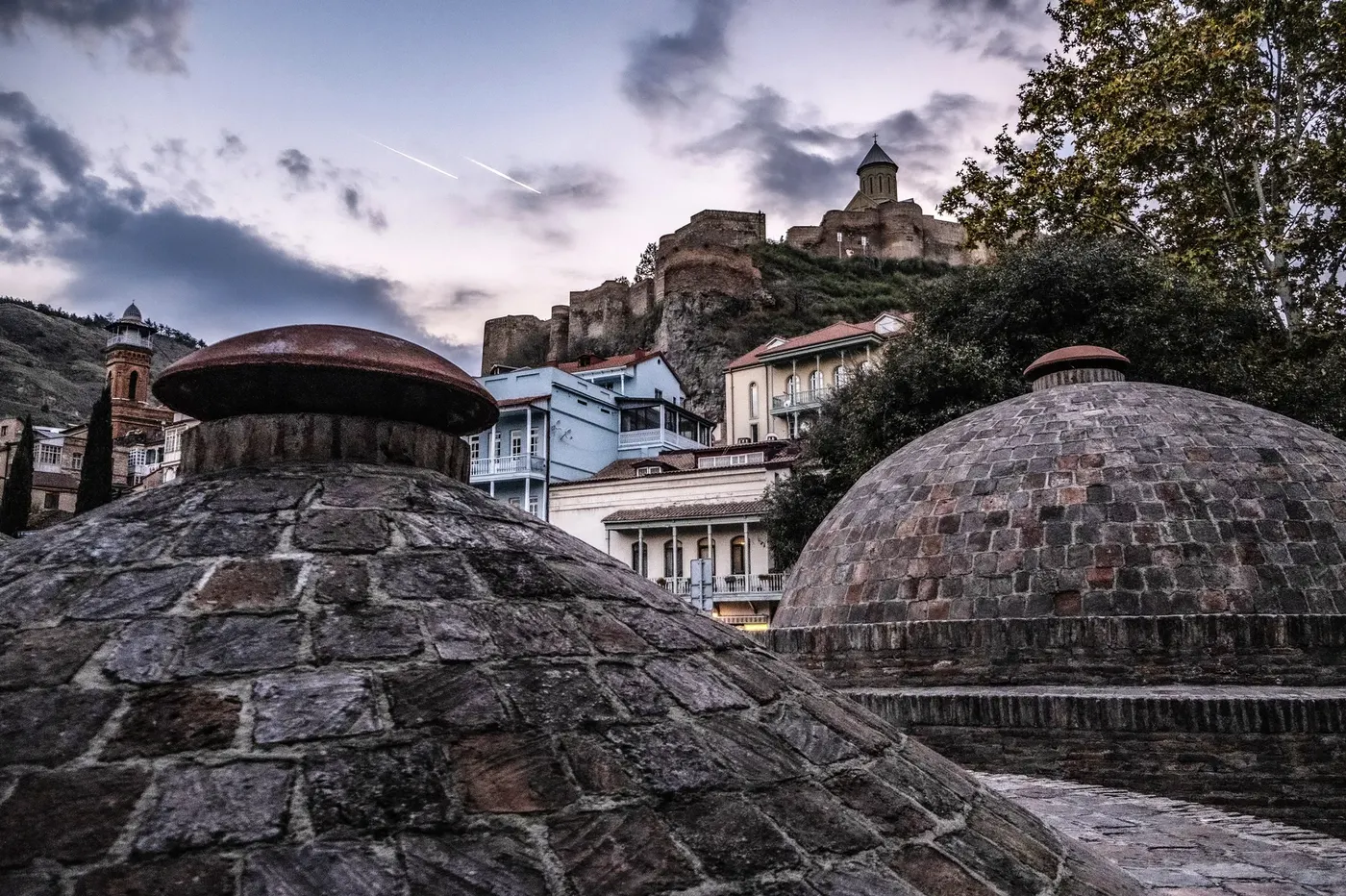
The word 'Tbilisi' derives from the Georgian for 'warm place' — a name given to the city because of the sulfur springs that rise along the banks of the Mtkvari River. The Abanotubani district (meaning 'bath district') clusters a series of domed brick bath houses, each fed by the same subterranean sulfurous aquifer that reportedly drew King Vakhtang Gorgasali to found a city here in the 5th century. According to legend, the king was hunting when a pheasant fell into one of the natural springs and emerged cooked — prompting him to build his capital on the site. The bath houses, rebuilt in their current form during the Persian and Russian periods, operate in the tradition of the regional hammam: a sequence of steam rooms, soaping chambers, and cool-down pools. The sulfur-rich water — milky, warm, faintly eggy — has been used continuously for over a millennium as a place of bathing, socialising, and recovery from illness.
Abanotubani Sulfur Bathsはジョージア・Old Town, Tbilisiに位置する硫黄泉・トルコ式浴場。源泉温度は39℃、標高445mの地に湧出する。泉水は中性に近い(pH約7.0)の泉質、炭酸水素塩泉・ナトリウム泉を豊富に含む、総溶解固形物1100 mg/Lが特徴だ。数世紀にわたる歴史を持つ。皮膚・呼吸器療法・筋肉の回復など多様な温浴療法が行われる。施設ではハンマーム・蒸し風呂・水風呂などが体験できる。
Minerales
Minerals
ミネラル
| Hydrogen Sulphide | 8.5 mg/L |
| Sodium | 180 mg/L |
| Bicarbonate | 420 mg/L |
| Calcium | 72 mg/L |
| Sulphate | 95 mg/L |
Tratamientos
Treatments
トリートメント
SkinRespiratoryMuscle RecoveryRelaxation
Técnicas
Techniques
技法
HammamSteam bathCold plungeKese exfoliation
Patrimonio
Los baños de azufre de Tbilisi se encuentran entre las instalaciones de baño en funcionamiento continuo más antiguas del Cáucaso. La propia ciudad fue fundada en torno a estos manantiales en el siglo V d.C. A lo largo de los quince siglos siguientes, las casas de baños atravesaron periodos administrativos persas, otomanos y rusos, cada uno de los cuales añadió capas arquitectónicas a las estructuras abovedadas que se conservan hoy. El distrito histórico de Abanotubani está protegido por la legislación patrimonial georgiana y constituye el núcleo cultural del casco antiguo de Tbilisi, propuesto para su inscripción en la UNESCO.
Heritage
Tbilisi's sulfur baths are among the oldest continuously operating bathing facilities in the Caucasus. The city itself was founded around these springs in the 5th century AD. Over the following fifteen centuries, the bath houses passed through Persian, Ottoman, and Russian administrative periods, each of which added architectural layers to the domed structures visible today. The historic district of Abanotubani is protected under Georgian heritage legislation and forms the cultural core of the UNESCO-proposed Old Town of Tbilisi.
文化財
トビリシの硫黄風呂は、コーカサス地方で継続的に営業してきた入浴施設としては最も古いものの一つである。この都市自体、5世紀にこれらの温泉を中心として建設された。その後の15世紀にわたり、これらの浴場はペルシア、オスマン、ロシアという各統治期を経験し、それぞれの時代が今日見られるドーム型建築に新たな層を加えてきた。歴史地区アバノトゥバニはジョージアの文化財法によって保護されており、ユネスコ登録が提案されているトビリシ旧市街の文化的中核をなしている。
Cultura
La cultura del baño georgiana es profundamente social: los baños de azufre de Abanotubani han sido históricamente lugares tanto de negociación comercial y conversación política como de ritual comunitario, tanto como de higiene. Escritores como Alexandre Dumas y Alexander Pushkin se bañaron aquí y escribieron sobre la experiencia. Pushkin calificó los baños de Tbilisi como los mejores que había visitado jamás. La tradición de contratar a un 'keisari' —un exfoliador y masajista profesional— para una ceremonia de baño completa sigue vigente hoy en día en varias de las casas históricas.
Culture
Georgian bath culture is deeply social: the sulfur baths of Abanotubani have historically been places of business negotiation, political conversation, and communal ritual as much as cleansing. Writers including Alexandre Dumas and Alexander Pushkin bathed here and wrote about the experience. Pushkin called the Tbilisi baths the finest he had ever visited. The tradition of hiring a 'keisari' — a professional scrubber and masseur — for a full bath ceremony continues today in several of the historic houses.
文化
ジョージアの入浴文化はきわめて社会的な性格を持つ。アバノトゥバニの硫黄風呂は歴史的に、単なる清めの場であるだけでなく、商談、政治的な対話、そして共同体の儀礼の場でもあった。アレクサンドル・デュマやアレクサンドル・プーシキンといった文豪もここで入浴し、その体験について記している。プーシキンはトビリシの浴場を、自分が訪れた中で最高のものだと評した。「ケイサリ」——専門の垢すり兼マッサージ師——を雇って行う本格的な入浴儀式の伝統は、今日でも複数の歴史的な浴場で受け継がれている。
Sostenibilidad
Los manantiales sulfurosos de Tbilisi fluyen desde un acuífero natural sin bombeo mecánico, a una temperatura constante de entre 37 y 42 °C. El agua no se recircula: fluye a través de las cámaras de baño y drena de manera natural, renovándose continuamente desde la fuente geotérmica. Varias casas de baños han sido renovadas utilizando materiales tradicionales de ladrillo y azulejo, en consonancia con el carácter arquitectónico histórico de Abanotubani.
Sustainability
The sulfur springs of Tbilisi flow from a natural aquifer without mechanical pumping, at a consistent 37–42°C. The water is not recirculated — it flows through the bath chambers and drains naturally, continuously renewed from the geothermal source. Several bath houses have undergone renovation using traditional brick and tile materials consistent with the historic architectural character of Abanotubani.
持続可能性
トビリシの硫黄泉は、機械的な汲み上げを行うことなく天然の帯水層から湧出しており、常時37〜42度の温度を保っている。この水は循環利用されておらず、浴場を通り抜けて自然に排水され、地熱源から絶えず新しい湯が供給されている。複数の浴場は、アバノトゥバニの歴史的な建築様式に沿った伝統的なレンガとタイルの材料を用いて改修されてきた。
Otros manantiales en Georgia