Tskaltubo Spa Resort

🇬🇪 Georgia · Imereti Region

Tskaltubo Spa Resort

Manantiales / Tskaltubo Spa ResortSprings / Tskaltubo Spa Resort温泉・鉱泉 / Tskaltubo Spa Resort

♨ Temperatura

34°C

⛰ Altitud

96 m

⚗ pH

7.2

💧 TDS

720 mg/L

🌊 Caudal

120 L/s

📅 Establecido

Antiquity; Soviet resort built 1930s–1950s

♨ Temperature

34°C

⛰ Altitude

96 m

⚗ pH

7.2

💧 TDS

720 mg/L

🌊 Flow rate

120 L/s

📅 Established

Antiquity; Soviet resort built 1930s–1950s

♨ 温度

34°C

⛰ 標高

96 m

⚗ pH

7.2

💧 TDS

720 mg/L

🌊 流量

120 L/s

📅 開設

Antiquity; Soviet resort built 1930s–1950s

RadonBalneologyHistorical

✓ Verificado el 2026-07-22

✓ Verified on 2026-07-22

✓ 確認日 2026-07-22

Tskaltubo es una ciudad de la región georgiana de Imereti construida casi en su totalidad alrededor de sus manantiales de radón. Las aguas emergen a 33–35 °C — cómodamente templadas, sin necesidad de enfriamiento — y llevan una baja concentración natural de gas radón. En la cúspide de la era soviética, Tskaltubo operaba dieciocho casas de spa y trataba a más de 120.000 pacientes al año. Hoy, la mitad de los magníficos palacios de baño neoclásicos estalinistas permanecen abandonados, congelados en una bella decadencia, mientras la otra mitad ha sido restaurada.

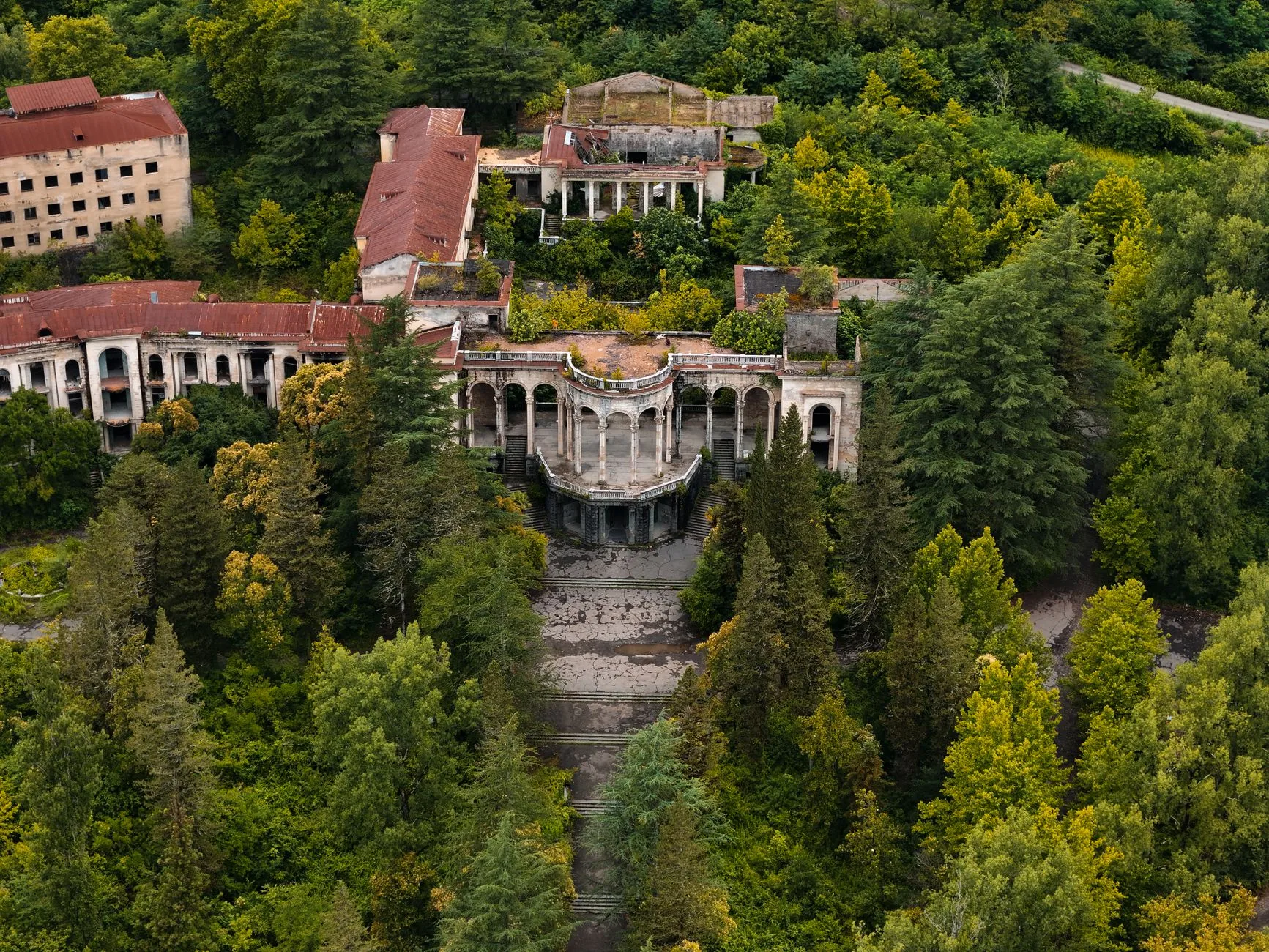
Tskaltubo is a small city in the Imereti region of western Georgia, built almost entirely around its thermal radon springs. The springs emerge at 33–35°C — unusually comfortable, requiring no cooling before bathing — and carry a low natural concentration of radon gas, which has long been the basis of the town's balneological claim. At the height of the Soviet era, Tskaltubo operated eighteen spa houses and treated over 120,000 patients a year, accommodating workers from across the USSR sent for state-funded rest cures. Stalin himself reportedly bathed here. Today, roughly half of the magnificent domed and colonnade-fronted bath palaces — built in Stalinist neoclassical style in the 1930s to 1950s — stand abandoned, their interiors frozen in a beautiful decay, while the other half have been restored and attract visitors from Europe drawn as much by the architectural atmosphere as by the waters. The springs flow at the same temperature and rate they always have: undisturbed by the political history that rose and fell around them.

Tskaltubo Spa Resortはジョージア・Imereti Regionに位置するラドン泉・温浴療法。源泉温度は34℃の豊かな温泉水が湧き出る。泉水は中性に近い(pH約7.2)の泉質、炭酸水素塩泉・ナトリウム泉を豊富に含む、総溶解固形物720 mg/Lが特徴だ。循環器療法・神経系・リウマチ療法など多様な温浴療法が行われる。施設では温泉療法・ラドン風呂・水中マッサージなどが体験できる。

Minerales

Minerals

ミネラル

Radon0.8 mg/L
Sodium95 mg/L
Bicarbonate580 mg/L
Calcium65 mg/L
Magnesium28 mg/L

Tratamientos

Treatments

トリートメント

CardiovascularNervous SystemRheumatologyRelaxation

Técnicas

Techniques

技法

BalneotherapyRadon bathUnderwater massage

Patrimonio

Los manantiales de Tskaltubo eran conocidos desde la Antigüedad y se mencionan en las crónicas georgianas. La transformación del pueblo en un complejo turístico terapéutico durante la era soviética produjo algunos de los edificios termales más ambiciosos arquitectónicamente del Cáucaso: palacios de baños neoclásicos de estilo estalinista, con fachadas de columnatas, salas de baño abovedadas y galerías para beber agua mineral. Las casas de baños, en parte en ruinas, son hoy objeto de debates sobre preservación patrimonial en los que participan el gobierno georgiano y organizaciones culturales europeas.

Heritage

Tskaltubo's springs were known in antiquity and are referenced in Georgian chronicles. The Soviet-era transformation of the town into a therapeutic resort complex produced some of the most architecturally ambitious spa buildings in the Caucasus — Stalinist neoclassical bath palaces with colonnaded facades, vaulted bathing halls, and mineral water drinking galleries. The partially ruined bath houses are now subject to heritage preservation discussions involving the Georgian government and European cultural organisations.

文化財

ツカルトゥボの温泉は古代から知られており、ジョージアの年代記にも言及がある。ソビエト時代にこの町が療養リゾート複合施設へと変貌したことで、コーカサス地方でも建築的に最も野心的な温泉建築群が生まれた——列柱のファサード、ヴォールト天井の浴場ホール、ミネラルウォーターの飲用ギャラリーを備えた、スターリン様式の新古典主義的な「浴場の宮殿」である。一部が廃墟と化したこれらの浴場は現在、ジョージア政府とヨーロッパの文化団体を交えた文化財保存の議論の対象となっている。

Cultura

Tskaltubo ocupa un lugar peculiar en la memoria cultural postsoviética: un monumento a un sistema de bienestar colectivo —el acceso universal a los baños medicinales— que ya no existe. Los palacios de baños abandonados, colonizados por el musgo y por ocupantes locales tras 1991, se han convertido en un lugar de peregrinación para fotógrafos y exploradores urbanos. El contraste entre la grandeza de la arquitectura y la modesta sencillez de los propios manantiales capta algo esencial sobre el idealismo y las contradicciones del proyecto soviético.

Culture

Tskaltubo occupies an unusual place in post-Soviet cultural memory: a monument to a system of collective welfare — universal access to medical bathing — that no longer exists. The abandoned bath palaces, colonised by moss and local squatters after 1991, have become a pilgrimage site for photographers and urban explorers. The contrast between the grandeur of the architecture and the modest simplicity of the springs themselves captures something essential about the idealism and the contradictions of the Soviet project.

文化

ツカルトゥボは、ポスト・ソビエト時代の文化的記憶の中で特異な位置を占めている。それは、もはや存在しない集団的福祉のシステム——医療入浴への万人のアクセス——を象徴する記念碑である。1991年以降、苔に覆われ地元の不法居住者が住み着いた廃墟の浴場宮殿群は、写真家や廃墟探索者たちの巡礼地となっている。壮麗な建築と、温泉そのものの質素な単純さとの対比は、ソビエト計画の理想主義とその矛盾の本質を捉えている。

Sostenibilidad

Los manantiales de radón de Tskaltubo fluyen naturalmente desde un acuífero calcáreo, con temperatura y composición química constantes. Los manantiales nunca han requerido bombeo. El desafío actual no es de índole geológica, sino arquitectónica: la restauración de las casas de baños soviéticas en ruinas utilizando materiales que respeten tanto el carácter histórico como los requisitos de seguridad sísmica de la región.

Sustainability

The radon springs of Tskaltubo flow naturally from a limestone aquifer at consistent temperature and chemistry. The springs have never required pumping. The current challenge is not geological but architectural: the restoration of derelict Soviet bath houses using materials that respect both the historic character and seismic safety requirements of the region.

持続可能性

ツカルトゥボのラドン泉は、一定の温度と化学組成を保ちながら石灰岩帯水層から自然に湧出しており、これまでポンプによる汲み上げを必要としたことはない。現在の課題は地質学的なものではなく建築的なものである。すなわち、荒廃したソビエト時代の浴場を、歴史的特性と地域の耐震安全基準の両方を尊重した材料を用いて修復することである。

Contacto

Sitio webtskaltubo.ge

DirecciónTskaltubo, Imereti, Georgia

Contact

Websitetskaltubo.ge

AddressTskaltubo, Imereti, Georgia

連絡先

ウェブサイトtskaltubo.ge

住所Tskaltubo, Imereti, Georgia

← Volver al directorio completo Ver en el mapa interactivo← Back to the full directory View on the interactive map← ディレクトリ全体に戻る インタラクティブマップで見る