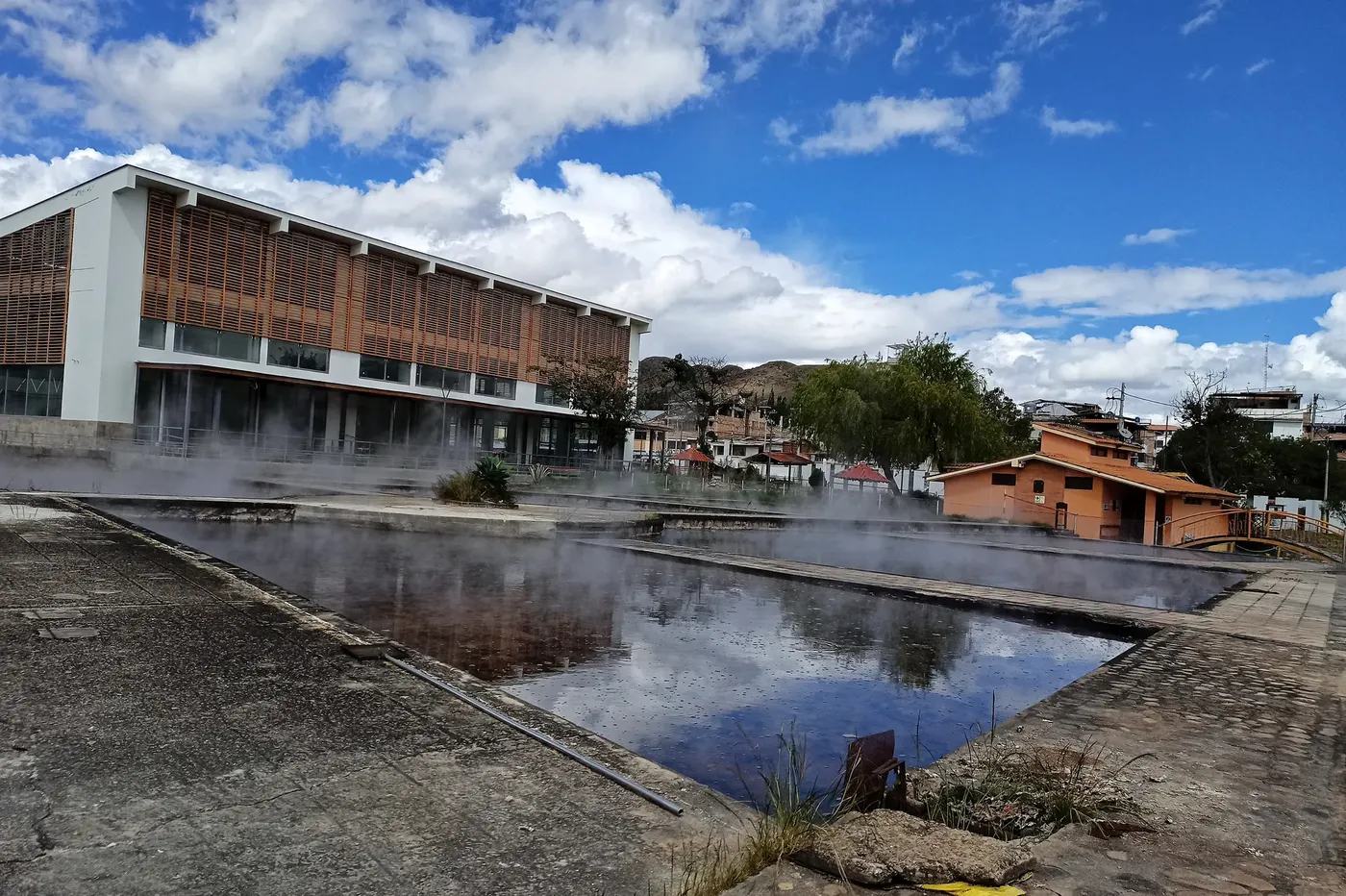
Photo by Fakudagreen, via Wikimedia Commons (CC BY-SA 4.0)
🇵🇪 Peru · Cajamarca
♨ Temperature
72°C
⛰ Altitude
2667 m
⚗ pH
6.8
💧 TDS
890 mg/L
🌊 Flow rate
60 L/s
📅 Established
Inca period; pools in use since at least 15th century
✓ Verified on 2026-07-22
The Baños del Inca near Cajamarca are among the most historically charged hot spring sites in the world. On 15 November 1532, the Spanish conquistador Francisco Pizarro arrived at Cajamarca while the Inca emperor Atahualpa was bathing at these same thermal springs — a moment that led directly to the capture of the emperor and the beginning of the Spanish conquest of the Inca Empire. The springs emerge at 72°C from a geothermal fracture in the Andes and flow into individual semi-enclosed stone-edged pools, each fed by a mix of hot spring water and cooled run-off, maintaining bathing temperatures of approximately 38–42°C. The pools retain their Inca-era stone construction and layout. A municipal complex manages over 70 private bathing enclosures alongside larger public pools, visited by thousands of Peruvians and international travellers who come both for the thermal experience and for the extraordinary weight of history these springs carry. The bathing tradition at Cajamarca predates the Inca — the Cajamarca culture was already using the springs from approximately 200 AD.
| Sodium | 195 mg/L |
| Bicarbonate | 420 mg/L |
| Chloride | 88 mg/L |
| Calcium | 72 mg/L |
| Sulphate | 45 mg/L |
The Baños del Inca are one of the most historically significant physical sites in the Americas. The encounter at Cajamarca in 1532 — Atahualpa's capture while bathing here, his ransom with a room filled twice with silver and once with gold, and his subsequent execution — was the decisive turning point ending the Inca Empire. The stone bathing pools are believed to be Inca-period constructions. Cajamarca's historic centre is on Peru's UNESCO tentative list.
To lower oneself into the same warm spring water that the last free Inca emperor used is to participate in a physical continuum spanning nearly five hundred years. The springs remain in daily use by Cajamarca's inhabitants — families, workers, students — alongside the flow of historical tourists who arrive by bus and depart before dark. This overlap of the everyday and the momentous is what makes Baños del Inca exceptional: a living bathing site that has not been museified despite its historical weight.
The Baños del Inca are managed by the municipal government of Cajamarca on a modest fee structure making them accessible to local residents. The springs flow naturally at 72°C without mechanical pumping. Conservation of the historic stone pool infrastructure uses traditional masonry techniques. The complex is one of the largest local employers in the immediate area and funds are reinvested in maintenance.
Websitewww.mincetur.gob.pe
AddressBaños del Inca, Cajamarca, Peru