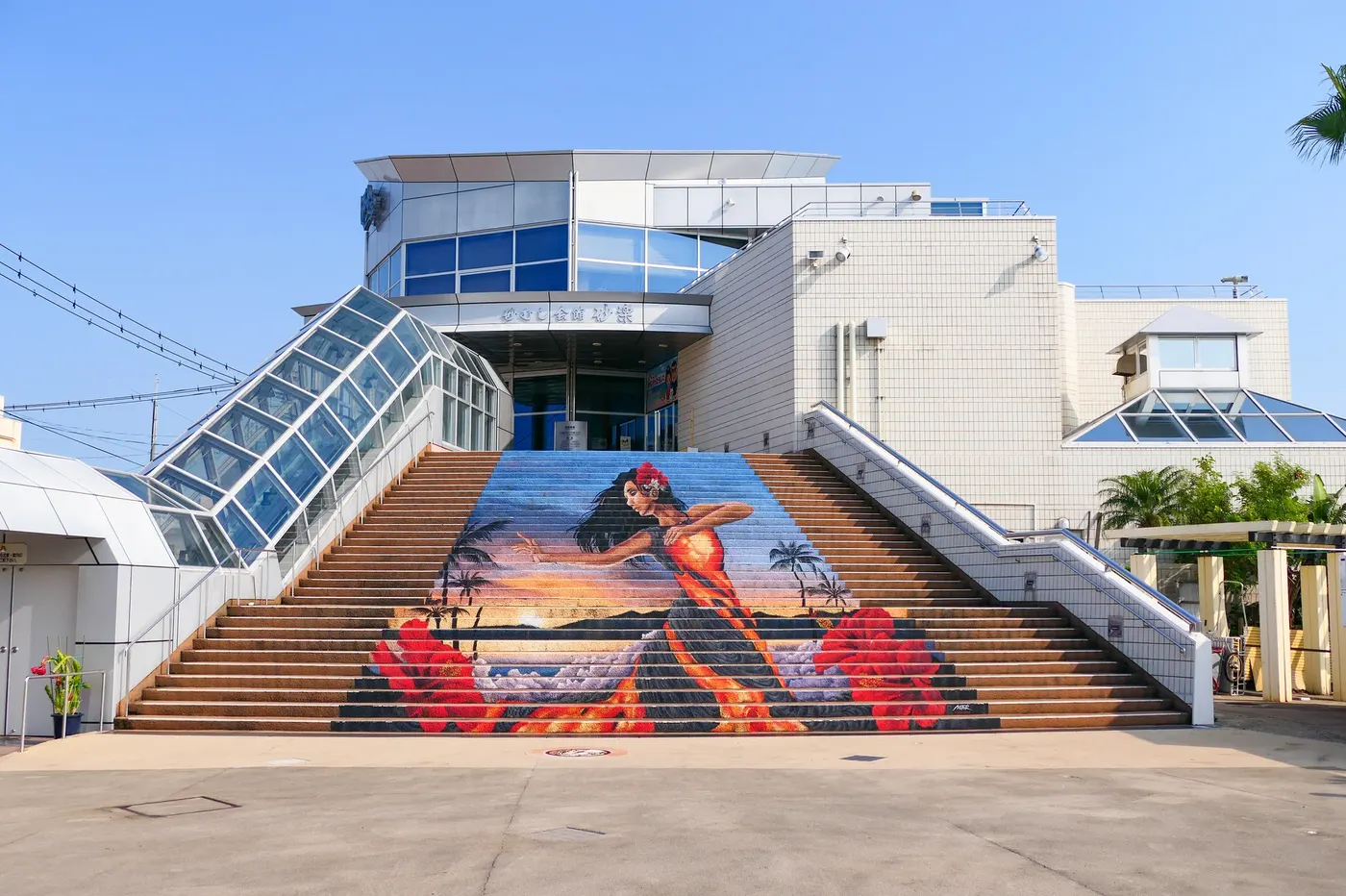
Photo by MaedaAkihiko, via Wikimedia Commons (CC BY-SA 4.0)
🇯🇵 Japan · Ibusuki, Kagoshima Prefecture, Kyushu
Photo by MaedaAkihiko, via Wikimedia Commons (CC BY-SA 4.0)
🇯🇵 Japan · Ibusuki, Kagoshima Prefecture, Kyushu
♨ Temperature
—
⛰ Altitude
—
⚗ pH
—
💧 TDS
—
🌊 Flow rate
—
📅 Established
sand-bathing tradition documented for 300+ years; earliest written reference over 450 years ago
✓ Verified on 2026-07-28
Ibusuki Onsen sits on the Satsuma Peninsula in Kagoshima Prefecture, Kyushu, on the shore of Kagoshima Bay, and is fed by roughly 500 hot spring sources discharging a combined 120,000 tonnes of water per day. Most of the water is a sodium chloride spring type, with source temperatures generally between 50-60°C and at least one source near 100°C. Ibusuki's defining feature is suna-mushi, sand bathing, where the naturally geothermally heated beach sand (around 50-55°C) is used to bury bathers up to the neck; the practice has been documented for at least 300 years, with the earliest known written reference over 450 years ago, when Portuguese merchant Jorge Alvares described people bathing in hot sand for two hours morning and night in 'The Japan Report.' Saraku, the town's largest public sand-bath hall, draws over 200,000 visitors a year.
Sand bathing at Ibusuki has been practiced for at least 300 years and was documented over 450 years ago by the Portuguese merchant Jorge Alvares, whose account 'The Japan Report' described locals bathing in hot sand for two hours at a time, morning and night.
Suna-mushi (sand bathing) remains Ibusuki's signature bathing tradition: bathers wear a yukata and lie in a shallow trench dug on the beach while staff bury them in sand naturally heated by the geothermal springs beneath, a practice historically used to treat rheumatism, asthma, anemia, and other ailments.