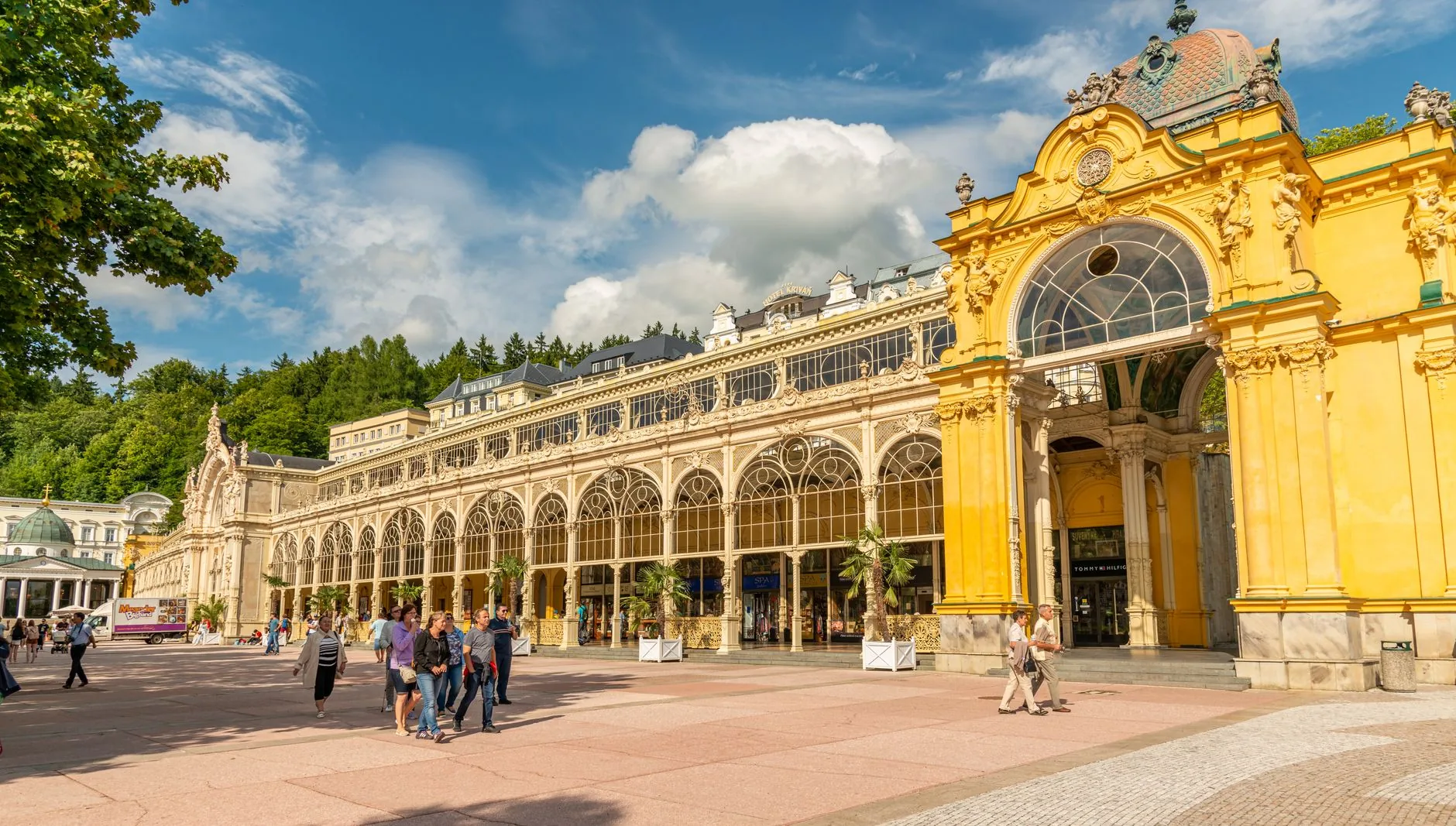
Photo by Franzfoto, via Wikimedia Commons (CC BY-SA 3.0)
🇨🇿 Czechia · Bohemia
♨ Temperature
62°C
⛰ Altitude
369 m
⚗ pH
6.8
💧 TDS
6200 mg/L
🌊 Flow rate
2000 L/s
📅 Established
1358
✓ Verified on 2026-09-11
Karlovy Vary (Carlsbad) has been a celebrated healing destination since Emperor Charles IV 'discovered' its springs in 1358. Twelve main springs, the hottest of which — the Sprudel — shoots water 12 metres into the air at 73°C, carry a complex mixture of bicarbonate, sulphate, sodium, and potassium. The town's elegant colonnades were designed for promenading while sipping waters from traditional porcelain spa cups. Beethoven, Goethe, and Peter the Great all took cures here. Part of the Great Spas of Europe UNESCO Heritage inscription.
According to local legend, Holy Roman Emperor Charles IV discovered the springs around 1358 when his hunting dog fell into a pool of hot water while chasing a stag — the town takes his name (Karlovy Vary, "Charles's Baths"). Geologically, rainwater seeps deep into granite fractures beneath the Ohře river valley, is heated by residual volcanic activity, and rises back to the surface enriched with bicarbonate, sulphate, and sodium after a journey of many decades underground. Of the town's thirteen springs, the hottest and most dramatic is the Vřídlo (the "Hot Spring" geyser), which erupts to around 73°C through a fountain nozzle inside the Vřídelní Colonnade, visible to any visitor walking through.
Karlovy Vary spa culture centers on the drinking cure rather than bathing alone: visitors buy a small porcelain cup with a built-in drinking spout (a lázeňský pohárek) and sample mineral water directly from several of the town's colonnades, each spring tasting slightly different in temperature and mineral strength. Beyond the free colonnades, spa hotels along the Teplá river offer full wellness programs — balneotherapy, mud wraps, and mineral baths — usually booked as part of a multi-day stay rather than a single walk-in visit. Expect elegant 19th-century architecture, the scent of sulphur near the Vřídlo, and stalls selling the town's traditional wafer cookies alongside the water cups.
Walking the colonnades and sampling the spring water is essentially free, aside from the cost of a souvenir drinking cup (roughly 100–150 CZK, about €4–6). Single spa treatments booked à la carte at hotel wellness centers — a mineral bath, massage, or mud wrap — typically start around €25–40 per session, while structured day-spa packages combining several treatments run higher. Traditional balneology cures, the multi-day medical treatment programs Karlovy Vary is historically known for, are priced per package and usually require a doctor's consultation on arrival. As with any spa town, prices vary considerably between hotels, so it's worth comparing a few before booking.
Karlovy Vary is about two hours from Prague by direct bus (departing frequently from Prague's Florenc station) or by train from Praha hlavní nádraží, both arriving close to the town's spa district. Karlovy Vary also has its own small airport with limited seasonal flights. Within the town, the springs and colonnades are clustered along the Teplá river and are entirely walkable; a funicular railway climbs to the Diana Lookout Tower above the colonnades for a view over the whole spa quarter. Driving is possible but parking in the historic core is limited, so many visitors leave cars at the edge of town.
Beyond drinking the waters, the main things to do in Karlovy Vary revolve around its spa identity: walking the full length of the colonnades, riding the funicular to Diana Lookout Tower, visiting the Jan Becher Museum (the local herbal liqueur distilled with spring water), and, for those staying longer, booking an actual balneology treatment rather than just observing them. Late spring through early autumn is the most comfortable season for walking the open-air colonnades, and late June brings the Karlovy Vary International Film Festival, when the town is livelier but also considerably busier and pricier to visit.
| Bicarbonate | 2370 mg/L |
| Sulphate | 1450 mg/L |
| Sodium | 1840 mg/L |
| Potassium | 160 mg/L |
| Carbon Dioxide | 1200 mg/L |
| Calcium | 280 mg/L |
Inscribed as part of the Great Spas of Europe UNESCO World Heritage Site in 2021, Karlovy Vary is Central Europe's most celebrated spa town, with an unbroken heritage of balneological practice since 1358. Its twelve springs, elegant colonnades, and grand spa hotels represent the apex of 19th-century European thermal resort architecture.
The Karlovy Vary drinking cure — promenading through colonnades while sipping thermal water from specially designed porcelain cups — is a distinctive cultural ritual unique to Bohemia. Goethe visited 13 times, Beethoven composed here, and Chopin, Liszt, and Brahms all took cures at Karlovy Vary. The International Film Festival held here annually continues this tradition of cultural convergence.
Karlovy Vary's springs are managed by the Czech Geological Survey to prevent over-extraction. The Sprudel geyser flows entirely by natural pressure without pumping. The town's UNESCO designation includes comprehensive conservation management plans for both the spring ecosystem and architectural heritage. The surrounding Slavkov Forest Protected Landscape Area forms the spring's recharge zone and is actively protected.