Kinugawa Onsen

🇯🇵 Japan · Nikko, Tochigi Prefecture, Kanto

Kinugawa Onsen

Manantiales / Kinugawa OnsenSprings / Kinugawa Onsen温泉・鉱泉 / Kinugawa Onsen

♨ Temperatura

⛰ Altitud

⚗ pH

💧 TDS

🌊 Caudal

📅 Establecido

17th century (opened to the public in the early Meiji period)

♨ Temperature

⛰ Altitude

⚗ pH

💧 TDS

🌊 Flow rate

📅 Established

17th century (opened to the public in the early Meiji period)

♨ 温度

⛰ 標高

⚗ pH

💧 TDS

🌊 流量

📅 開設

17th century (opened to the public in the early Meiji period)

Simple thermal (low mineral)ChlorinatedBicarbonatedSulphurous

✓ Verificado el 2026-07-28

✓ Verified on 2026-07-28

✓ 確認日 2026-07-28

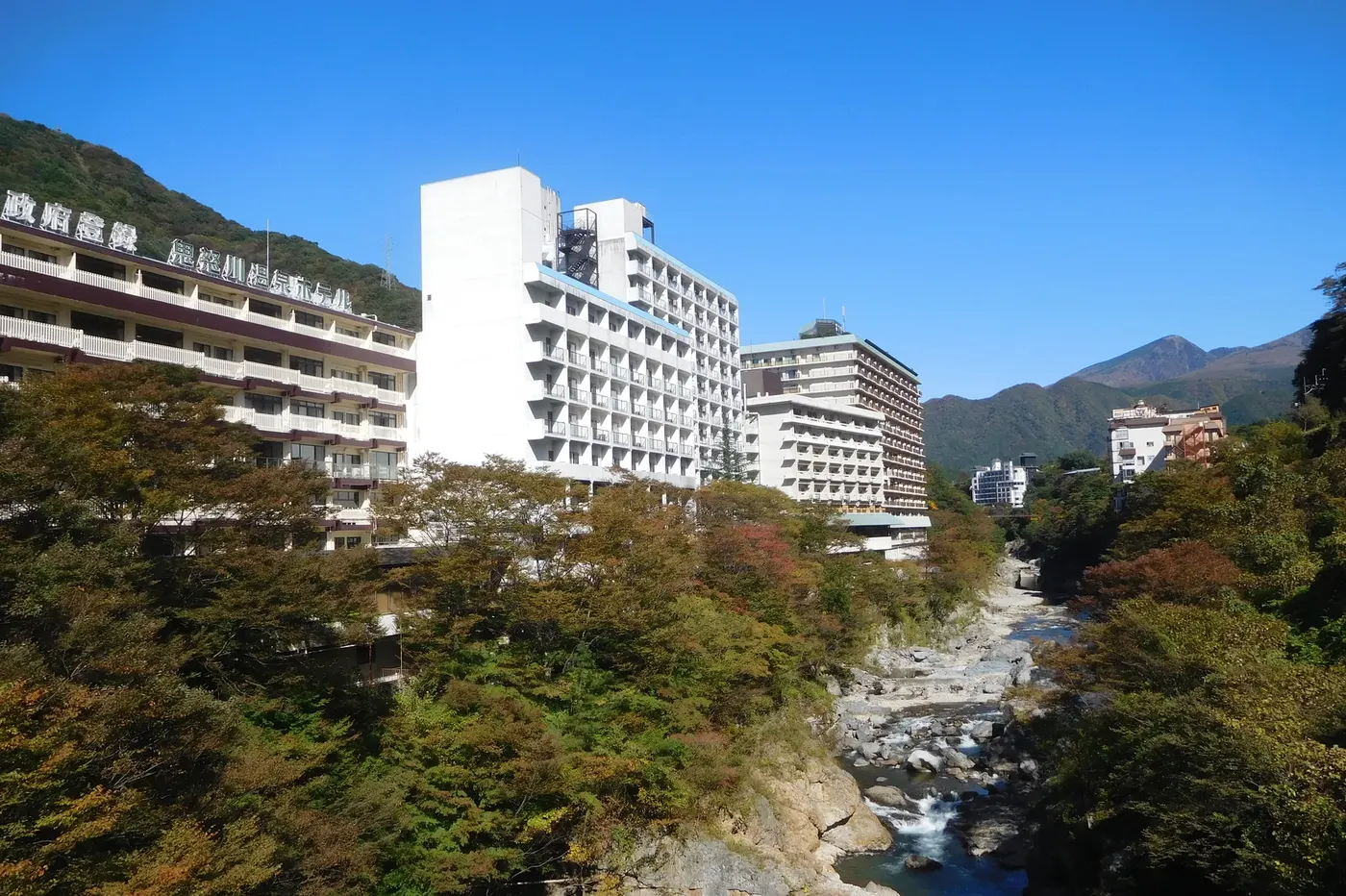
Kinugawa Onsen se desarrolló a ambas orillas del río Kinugawa en Nikko, prefectura de Tochigi, a unas dos horas en tren de Tokio. Fundado en el siglo XVII, sus aguas estaban originalmente reservadas a funcionarios de alto rango y sacerdotes budistas, y solo se abrieron al público en general a principios de la era Meiji (a partir de 1868). Distintos baños del complejo aprovechan varios tipos de fuentes, entre ellas simples, cloruradas, bicarbonatadas y sulfurosas, y el agua alcalina simple es apreciada por ser suave con la piel. El complejo se expandió notablemente durante el auge del turismo organizado de la década de 1970, atravesó un período de declive visible tras la recesión de los años noventa y desde entonces ha trabajado por revitalizarse.

Kinugawa Onsen developed along both banks of the Kinugawa River in Nikko, Tochigi Prefecture, roughly two hours by train from Tokyo. Founded in the 17th century, its waters were originally reserved for high-ranking officials and Buddhist priests, only opening to the general public in the early Meiji period (from 1868). Different bathhouses across the resort draw on several spring types, including simple, chloride, bicarbonate, and sulfur springs, with the alkaline simple-spring water noted for being gentle on skin. The resort expanded heavily during the 1970s package-tourism boom, went through a period of visible decline after the 1990s economic downturn, and has since worked to revitalize itself.

鬼怒川温泉は栃木県日光市、鬼怒川の両岸に発展した温泉地で、東京から電車で約2時間の距離にある。17世紀に開かれたが、当初は身分の高い役人や僧侶のみが利用でき、一般に開放されたのは明治時代初期(1868年以降)になってからだった。温泉地内の各施設は単純泉、塩化物泉、炭酸水素塩泉、硫黄泉などさまざまな泉質の湯を利用しており、アルカリ性単純泉は肌に優しいことで知られる。1970年代の団体旅行ブームで大きく発展したが、1990年代の景気後退後は衰退が目立つ時期を経験し、その後は再生に取り組んでいる。

Técnicas

Techniques

技法

Bathing (Onsen)

Patrimonio

Las aguas se utilizaron por primera vez en el siglo XVII por monjes y estaban vedadas a la gente común, volviéndose accesibles al público solo después de la Restauración Meiji de 1868. El complejo creció rápidamente durante el auge turístico japonés de la década de 1970, antes de entrar en declive en los años noventa, un período que un profesor de urbanismo citó en un ranking de 2005 sobre los lugares 'más feos' de Japón.

Heritage

The springs were first used in the 17th century by monks and were off-limits to ordinary people, becoming publicly accessible only after the Meiji Restoration in 1868. The resort grew rapidly during Japan's 1970s tourism boom before falling into decline in the 1990s, a period one urban planning professor cited in a 2005 ranking of Japan's 'ugliest' developed towns.

文化財

この湯は17世紀に僧侶によって初めて利用され、一般庶民の立ち入りは禁じられていたが、1868年の明治維新後に一般開放された。1970年代の日本の観光ブームで急速に発展した後、1990年代に衰退期を迎え、ある都市計画の専門家が2005年に発表した「日本で最も景観が損なわれた場所」のランキングでこの時期の様子が取り上げられたこともある。

Contacto

Sitio webwww.visit-tochigi.com/plan-your-trip/things-to-do/771/

DirecciónKinugawaonsen, Nikko, Tochigi, Japan

Contact

Websitewww.visit-tochigi.com/plan-your-trip/things-to-do/771/

AddressKinugawaonsen, Nikko, Tochigi, Japan

連絡先

ウェブサイトwww.visit-tochigi.com/plan-your-trip/things-to-do/771/

住所Kinugawaonsen, Nikko, Tochigi, Japan

← Volver al directorio completo Ver en el mapa interactivo← Back to the full directory View on the interactive map← ディレクトリ全体に戻る インタラクティブマップで見る