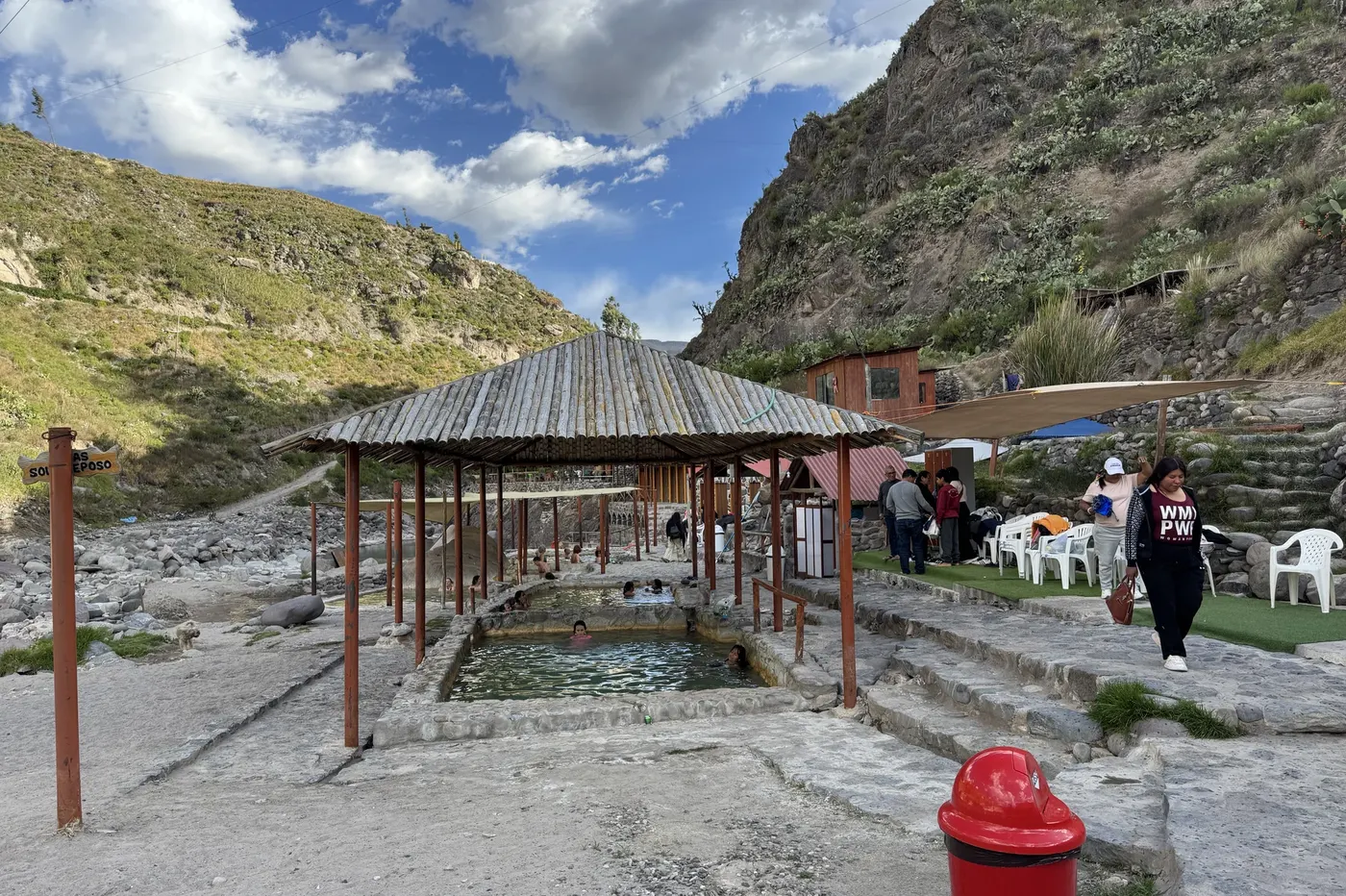
Photo by Codas, via Wikimedia Commons (CC BY-SA 4.0)
🇵🇪 Peru · Lares district, Cusco Region
Photo by Codas, via Wikimedia Commons (CC BY-SA 4.0)
🇵🇪 Peru · Lares district, Cusco Region
♨ Temperature
45°C
⛰ Altitude
3850 m
⚗ pH
7.1
💧 TDS
520 mg/L
🌊 Flow rate
15 L/s
📅 Established
Pre-Inca era
✓ Verified on 2026-07-22
The hot springs at Chacapi sit at an elevation of nearly 4,000 metres in the Andean highlands northwest of Cusco, surrounded by snow-capped peaks and deep glacial valleys. Water emerges from the earth at around 45°C and collects in a series of natural and community-built stone pools. The Lares Valley trek has long been considered an alternative to the Inca Trail, passing through villages where Quechua is still the primary language and traditional textile and agricultural practices continue largely unchanged. The springs are used by local Quechua families for bathing and, within traditional knowledge systems, for the treatment of joint and muscular conditions attributed to high-altitude labour. Trekkers pass through on multi-day routes between Lares and the Sacred Valley.
| Sulphur (H₂S) | 1.2 mg/L |
| Bicarbonate | 384 mg/L |
| Calcium | 89 mg/L |
| Sodium | 42 mg/L |
| Magnesium | 18 mg/L |
| Iron | 0.8 mg/L |
The Lares Valley lies within the broader Inca imperial heartland of the Cusco region. Archaeological evidence shows continuous Quechua habitation in this valley for over 2,000 years. The hot springs at Chacapi were almost certainly known to the Inca state, which systematically catalogued and used thermal springs across the empire. Today the surrounding communities are among the best-preserved examples of traditional Quechua weaving, textile dyeing, and highland agriculture remaining in the Americas.
Bathing in hot springs carries deep significance in Andean cosmology, associated with the concept of 'kawsay' — the vital energy or life force that flows through the earth. Thermal waters are understood as gifts from Pachamama (Earth Mother) that concentrate healing mineral energy from deep within the mountains. The Lares springs are a community resource embedded in local social life, not a commercial spa product.
At 3,850 metres, the spring sustains no artificial infrastructure and requires no energy to operate. Community management has historically maintained these pools for centuries. The broader Lares Valley remains one of the most intact traditional agricultural landscapes in the Andes, with potato farming terraces and canal systems of Inca origin still in use.
Websitewww.visitperu.com
AddressLares District, Calca Province, Cusco Region, Peru