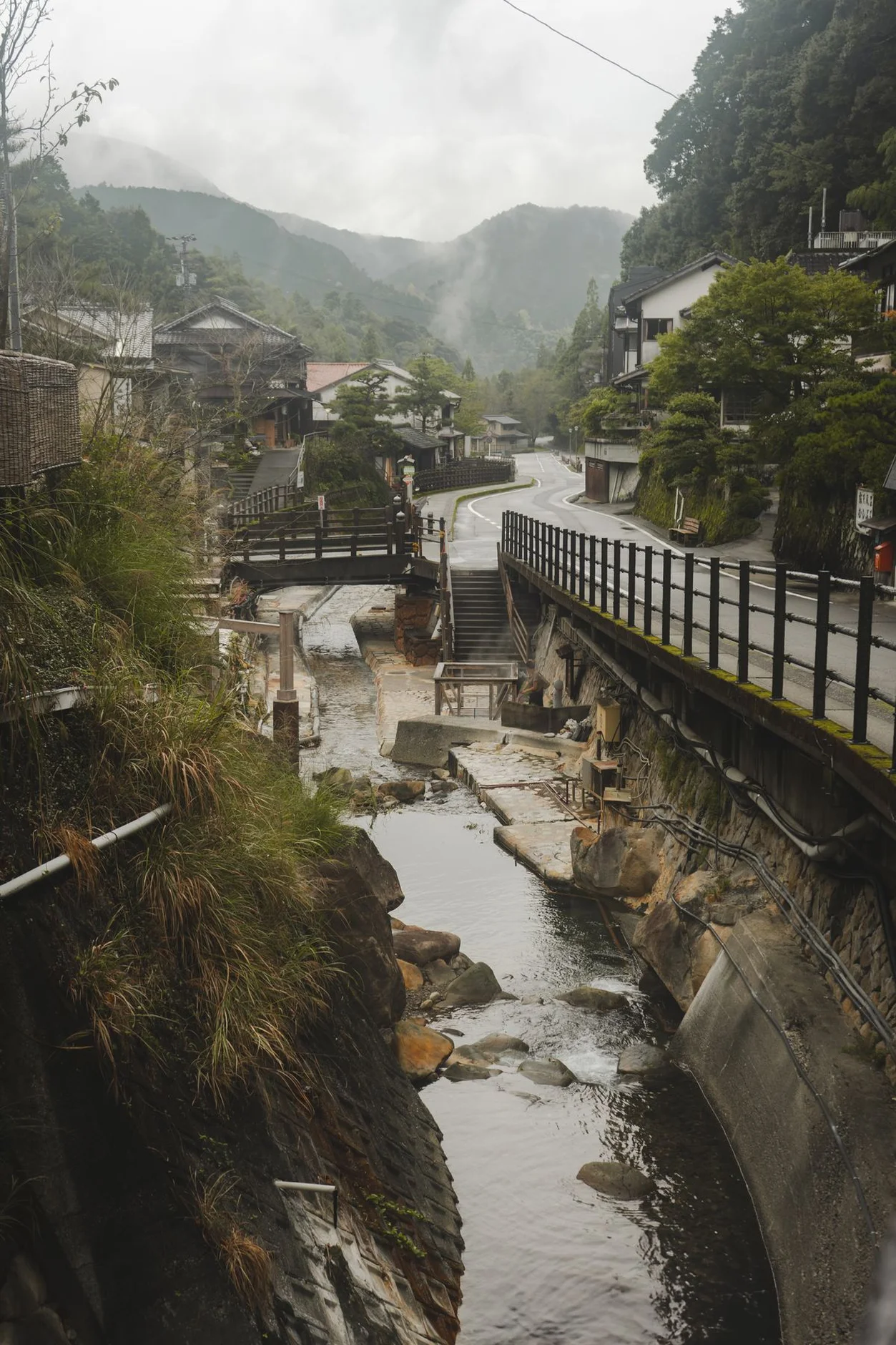
Photo by 三塚, via Wikimedia Commons (CC BY-SA 4.0)
🇯🇵 Japan · Tottori Prefecture, Honshu
Photo by 三塚, via Wikimedia Commons (CC BY-SA 4.0)
🇯🇵 Japan · Tottori Prefecture, Honshu
♨ Temperature
49°C
⛰ Altitude
70 m
⚗ pH
7.1
💧 TDS
1100 mg/L
🌊 Flow rate
20 L/s
📅 Established
12th century
✓ Verified on 2026-07-22
Misasa Onsen has one of the highest radon concentrations of any spring in the world, making it one of a rare category of naturally radioactive therapeutic waters. Low-dose radon is thought to stimulate antioxidant defences — the so-called hormesis effect. The springs were studied by Marie Curie herself in the early 20th century. The historic hot spring town sits in a river valley and has been continuously operating since the Kamakura period.
| Radon (Rn) | 0.72 mg/L |
| Sodium Chloride | 620 mg/L |
| Sulphur | 4.2 mg/L |
| Calcium | 210 mg/L |
| Bicarbonate | 380 mg/L |
Misasa Onsen has operated continuously since the Kamakura period (12th century), making it one of Japan's longest-standing thermal establishments. The town is classified as one of Japan's 100 Famous Onsen. Marie Curie's research interest in Misasa's radon content in the early 20th century gave the springs international scientific prominence and contributed to the study of low-dose radiation biology.
In Japanese onsen culture, Misasa holds a special status as a radioactive spring (hōshasen-sen) — a category recognised in Japanese balneology as beneficial through the hormesis principle. The town maintains the traditional onsen machi character with wooden machiya townhouses, communal foot baths (ashiyu), and street-side ryokan. The tradition of riverside open-air bathing (kawa-yu) remains an authentic cultural practice.
The springs at Misasa are managed by Tottori Prefecture to limit extraction and preserve the radon content that defines their character. The surrounding Daisen-Oki National Park provides a protected forest catchment. Scientific research partnerships between Misasa and Okayama University ensure continuous monitoring of spring flow and radon levels, contributing to global research on natural radiation and human wellbeing.