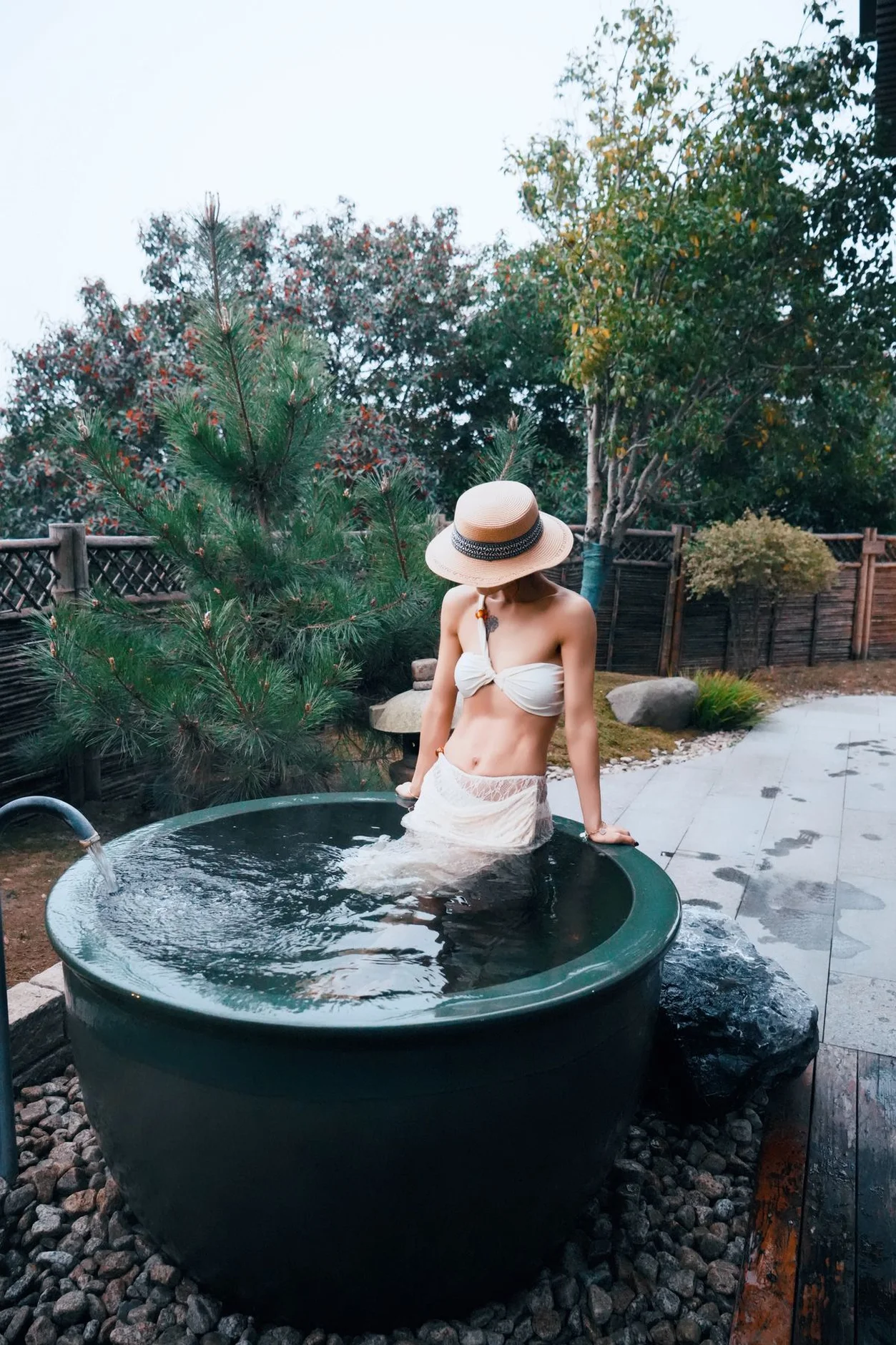
Photo by Zacharymccune, via Wikimedia Commons (CC BY-SA 4.0)
🇯🇵 Japan · Nagano
♨ Temperature
40–90°C
⛰ Altitude
576 m
⚗ pH
8.0–8.8
💧 TDS
400–1100 mg/L
🌊 Flow rate
Varies by source
📅 Established
First recorded as 'Yuyama-mura' in 1272 (Kamakura period); tōji visits began in the Edo period
✓ Verified on 2026-08-11
Nozawa Onsen is one of Japan's most atmospheric onsen villages — a compact settlement that has preserved its old-fashioned townscape in the mountains of northern Nagano, where the streets run between steaming bathhouses, hot-spring inns, shops, and distilleries. The village has 13 soto-yu (public bathhouses), each with a donation box at its entrance. They are maintained and managed by the village community through an association of local residents called Yu-Nakama, so visitors are asked to leave a small donation when using them. Most of the water is simple sulphurous water, though composition and temperature vary somewhat by source, with temperatures at the source ranging from about 40°C to 90°C, often too hot to enter directly and requiring dilution with cold water. The village first appears in historical records as 'Yuyama-mura' in 1272, during the Kamakura period, and it retains its traditional character with remarkable integrity. Therapeutic properties are said to vary from bathhouse to bathhouse, with the waters traditionally considered most effective for neuralgia, digestive complaints, and skin conditions.
| Sodium | 240 mg/L |
| Sulphate | 185 mg/L |
| Chloride | 195 mg/L |
| Bicarbonate | 155 mg/L |
The village first appears in historical records as 'Yuyama-mura' in 1272, during the Kamakura period, and visits for therapeutic bathing (tōji) began in the Edo period. Nozawa has maintained continuous operation of its public bathhouses across this long history, one of the longest unbroken hot spring bathing traditions in Japan. Yu-Nakama (湯仲間), an association of local residents, maintains the bathhouses as communal property — itself a form of living cultural heritage.
Nozawa Onsen is also one of Japan's traditional ski resort villages, meaning the community seamlessly blends centuries-old thermal culture with winter mountain sports. In January, the village holds the Nozawa Fire Festival (Dōsojin Matsuri), a sacred rite centered on a ritual bonfire believed to protect the village and ensure a good harvest — one of Japan's most significant fire festivals.
Yu-Nakama (湯仲間), the association of local residents, ensures that bathhouse management remains in the hands of the village community, with maintenance costs shared collectively. This model has prevented the commercialisation of the hot springs and maintained the village's authentic character across centuries.
Websitewww.nozawakanko.jp
AddressNozawa Onsen Village, Shimotakai-gun, Nagano 389-2502, Japan