Manantiales / Rimske TermeSprings / Rimske Terme温泉・鉱泉 / Rimske Terme
📅 Establecido
Roman-era bathing use; first written record 1486; modern spa developed from 1840
📅 Established
Roman-era bathing use; first written record 1486; modern spa developed from 1840
📅 開設
Roman-era bathing use; first written record 1486; modern spa developed from 1840
BicarbonatedCalcium-Magnesium
✓ Verificado el 2026-07-31
✓ Verified on 2026-07-31
✓ 確認日 2026-07-31
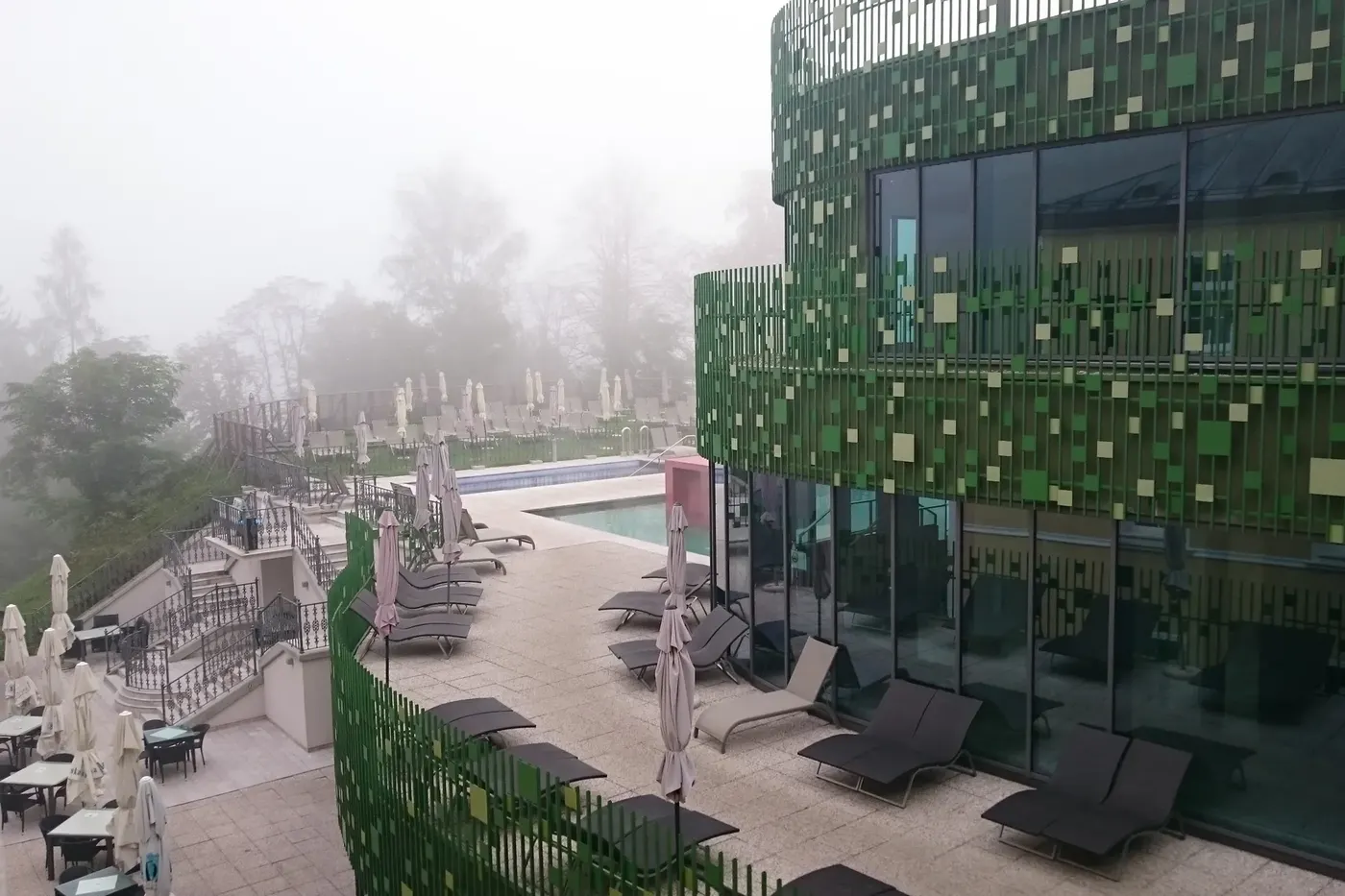
Rimske Terme —literalmente 'Termas Romanas'— se encuentra en la orilla derecha del río Savinja, bajo la colina de Stražnik de 655 metros, donde dos manantiales emergen de fisuras en roca dolomítica triásica: el más cálido, el manantial Amalija, a 38,4°C, y el manantial Romano, a 36,3°C, ambos de carácter bicarbonatado cálcico-magnésico. Altares votivos a ninfas curativas, excavados entre 1769 y 1845, atestiguan el uso romano de estos baños, y la historia escrita del lugar se remonta a 1486. El balneario moderno toma forma a partir de 1840, cuando Gustav Adolf Uhlich compró los manantiales para su esposa Amalia y dio nombre al asentamiento. Tras décadas de cierre bajo uso militar yugoslavo, el balneario reabrió progresivamente desde 2005, con el histórico edificio Sofijin Dvor restaurado y el centro termal de nuevo en funcionamiento en 2008.
Rimske Terme — literally 'Roman Thermal Baths' — sits on the right bank of the Savinja River beneath the 655-meter Stražnik Hill, where two springs emerge from fissures in Triassic dolomite rock: the warmer Amalija spring at 38.4°C and the Roman spring at 36.3°C, both magnesium-calcium bicarbonate in character. Votive altars to healing nymphs, excavated between 1769 and 1845, attest to Roman-era bathing here, and the site's written history reaches back to 1486. The modern resort takes its shape from 1840, when Gustav Adolf Uhlich bought the springs for his wife Amalia and gave the settlement its name. After decades of closure under Yugoslav military use, the spa reopened progressively from 2005, with the historic Sofijin Dvor building restored and the thermal center back in operation by 2008.
リムスケ・テルメ(文字通り「ローマ温泉」)は、標高655メートルのストラジュニク丘陵の麓、サヴィニャ川右岸に位置し、三畳紀ドロマイト岩の裂け目から2つの源泉が湧き出る。より高温のアマリア泉は38.4℃、ローマ泉は36.3℃で、いずれもマグネシウム・カルシウム重炭酸泉である。1769年から1845年にかけて発掘された治癒の女神(ニンフ)への奉納祭壇は、ここでのローマ時代の入浴利用を裏付けており、文献上の歴史は1486年まで遡る。近代的な温泉施設は1840年、グスタフ・アドルフ・ウーリッヒが妻アマリアのために源泉を購入し、その名を集落に与えたことに始まる。ユーゴスラビア軍による使用で数十年閉鎖された後、2005年から段階的に再開し、歴史的建造物ソフィイン・ドヴォルが修復され、2008年までに温泉センターが営業を再開した。
Técnicas
Techniques
技法
Bathing
Patrimonio
Los altares votivos dedicados a ninfas curativas, excavados entre 1769 y 1845 cerca de los manantiales, aportan evidencia arqueológica del uso romano de los baños en este lugar, y la historia escrita documentada de los manantiales se remonta a 1486, una de las tradiciones termales más antiguas atestiguadas de Eslovenia.
Heritage
Votive altars dedicated to healing nymphs, excavated between 1769 and 1845 near the springs, provide archaeological evidence of Roman-era bathing at this site, and the springs carry documented written history back to 1486 — among the longest-attested thermal traditions in Slovenia.
文化財
源泉近くで1769年から1845年にかけて発掘された治癒の女神への奉納祭壇は、この地でのローマ時代の入浴利用を示す考古学的証拠であり、源泉に関する文献記録は1486年まで遡る、スロベニアで最も長く記録が残る温泉の伝統の一つである。
Otros manantiales en Slovenia
Other springs in Slovenia