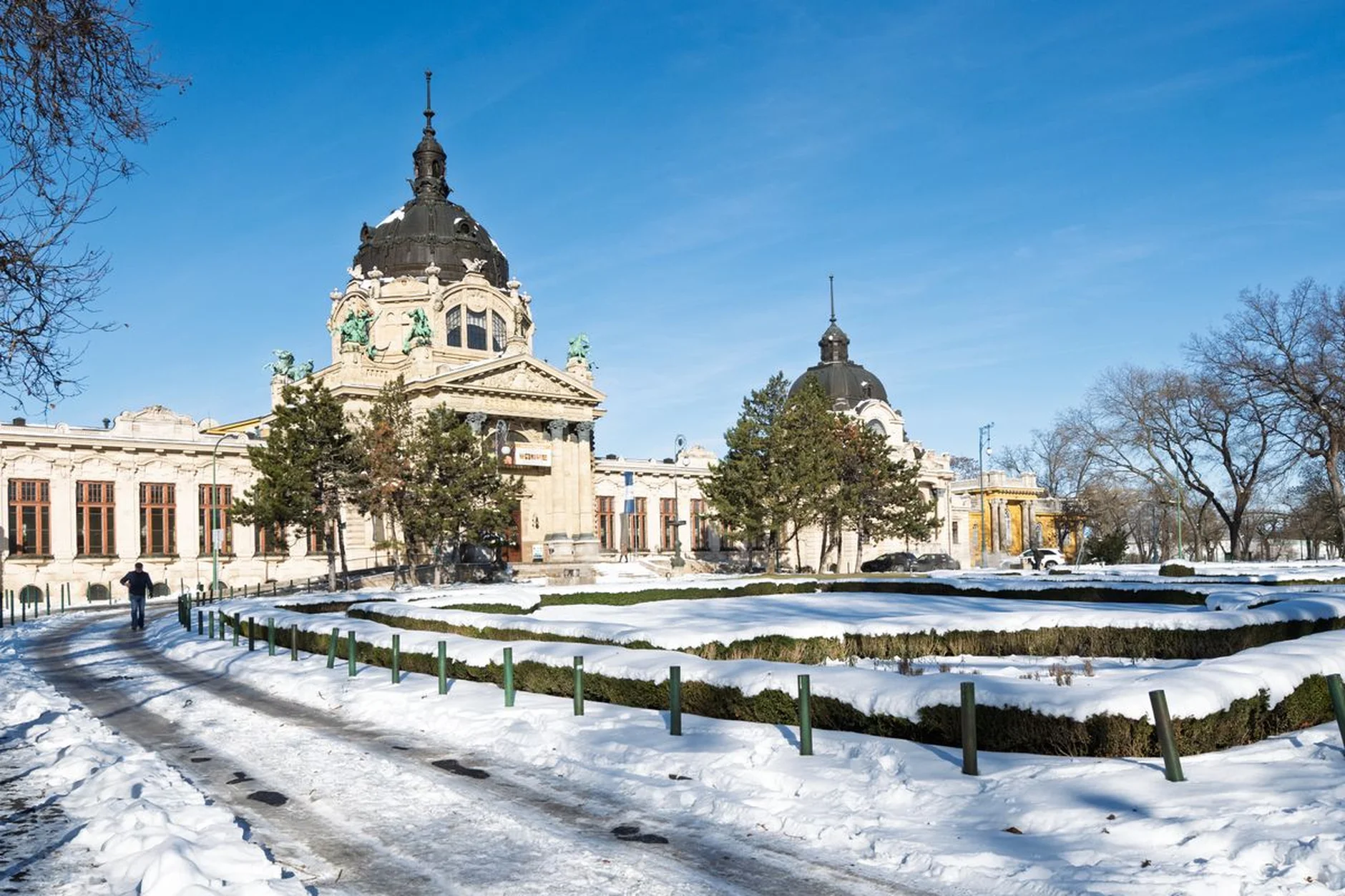
Photo by Syrus257, via Wikimedia Commons (CC BY 2.0)
🇭🇺 Hungary · Budapest
♨ Temperature
38°C
⛰ Altitude
102 m
⚗ pH
7
💧 TDS
1900 mg/L
🌊 Flow rate
76000 L/day
📅 Established
Ottoman period, 16th century
✓ Verified on 2026-07-22
Budapest is built on more than 100 thermal springs and is known as the 'City of Spas'. The Ottomans built the first bath houses in the 16th century; the Széchenyi, Gellért, Rudas, and Lukács baths remain operational today. The calcium-magnesium sulphate waters are recognised by Hungarian health authorities for rheumatological and circulatory conditions. Bathing culture in Budapest is social and architectural as much as therapeutic — the palaces of water are a UNESCO candidate.
| Calcium | 230 mg/L |
| Magnesium | 85 mg/L |
| Sulphate | 420 mg/L |
| Bicarbonate | 380 mg/L |
| Fluoride | 2.1 mg/L |
Budapest's thermal spring heritage spans 2,000 years — from Roman Aquincum to the Ottoman bath houses built after 1541. The Király, Rudas, and Veli Bej baths, all dating to the Ottoman period, are functioning architectural monuments. Budapest has submitted its spa culture for UNESCO World Heritage designation, with 11 thermal establishments included in the proposed inscription.
Budapest's bath culture is one of the most socially embedded in the world. The thermal baths are genuinely cross-social spaces — visited by elderly regulars, office workers, tourists, and chess players (the famous chess baths of Széchenyi). The baths are civic institutions central to Budapest's identity as the City of Spas. The tradition of daily bathing as a social and health maintenance practice remains very much alive.
Budapest's thermal springs are natural artesian flows requiring no external energy for water extraction. The city's district heating system is gradually being integrated with geothermal energy to reduce carbon emissions. Several older bath buildings are undergoing energy-efficiency renovation to reduce the carbon footprint of water heating while preserving their architectural heritage.