Photo by Nekosuki, via Wikimedia Commons (CC BY-SA 4.0)
🇯🇵 Japan · Tanabe, Wakayama Prefecture, Kansai
Photo by Nekosuki, via Wikimedia Commons (CC BY-SA 4.0)
🇯🇵 Japan · Tanabe, Wakayama Prefecture, Kansai
♨ Temperature
90°C
⛰ Altitude
—
⚗ pH
—
💧 TDS
—
🌊 Flow rate
—
📅 Established
discovered circa 1,800 years ago
✓ Verified on 2026-07-28
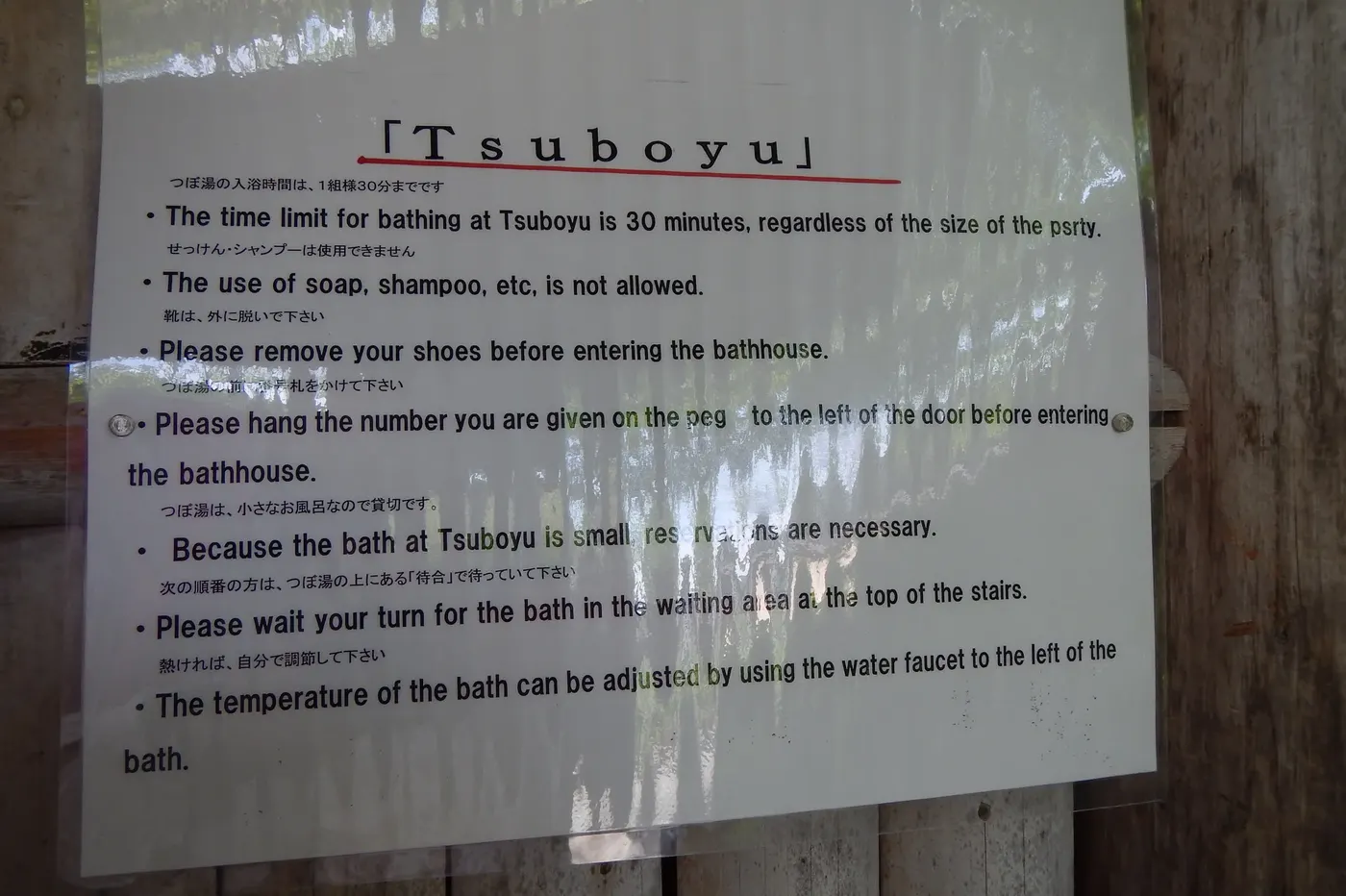
Tsuboyu is a tiny, stone-lined bathhouse in Yunomine Onsen, a hot spring hamlet along the Kumano Kodo Nakahechi pilgrimage trail in Tanabe, Wakayama Prefecture. Yunomine Onsen is thought to have been discovered around 1,800 years ago, making it one of Japan's oldest hot springs, and for over 1,000 years pilgrims have bathed here in ritual purification before worshipping at Kumano Hongu Taisha. Tsuboyu itself, fitting only one or two bathers at a time for up to 30 minutes, is registered as part of the 'Sacred Sites and Pilgrimage Routes in the Kii Mountain Range' UNESCO World Heritage listing, making it the only hot spring bath in the world where visitors can actually bathe within a UNESCO World Heritage property. The source water, which reaches about 90°C, contains sulfur, sodium, and hydrogen carbonate along with potassium, calcium, iron, chlorine, and sulfate. A separate public spring nearby, Yuzutsu, is used to boil onsen tamago (hot spring eggs).
Yunomine Onsen is believed to have been discovered approximately 1,800 years ago and has been tied for over a millennium to the Kumano Kodo pilgrimage, where travelers bathed in purification before worshipping at Kumano Hongu Taisha. Tsuboyu was inscribed as part of the 'Sacred Sites and Pilgrimage Routes in the Kii Mountain Range' UNESCO World Heritage site, the only hot spring bath in the world with this status.
Pilgrims on the Kumano Kodo have long used Tsuboyu for ritual purification before visiting Kumano Hongu Taisha, a practice that continues today alongside its use as a small public bathhouse limiting each group to a 30-minute soak.
Websitewww.tb-kumano.jp/en/places/yunomine/
AddressYunomine, Hongu-cho, Tanabe, Wakayama, Japan