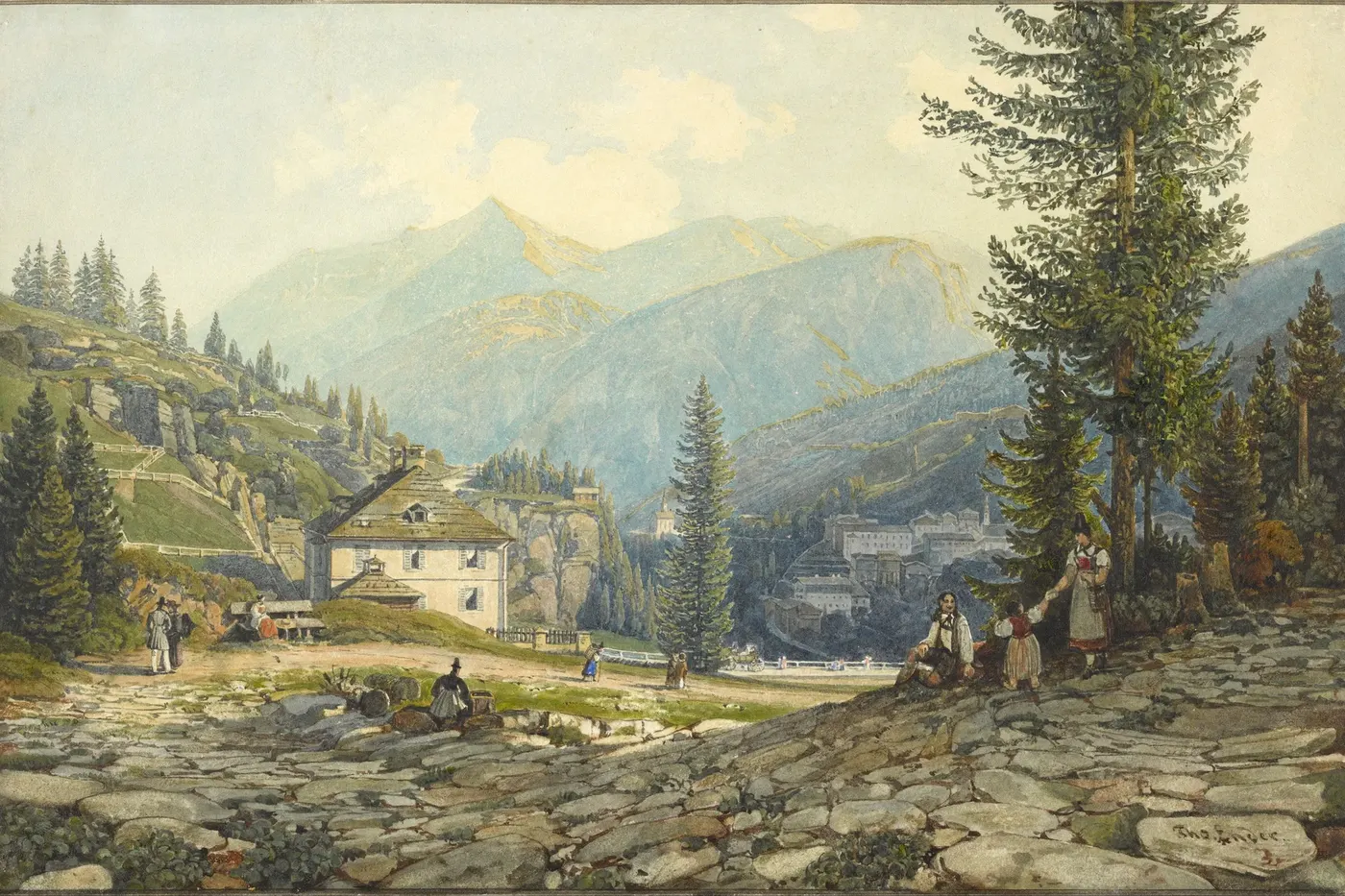
Bad Gastein

🇦🇹 Austria · Salzburg Province, Hohe Tauern

Bad Gastein

Manantiales / Bad GasteinSprings / Bad Gastein温泉・鉱泉 / Bad Gastein

♨ Temperatura

47°C

⛰ Altitud

1002 m

⚗ pH

7.1

💧 TDS

280 mg/L

🌊 Caudal

190 L/s

📅 Establecido

Medieval; first documented thermal use 1342

♨ Temperature

47°C

⛰ Altitude

1002 m

⚗ pH

7.1

💧 TDS

280 mg/L

🌊 Flow rate

190 L/s

📅 Established

Medieval; first documented thermal use 1342

♨ 温度

47°C

⛰ 標高

1002 m

⚗ pH

7.1

💧 TDS

280 mg/L

🌊 流量

190 L/s

📅 開設

Medieval; first documented thermal use 1342

Radon SpringThermal BathAlpine

✓ Verificado el 2026-07-22

✓ Verified on 2026-07-22

✓ 確認日 2026-07-22

Bad Gastein ocupa uno de los escenarios más espectaculares de cualquier ciudad balnearia del mundo: un estrecho desfiladero alpino en el Hohe Tauern de Salzburgo, donde la cascada del Gasteiner Ache cae por el centro del pueblo y las fachadas de los grandes hoteles del siglo XIX se elevan directamente desde las paredes del acantilado. Los manantiales termales están en uso desde 1342. La temporada Belle Époque atrajo al Emperador Francisco José I, Brahms, Bruckner y Freud. El agua emerge a 44-47°C con inusual contenido de radón.

Bad Gastein occupies one of the most spectacular settings of any spa town in the world: a tight Alpine gorge in the Hohe Tauern mountain range of Salzburg Province, where the Gasteiner Ache waterfall plunges through the centre of the town and 19th-century grand hotel façades rise directly from the cliff walls. The thermal springs of the Gastein Valley have been in use since at least 1342, when historical records document the first thermal baths. By the 16th century, Bad Gastein was already an internationally famous destination attracting Holy Roman Emperor Frederick III, who visited in 1436 and 1481. The Belle Époque period — from the 1870s through 1914 — brought an extraordinary building program of grand hotels, casinos, and spa infrastructure that remains largely intact today. The water that emerged from granite fissures at 44–47°C is distinctive for its low mineralization but unusual radon content — a property that became the basis of medical treatments endorsed by Austrian health authorities for joint and respiratory conditions. The Gastein valley contains several distinct spa communities including Badgastein, Bad Hofgastein, and Dorfgastein, each with distinct character and water sources.

Bad Gasteinはオーストリア・Salzburg Province, Hohe Tauernに位置するラドン泉・温熱泉。源泉温度は47℃、標高1002mの地に湧出する。泉水は中性に近い(pH約7.1)の泉質、炭酸水素塩泉・ナトリウム泉を豊富に含む、総溶解固形物280 mg/Lが特徴だ。1342年頃に発見された。リウマチ療法・整形外科・呼吸器療法など多様な温浴療法が行われる。施設では温泉入浴・ラドン吸入(ハイルシュトレン坑道療法)・クナイプ水治療法などが体験できる。

Minerales

Minerals

ミネラル

Radon0.13 mg/L
Sodium28 mg/L
Calcium18 mg/L
Bicarbonate88 mg/L
Silica22 mg/L
Magnesium6 mg/L

Tratamientos

Treatments

トリートメント

RheumatologyOrthopaedicsRespiratoryCardiovascularSkinRadon Therapy

Técnicas

Techniques

技法

Thermal bathingRadon inhalation (Heilstollen mine therapy)Kneipp hydrotherapy

Patrimonio

El valle de Gastein se encuentra dentro del macizo de los Altos Tauern (Hohe Tauern), la cadena montañosa más alta de los Alpes orientales, un área de extraordinaria complejidad geológica donde profundos plutones graníticos empujan hacia la superficie aguas antiguas a altas temperaturas. El Parque Nacional Hohe Tauern que la rodea es la mayor área protegida de Austria y abarca el corazón de los Alpes, incluido el Großglockner, la cumbre más alta de Austria. El sistema de fuentes termales está conectado con este basamento granítico, que tiene entre 300 y 350 millones de años de antigüedad.

Heritage

The Gastein Valley sits within the Hohe Tauern — the highest mountain range in the Eastern Alps — an area of extraordinary geological complexity where deep granite plutons force ancient water to the surface at high temperatures. The surrounding Hohe Tauern National Park is Austria's largest protected area and covers the heart of the Alps including the Großglockner, Austria's highest peak. The thermal spring system is connected to this granite basement, which is between 300 and 350 million years old.

文化財

ガシュタイン渓谷は、東アルプスで最も高い山脈であるホーエ・タウエルンに位置し、深部の花崗岩貫入体が古い地下水を高温のまま地表へと押し上げる、地質学的に極めて複雑な地域である。周囲を囲むホーエ・タウエルン国立公園はオーストリア最大の保護区域であり、オーストリア最高峰のグロースグロックナーを含むアルプスの中心部を包含している。この温泉系は、3億年から3億5000万年前に形成されたこの花崗岩の基盤とつながっている。

Cultura

La lista de visitantes de Bad Gastein durante el siglo XIX y principios del XX se lee como un registro de la vida aristocrática y cultural europea: el emperador Francisco José I la visitó repetidamente, al igual que el káiser Guillermo II, Otto von Bismarck, el archiduque Francisco Fernando, Brahms, Bruckner, Freud, y la emperatriz consorte de Francisco José, Isabel (Sisi). El distrito de grandes hoteles de la ciudad —en gran parte abandonado y parcialmente en ruinas hacia finales del siglo XX— se convirtió en un espacio de reinvención artística y cultural en la década de 2010, atrayendo residencias de artistas, sesiones de moda y eventos culturales vanguardistas que combinaban la grandeza de la Belle Époque con una estética de decadencia.

Culture

Bad Gastein's visitor list from the 19th and early 20th centuries reads as a register of European aristocratic and cultural life: Emperor Franz Joseph I visited repeatedly, as did Kaiser Wilhelm II, Otto von Bismarck, Archduke Franz Ferdinand, Brahms, Bruckner, Freud, and Kaiser Franz Joseph's consort Elisabeth (Sisi). The town's grand hotel district — largely abandoned and partially derelict by the late 20th century — became a site of artistic and cultural reinvention in the 2010s, attracting artists' residencies, fashion shoots, and avant-garde cultural events that mixed Belle Époque grandeur with decay aesthetics.

文化

19世紀から20世紀初頭にかけてのバート・ガシュタインの来訪者リストは、ヨーロッパの貴族社会・文化的生活の記録帳のようである。フランツ・ヨーゼフ1世皇帝は幾度も訪れ、ヴィルヘルム2世、オットー・フォン・ビスマルク、フランツ・フェルディナント大公、ブラームス、ブルックナー、フロイト、そしてフランツ・ヨーゼフ皇帝の妃エリザベート(シシィ)もまた訪れた。20世紀後半までにほぼ廃墟同然となっていた町の大ホテル街は、2010年代に芸術的・文化的な再生の場となり、アーティスト・イン・レジデンス、ファッション撮影、そしてベル・エポックの華やかさと荒廃の美学を融合させた前衛的な文化イベントを引き寄せるようになった。

Sostenibilidad

Las fuentes termales de Gastein fluyen enteramente por presión artesiana natural desde el sistema montañoso granítico, sin necesidad de bombeo. La Galería Curativa de Gastein (Heilstollen) —una antigua mina de oro reconvertida en centro de terapia por inhalación de radón— utiliza la emanación natural de radón del granito para ofrecer un tratamiento médicamente autorizado para afecciones crónicas. El Parque Nacional Hohe Tauern que la rodea proporciona un contexto de ecosistema alpino protegido.

Sustainability

The Gastein thermal springs flow entirely by natural artesian pressure from the granite mountain system, requiring no pumping. The Gastein Healing Gallery (Heilstollen) — a former gold mine repurposed as a radon inhalation therapy site — uses the natural radon emanation from the granite to provide a medically authorized treatment for chronic conditions. The surrounding Hohe Tauern National Park provides protected alpine ecosystem context.

持続可能性

ガシュタインの温泉は、花崗岩質の山岳系から自然の自噴圧によって完全に湧出しており、ポンプ揚水を必要としない。かつての金鉱を転用したガシュタイン治療坑道(ハイルシュトレン)は、ラドン吸入療法の施設として、花崗岩から自然に放出されるラドンを利用し、慢性疾患に対する医学的に認可された治療を提供している。周囲を囲むホーエ・タウエルン国立公園は、保護されたアルプス生態系という背景を提供している。

Contacto

Teléfono+43 6432 6393

Sitio webwww.gastein.com

DirecciónBad Gastein, Salzburg Province 5640, Austria

Contact

Phone+43 6432 6393

Websitewww.gastein.com

AddressBad Gastein, Salzburg Province 5640, Austria

連絡先

電話+43 6432 6393

ウェブサイトwww.gastein.com

住所Bad Gastein, Salzburg Province 5640, Austria

← Volver al directorio completo Ver en el mapa interactivo← Back to the full directory View on the interactive map← ディレクトリ全体に戻る インタラクティブマップで見る